Thank you for visiting SNEWPapers!
Sign up free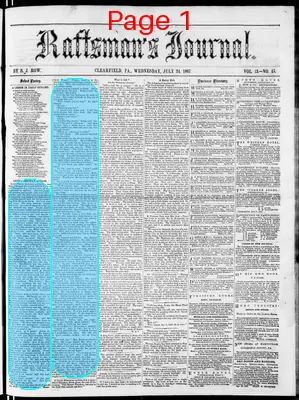
Literary
July 24, 1867
Raftsman's Journal
Clearfield, Clearfield County, Pennsylvania
What is this article about?
Homeless orphan Cherry, wandering New York streets, sings 'Home, Sweet Home' outside a store. Boy Julian Evans, unable to buy a music box for his sick sister Alice, invites her home. Cherry entertains Alice until her death, then becomes family, discovering her 'mission' through God's care.
Clipping
OCR Quality
98%
Excellent
Full Text
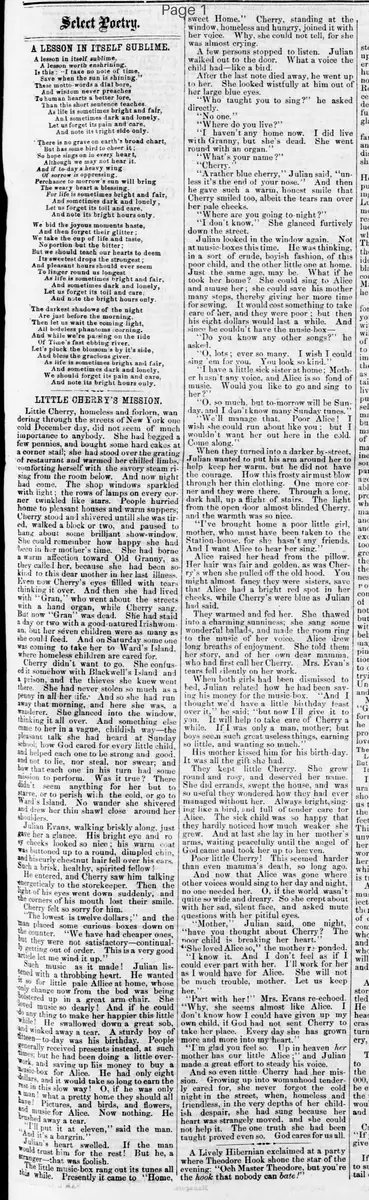
LITTLE CHERRY'S MISSION.
Little Cherry, homeless and forlorn, wandering through the streets of New York one cold December day, did not seem of much importance to anybody. She had begged a few pennies, and bought some hard cakes at a corner stall; she had stood over the grating of a restaurant and warmed her chilled limbs, comforting herself with the savory steam rising from the room below. And now night had come. The shop windows sparkled with light; the rows of lamps on every corner twinkled like stars. People hurried home to pleasant houses and warm suppers; Cherry stood and shivered until she was tired, walked a block or two, and paused to hang about some brilliant show-window.
She could remember how happy she had been in her mother's time. She had borne a warm affection toward Old Granny, as they called her, because she had been so kind to this dear mother in her last illness. Even now Cherry's eyes filled with tears thinking it over. And then she had lived with "Gran," who went about the streets with a hand organ, while Cherry sang. But now "Gran" was dead. She had stayed a day or two with a good-natured Irishwoman, but her seven children were as many as she could feed. And on Saturday some one was coming to take her to Ward's Island, where homeless children are cared for.
Cherry didn't want to go. She confused it somehow with Blackwell's Island and a prison, and the thieves she knew went there. She had never stolen so much as a penny in all her life. And so she had run away that morning, and here she was, a wanderer. She glanced into the window, thinking it all over. And something else came to her in a vague, childish way—the pleasant talk she had heard at Sunday school: how God cared for every little child, and helped each one to be strong and good, and not to lie, nor steal, nor swear; and how that each one in his turn had some mission to perform. Was it true? There didn't seem anything for her but to starve, or to perish with the cold, or go to Ward's Island. No wonder she shivered and drew her thin shawl close around her shoulders.
Julian Evans, walking briskly along, just gave her a glance. His bright eye and rosy cheeks looked so nice; his warm coat was buttoned up to a round, dimpled chin, and his curly chestnut hair fell over his ears. Such a brisk, healthy, spirited fellow! He entered, and Cherry saw him talking energetically to the storekeeper. Then the light of his eyes went down suddenly, and the corners of his mouth lost their smile. Cherry felt so sorry for him.
"The lowest is twelve dollars;" and the man placed some curious boxes down on the counter. "We have had cheaper ones, but they were not satisfactory—continually getting out of order. This is a very good article; let me wind it up. Such music as it made!" Julian listened with a throbbing heart. He wanted it so for little pale Alice at home, whose only change now bolstered up in the bed was being arm-chair. She loved music so dearly! And if he could do anything to make her happier this little while! He swallowed down a great sob, and winked away a tear. A sturdy boy of fifteen to-day generally received presents instead, at such a time; but he had work, and saving up his money to buy a music-box for Alice. He had only eight dollars, and it would take so long to earn the rest in this slow way! O, if he was only a man! What a pretty home they might have! Pictures, and birds, and flowers, and music for Alice. He brushed away a tear. "I'll put it at eleven," said the man. Now nothing. He and it's a bargain. Julian's heart swelled. If the man would trust him for the rest! But he, a stranger—that was foolish. The little music-box rang out its tunes all this while. Presently it came to "Home, sweet Home." Cherry, standing at the window, homeless and hungry, joined it with her voice. Why, she could not tell, for she was almost crying.
A few persons stopped to listen. Julian walked out to the door. What a voice the child had—like a bird! After the last note died away, he went up to her. She looked wistfully at him out of her large blue eyes.
"Who taught you to sing?" he asked directly.
"No one."
"Where do you live?"
"I haven't any home now. I did live with Granny, but she's dead. She went round with an organ."
"What's your name?"
"Cherry."
"A rather blue cherry," Julian said, "unless it's the end of your nose." And then he gave such a warm, honest smile that Cherry smiled too, albeit the tears ran over her pale cheeks.
"Where are you going to-night?"
"I don't know." She glanced furtively down the street.
Julian looked in the window again. Not at music-boxes this time. He was thinking, in a sort of crude, boyish fashion, of this poor child, and the other little one at home. Just the same age, may be. What if he took her home? She could sing to Alice and amuse her; she could save his mother many steps, thereby giving her more time for sewing. It would cost something to take care of her, and they were poor; but then his eight dollars would last a while. And since he couldn't have the music-box—
"Do you know any other songs?" he asked.
"O, lots; ever so many. I wish I could sing 'em for you. You look so kind."
"I have a little sick sister at home; Mother hasn't any voice, and Alice is so fond of music. Would you like to go and sing to her?"
"O, so much, but to-morrow will be Sunday, and I don't know many Sunday tunes."
"We'll manage that. Poor Alice! I wish she could run about like you; but I wouldn't want her out here in the cold. Come along."
When they turned into a darker by-street, Julian wanted to put his arm around her to help keep her warm, but he did not have the courage. How this frosty air must blow through her thin clothing. One more corner and they were there. Through a long, dark hall, up a flight of stairs. The light from the open door almost blinded Cherry, and the warmth was so nice.
"I've brought home a poor little girl, mother, who must have been taken to the Station-house, for she hasn't any friends. And I want Alice to hear her sing."
Alice raised her head from the pillow. Her hair was fair and golden, as was Cherry's when she pulled off the old hood. You might almost fancy they were sisters, save that Alice had a bright red spot in her cheeks, while Cherry's were blue as Julian had said.
They warmed and fed her. She thawed into a charming sunniness; she sang some wonderful ballads, and made the room ring to the music of her voice. Alice drew long breaths of enjoyment. She told them her story, and of her own dear mamma, who had first called her Cherry. Mrs. Evans's tears fell silently on her work.
When both girls had been dismissed to bed, Julian related how he had been saving his money for the music-box. "And I thought we'd have a little birthday feast over it," he said; "but now I'll give it to you. It will help to take care of Cherry a while. If I was only a man, mother; but boys seem such great useless things, earning so little, and wanting so much."
His mother kissed him for his birthday. It was all the gift she had.
They kept little Cherry. She grew round and rosy, and deserved her name. She did errands, swept the house, and was so useful they wondered how they had ever managed without her. Always bright, singing like a bird, and full of tender care for Alice. The sick child was so happy that they hardly noticed how much weaker she grew. And at last she lay in her mother's arms, waiting peacefully until the angel of God came and took her up to heaven.
Poor little Cherry! This seemed harder than even mamma's death, so long ago. And now that Alice was gone where other voices would sing to her day and night, no one needed her. O, if the world wasn't quite so wide and dreary. So she crept about with her sad, silent face, and asked mute questions with her pitiful eyes.
"Mother," Julian said, one night, "have you thought about Cherry? The poor child is breaking her heart."
"She loved Alice so," the mother responded.
"I know it. And I don't feel as if I could ever part with her. I'll work for her as I would have for Alice. She will not be much trouble, mother. Let us keep her."
"Part with her!" Mrs. Evans re-echoed. "Why, she seems almost like Alice. I don't know how I could have given up my own child, if God had not sent Cherry to take her place. Every day she has grown more and more into my heart."
"I'm glad you feel so. Up in heaven her mother has our little Alice;" and Julian made a great effort to steady his voice.
And so even little Cherry had her mission. Growing up into womanhood tenderly cared for, she never forgot the cold night in the street, when, homeless and friendless, in the very depths of her childish despair, she had sung because her heart was strangely moved, and she could not help it. The one truth she had been taught proved even so. God cares for us all.
Little Cherry, homeless and forlorn, wandering through the streets of New York one cold December day, did not seem of much importance to anybody. She had begged a few pennies, and bought some hard cakes at a corner stall; she had stood over the grating of a restaurant and warmed her chilled limbs, comforting herself with the savory steam rising from the room below. And now night had come. The shop windows sparkled with light; the rows of lamps on every corner twinkled like stars. People hurried home to pleasant houses and warm suppers; Cherry stood and shivered until she was tired, walked a block or two, and paused to hang about some brilliant show-window.
She could remember how happy she had been in her mother's time. She had borne a warm affection toward Old Granny, as they called her, because she had been so kind to this dear mother in her last illness. Even now Cherry's eyes filled with tears thinking it over. And then she had lived with "Gran," who went about the streets with a hand organ, while Cherry sang. But now "Gran" was dead. She had stayed a day or two with a good-natured Irishwoman, but her seven children were as many as she could feed. And on Saturday some one was coming to take her to Ward's Island, where homeless children are cared for.
Cherry didn't want to go. She confused it somehow with Blackwell's Island and a prison, and the thieves she knew went there. She had never stolen so much as a penny in all her life. And so she had run away that morning, and here she was, a wanderer. She glanced into the window, thinking it all over. And something else came to her in a vague, childish way—the pleasant talk she had heard at Sunday school: how God cared for every little child, and helped each one to be strong and good, and not to lie, nor steal, nor swear; and how that each one in his turn had some mission to perform. Was it true? There didn't seem anything for her but to starve, or to perish with the cold, or go to Ward's Island. No wonder she shivered and drew her thin shawl close around her shoulders.
Julian Evans, walking briskly along, just gave her a glance. His bright eye and rosy cheeks looked so nice; his warm coat was buttoned up to a round, dimpled chin, and his curly chestnut hair fell over his ears. Such a brisk, healthy, spirited fellow! He entered, and Cherry saw him talking energetically to the storekeeper. Then the light of his eyes went down suddenly, and the corners of his mouth lost their smile. Cherry felt so sorry for him.
"The lowest is twelve dollars;" and the man placed some curious boxes down on the counter. "We have had cheaper ones, but they were not satisfactory—continually getting out of order. This is a very good article; let me wind it up. Such music as it made!" Julian listened with a throbbing heart. He wanted it so for little pale Alice at home, whose only change now bolstered up in the bed was being arm-chair. She loved music so dearly! And if he could do anything to make her happier this little while! He swallowed down a great sob, and winked away a tear. A sturdy boy of fifteen to-day generally received presents instead, at such a time; but he had work, and saving up his money to buy a music-box for Alice. He had only eight dollars, and it would take so long to earn the rest in this slow way! O, if he was only a man! What a pretty home they might have! Pictures, and birds, and flowers, and music for Alice. He brushed away a tear. "I'll put it at eleven," said the man. Now nothing. He and it's a bargain. Julian's heart swelled. If the man would trust him for the rest! But he, a stranger—that was foolish. The little music-box rang out its tunes all this while. Presently it came to "Home, sweet Home." Cherry, standing at the window, homeless and hungry, joined it with her voice. Why, she could not tell, for she was almost crying.
A few persons stopped to listen. Julian walked out to the door. What a voice the child had—like a bird! After the last note died away, he went up to her. She looked wistfully at him out of her large blue eyes.
"Who taught you to sing?" he asked directly.
"No one."
"Where do you live?"
"I haven't any home now. I did live with Granny, but she's dead. She went round with an organ."
"What's your name?"
"Cherry."
"A rather blue cherry," Julian said, "unless it's the end of your nose." And then he gave such a warm, honest smile that Cherry smiled too, albeit the tears ran over her pale cheeks.
"Where are you going to-night?"
"I don't know." She glanced furtively down the street.
Julian looked in the window again. Not at music-boxes this time. He was thinking, in a sort of crude, boyish fashion, of this poor child, and the other little one at home. Just the same age, may be. What if he took her home? She could sing to Alice and amuse her; she could save his mother many steps, thereby giving her more time for sewing. It would cost something to take care of her, and they were poor; but then his eight dollars would last a while. And since he couldn't have the music-box—
"Do you know any other songs?" he asked.
"O, lots; ever so many. I wish I could sing 'em for you. You look so kind."
"I have a little sick sister at home; Mother hasn't any voice, and Alice is so fond of music. Would you like to go and sing to her?"
"O, so much, but to-morrow will be Sunday, and I don't know many Sunday tunes."
"We'll manage that. Poor Alice! I wish she could run about like you; but I wouldn't want her out here in the cold. Come along."
When they turned into a darker by-street, Julian wanted to put his arm around her to help keep her warm, but he did not have the courage. How this frosty air must blow through her thin clothing. One more corner and they were there. Through a long, dark hall, up a flight of stairs. The light from the open door almost blinded Cherry, and the warmth was so nice.
"I've brought home a poor little girl, mother, who must have been taken to the Station-house, for she hasn't any friends. And I want Alice to hear her sing."
Alice raised her head from the pillow. Her hair was fair and golden, as was Cherry's when she pulled off the old hood. You might almost fancy they were sisters, save that Alice had a bright red spot in her cheeks, while Cherry's were blue as Julian had said.
They warmed and fed her. She thawed into a charming sunniness; she sang some wonderful ballads, and made the room ring to the music of her voice. Alice drew long breaths of enjoyment. She told them her story, and of her own dear mamma, who had first called her Cherry. Mrs. Evans's tears fell silently on her work.
When both girls had been dismissed to bed, Julian related how he had been saving his money for the music-box. "And I thought we'd have a little birthday feast over it," he said; "but now I'll give it to you. It will help to take care of Cherry a while. If I was only a man, mother; but boys seem such great useless things, earning so little, and wanting so much."
His mother kissed him for his birthday. It was all the gift she had.
They kept little Cherry. She grew round and rosy, and deserved her name. She did errands, swept the house, and was so useful they wondered how they had ever managed without her. Always bright, singing like a bird, and full of tender care for Alice. The sick child was so happy that they hardly noticed how much weaker she grew. And at last she lay in her mother's arms, waiting peacefully until the angel of God came and took her up to heaven.
Poor little Cherry! This seemed harder than even mamma's death, so long ago. And now that Alice was gone where other voices would sing to her day and night, no one needed her. O, if the world wasn't quite so wide and dreary. So she crept about with her sad, silent face, and asked mute questions with her pitiful eyes.
"Mother," Julian said, one night, "have you thought about Cherry? The poor child is breaking her heart."
"She loved Alice so," the mother responded.
"I know it. And I don't feel as if I could ever part with her. I'll work for her as I would have for Alice. She will not be much trouble, mother. Let us keep her."
"Part with her!" Mrs. Evans re-echoed. "Why, she seems almost like Alice. I don't know how I could have given up my own child, if God had not sent Cherry to take her place. Every day she has grown more and more into my heart."
"I'm glad you feel so. Up in heaven her mother has our little Alice;" and Julian made a great effort to steady his voice.
And so even little Cherry had her mission. Growing up into womanhood tenderly cared for, she never forgot the cold night in the street, when, homeless and friendless, in the very depths of her childish despair, she had sung because her heart was strangely moved, and she could not help it. The one truth she had been taught proved even so. God cares for us all.
What sub-type of article is it?
Prose Fiction
What themes does it cover?
Moral Virtue
Religious
What keywords are associated?
Homeless Orphan
Charity
Sick Child
Adoption
Divine Providence
Music Box
Family Bonds
Literary Details
Title
Little Cherry's Mission.
Key Lines
And So She Had Run Away That Morning, And Here She Was, A Wanderer.
And So Even Little Cherry Had Her Mission.
God Cares For Us All.