Thank you for visiting SNEWPapers!
Sign up free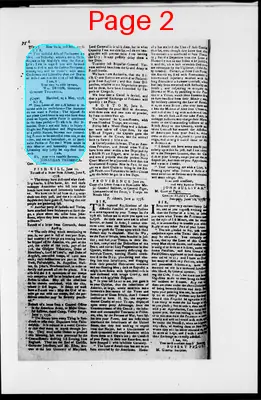
The Newport Gazette
Newport, Newport County, Rhode Island
What is this article about?
Exchange of letters between New York Governor William Tryon and Connecticut Governor Jonathan Trumbull in May 1778 regarding the forwarding of British Acts of Parliament and Trumbull's rejection of personal appeals for pardon amid ongoing conflict.
Clipping
OCR Quality
Full Text
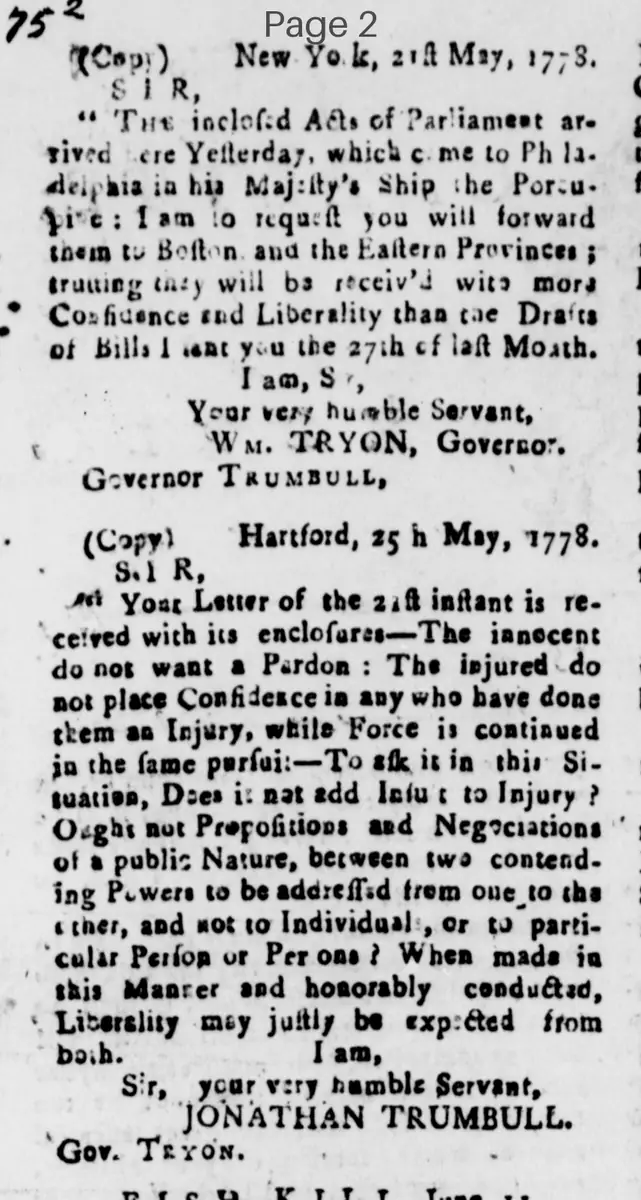
New York, 21st May, 1778.
SIR,
The enclosed Acts of Parliament arrived yesterday, which came to Philadelphia in his Majesty's Ship the Porcupine: I am to request you will forward them to Boston, and the Eastern Provinces; trusting they will be received with more Confidence and Liberality than the Drafts of Bills I sent you the 27th of last Month.
I am, Sir,
Your very humble Servant,
Wm. Tryon, Governor.
Governor Trumbull,
(Copy)
Hartford, 25th May, 1778.
SIR,
Your Letter of the 21st instant is received with its enclosures—The innocent do not want a Pardon: The injured do not place Confidence in any who have done them an Injury, while Force is continued in the same pursuit:—To ask it in their Situation, Does it not add Injury to Injury?
Ought not Propositions and Negotiations of a public Nature, between two contending Powers to be addressed from one to the other, and not to Individuals, Or to particular Person or Persons? When made in this Manner and honorably conducted, Liberality may justly be expected from both.
I am,
Sir, your very humble Servant,
JONATHAN TRUMBULL.
Gov. Tryon.
What sub-type of article is it?
What keywords are associated?
What entities or persons were involved?
Where did it happen?
Domestic News Details
Primary Location
New York And Hartford
Event Date
21st May, 1778 And 25th May, 1778
Key Persons
Outcome
trumbull rejects personal appeal, insists on public negotiations between contending powers.
Event Details
Governor Tryon sends Acts of Parliament arrived via HMS Porcupine, requests forwarding to Boston and Eastern Provinces, hopes for better reception than previous drafts. Governor Trumbull responds that innocents need no pardon, injured lack confidence in injurers, criticizes addressing individuals instead of public propositions between powers.