Thank you for visiting SNEWPapers!
Sign up free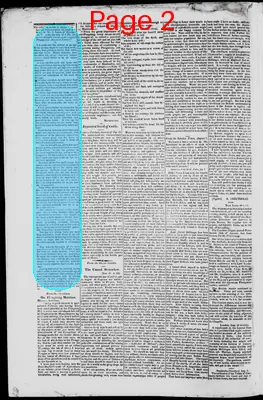
Literary
October 17, 1818
Delaware Gazette And Peninsula Advertiser
Wilmington, New Castle County, Delaware
What is this article about?
Excerpt from J. Foster's farrier guide detailing how to determine a horse's age by examining its teeth, from three years old through advanced age, including descriptions of tooth changes, tusks, and other mouth features.
Clipping
OCR Quality
95%
Excellent
Full Text
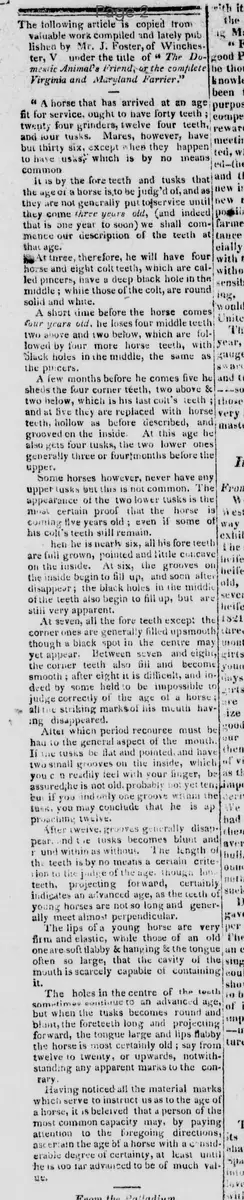
The following article is copied from a valuable work compiled and lately published by Mr. J. Foster, of Winchester, Va. under the title of "The Domestic Animal's Friend, or the complete Virginia and Maryland Farrier."
"A horse that has arrived at an age fit for service, ought to have forty teeth; twenty four grinders, twelve fore teeth, and four tusks. Mares, however, have but thirty six, except when they happen to have tusks, which is by no means common. It is by the fore teeth and tusks that the age of a horse is to be judged of, and as they are not generally put to service until they come three years old, (and indeed that is one year too soon) we shall commence our description of the teeth at that age.
At three, therefore, he will have four horse and eight colt teeth, which are called pincers, have a deep black hole in the middle; while those of the colt, are round solid and white.
Four years old, he loses four middle teeth two above and two below, which are followed by four more horse teeth, with black holes in the middle, the same as the pincers.
A few months before he comes five he sheds the four corner teeth, two above & two below, which is his last colt's teeth; and at five they are replaced with horse teeth, hollow as before described, and grooved on the inside. At this age he also gets four tusks, the two lower ones generally three or four months before the upper.
Some horses however, never have any upper tusks but this is not common. The appearance of the two lower tusks is the most certain proof that the horse is coming five years old; even if some of his colt's teeth still remain.
When he is nearly six, all his fore teeth are full grown, pointed and little concave on the inside. At six, the grooves on the inside begin to fill up, and soon after disappear; the black holes in the middle of the teeth also begin to fill up, but are still very apparent.
At seven, all the fore teeth except the corner ones are generally filled up smooth though a black spot in the centre may yet appear. Between seven and eight, the corner teeth also fill and become smooth: after eight it is difficult, and indeed by some held to be impossible to judge correctly of the age of a horse; all the striking marks of his mouth having disappeared.
After which period recourse must be had to the general aspect of the mouth. If the tusks be flat and pointed, and have two small grooves on the inside, which you can readily feel with your finger, be assured; he is not old. probably not yet ten: but if you find only one groove within the tusk, you may conclude that he is approaching twelve.
After twelve, grooves generally disappear. and the tusks become blunt and round within as without. The length of the teeth is by no means a certain criterion to the judge of the age. though long teeth, projecting forward, certainly indicates an advanced age, as the teeth of young horses are not so long and generally meet almost perpendicular.
The lips of a young horse are very firm and elastic, while those of an old one are soft flabby & hanging & the tongue often so large, that the cavity of the mouth is scarcely capable of containing it.
The holes in the centre of the teeth sometimes continue to an advanced age, but when the tusks become round and blunt, the foreteeth long and projecting forward, the tongue large and lips flabby the horse is most certainly old; say from twelve to twenty, or upwards, notwithstanding any apparent marks to the contrary.
Having noticed all the material marks which serve to instruct us as to the age of a horse, it is believed that a person of the most common capacity may, by paying attention to the foregoing directions, ascertain the age of a horse with a considerable degree of certainty, at least until he is too far advanced to be of much value."
"A horse that has arrived at an age fit for service, ought to have forty teeth; twenty four grinders, twelve fore teeth, and four tusks. Mares, however, have but thirty six, except when they happen to have tusks, which is by no means common. It is by the fore teeth and tusks that the age of a horse is to be judged of, and as they are not generally put to service until they come three years old, (and indeed that is one year too soon) we shall commence our description of the teeth at that age.
At three, therefore, he will have four horse and eight colt teeth, which are called pincers, have a deep black hole in the middle; while those of the colt, are round solid and white.
Four years old, he loses four middle teeth two above and two below, which are followed by four more horse teeth, with black holes in the middle, the same as the pincers.
A few months before he comes five he sheds the four corner teeth, two above & two below, which is his last colt's teeth; and at five they are replaced with horse teeth, hollow as before described, and grooved on the inside. At this age he also gets four tusks, the two lower ones generally three or four months before the upper.
Some horses however, never have any upper tusks but this is not common. The appearance of the two lower tusks is the most certain proof that the horse is coming five years old; even if some of his colt's teeth still remain.
When he is nearly six, all his fore teeth are full grown, pointed and little concave on the inside. At six, the grooves on the inside begin to fill up, and soon after disappear; the black holes in the middle of the teeth also begin to fill up, but are still very apparent.
At seven, all the fore teeth except the corner ones are generally filled up smooth though a black spot in the centre may yet appear. Between seven and eight, the corner teeth also fill and become smooth: after eight it is difficult, and indeed by some held to be impossible to judge correctly of the age of a horse; all the striking marks of his mouth having disappeared.
After which period recourse must be had to the general aspect of the mouth. If the tusks be flat and pointed, and have two small grooves on the inside, which you can readily feel with your finger, be assured; he is not old. probably not yet ten: but if you find only one groove within the tusk, you may conclude that he is approaching twelve.
After twelve, grooves generally disappear. and the tusks become blunt and round within as without. The length of the teeth is by no means a certain criterion to the judge of the age. though long teeth, projecting forward, certainly indicates an advanced age, as the teeth of young horses are not so long and generally meet almost perpendicular.
The lips of a young horse are very firm and elastic, while those of an old one are soft flabby & hanging & the tongue often so large, that the cavity of the mouth is scarcely capable of containing it.
The holes in the centre of the teeth sometimes continue to an advanced age, but when the tusks become round and blunt, the foreteeth long and projecting forward, the tongue large and lips flabby the horse is most certainly old; say from twelve to twenty, or upwards, notwithstanding any apparent marks to the contrary.
Having noticed all the material marks which serve to instruct us as to the age of a horse, it is believed that a person of the most common capacity may, by paying attention to the foregoing directions, ascertain the age of a horse with a considerable degree of certainty, at least until he is too far advanced to be of much value."
What sub-type of article is it?
Essay
What themes does it cover?
Agriculture Rural
What keywords are associated?
Horse Age
Teeth Examination
Farrier Guide
Equine Dentistry
Domestic Animals
What entities or persons were involved?
Mr. J. Foster
Literary Details
Author
Mr. J. Foster
Subject
Judging The Age Of A Horse By Its Teeth
Form / Style
Instructional Prose On Equine Age Determination
Key Lines
At Three, Therefore, He Will Have Four Horse And Eight Colt Teeth, Which Are Called Pincers, Have A Deep Black Hole In The Middle; While Those Of The Colt, Are Round Solid And White.
The Appearance Of The Two Lower Tusks Is The Most Certain Proof That The Horse Is Coming Five Years Old; Even If Some Of His Colt's Teeth Still Remain.
After Eight It Is Difficult, And Indeed By Some Held To Be Impossible To Judge Correctly Of The Age Of A Horse; All The Striking Marks Of His Mouth Having Disappeared.
If The Tusks Be Flat And Pointed, And Have Two Small Grooves On The Inside, Which You Can Readily Feel With Your Finger, Be Assured; He Is Not Old. Probably Not Yet Ten: But If You Find Only One Groove Within The Tusk, You May Conclude That He Is Approaching Twelve.
Having Noticed All The Material Marks Which Serve To Instruct Us As To The Age Of A Horse, It Is Believed That A Person Of The Most Common Capacity May, By Paying Attention To The Foregoing Directions, Ascertain The Age Of A Horse With A Considerable Degree Of Certainty, At Least Until He Is Too Far Advanced To Be Of Much Value.