Thank you for visiting SNEWPapers!
Sign up free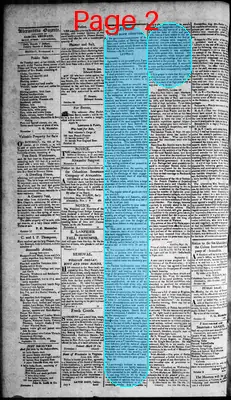
Editorial
November 4, 1816
Alexandria Gazette, Commercial And Political
Alexandria, Virginia
What is this article about?
In Letter II to bank directors, M. Carey critiques the U.S. banking system's role in causing economic distress through excessive discounts followed by sudden withdrawals, leading to speculation, bankruptcies, and widespread ruin in cities post-1815 war. He urges against further curtailment of discounts.
Clipping
OCR Quality
95%
Excellent
Full Text
LETTERS
TO THE BANK DIRECTORS
On the pernicious consequences of the prevailing system of Banking Operations; and on the facility of reducing discounts to any extent, as soon as the Bank of the United States commences business. By M. CAREY.
LETTER II.
GENTLEMEN,
Agreeably to my proposed plan, I proceed to draw an outline of the calamitous state of trade and commerce. The picture shall be a true one. - It is not my fault, if it be heart-rending.
I shall previously cast a retrospective glance at the times that are past & gone. When similar ones are to return, is in the womb of time.
Last year we closed an eventful war, in which every thing dear to nations was at stake. We acquired a large increase of glory--and our character was elevated in the estimation of all the nations of Europe. When the alarms of war had subsided, and blessed peace once more welcomed in the restoration of trade and commerce, we anticipated a series of uninterrupted prosperity and happiness.
For a time our fondest hopes were realized. The whole nation, from the centre to the remotest extremities, exhibited the most glowing scene of happiness that the fondest wish of the most sanguine friend of the country could have desired. A sudden reverse took place, which commenced about twelve months since-and from that period to the present time, a large portion of the inhabitants of our cities have experienced more distress than they suffered during the ravages of a desolating warfare. This lamentable state of things has arisen from the deleterious spirit of speculation and overtrading, to which the extravagant extent of discounts by some of the Banks here and elsewhere gave every facility--from lending money too freely at one period, and withdrawing it too hastily at another.
The leading outlines of our present situation, are as follow :--
1. Remittances from the country, on which a great portion of our citizens depend for the discharge of their engagements, fall miserably short of what they had a right to expect.
2. Western notes, which form a large proportion of the few remittances, received, are at a discount of from 6 to 20 per cent.
3. The regular sales of goods are very slow and dull.
4. Goods, foreign and domestic, when sold at auction, are sacrificed at a loss of from 20 to 45 per cent.
5. It is hardly possible to raise money on real estate of any description.
6. Those who hold bills receivable, intended to meet a discharge of their bills payable, are obliged to prolong the period of payment, from the inability of their debtors to pay, and from the danger of forcing those debtors to stop payment altogether.
7. Thus pent up and shut out from their resources, many of our citizens, beside bank engagements, owe heavily to the government for duties, and to individuals for goods purchased.
8. Money cannot be had of the brokers but at a rate of from 18 to 30 per annum.
9. It is extremely difficult and hardly possible, to procure new discounts at Bank for any note, how solvent soever the drawer and indorser may be. New accommodation notes are absolutely proscribed.
10. Various bankruptcies have taken place: and many persons are "tottering to their fall," and hanging on the very verge of the precipice of bankruptcy.
That this is a correct portraiture in all its items-and that it is susceptible of great amplification, no man at all acquainted with the state of our city, will attempt to deny, without offering gross violence to truth.
In these circumstances, the hope or expectation of making any great reduction of discounts, or diminution of the amount of notes in circulation, is the child of folly or inconsideration: and the attempt to effect it must produce new scenes of ruin of the most disastrous kind. and to a most alarming extent. Should the attempt be continued, I shudder to consider the consequences.
When you have calmly reflected on these various items, and brought them fairly to the test of truth, I appeal to your feelings, to the duty you owe to the public in the high and powerful stations you fill, to decide upon the propriety of the curtailing system pursued for so many months past, which has produced such an abundant harvest of mischief-which has prostrated arts and manufactures-paralyzed industry, sunk the value of almost every species of property--which has laid the middle and lower classes of our citizens at the mercy of the wealthy, and produced the deleterious effect of "making the rich richer, and the poor poorer."
Sept. 21.
*I am strongly inclined to believe- (the declaration is not lightly hazarded) --that the addition made to the amount of bills discounted in the month of June, July, and Aug. 1815, by all the Banks. was at least three millions of dollars. And am likewise of opinion, that very nearly the whole was withdrawn in the four succeeding months. It is impossible to pursue a plan more injurious to morals, prosperity, or happiness. - The vile spirit of speculation, the source of a thousand ills, and the bane of virtue and public spirit. was, as I have stated in the text. fostered as in a hot bed, in the first period-our citizens were tempted to launch out into new enterprizes, to erect machinery, to hire workmen, &c. and as soon as the money thus imprudently lent was fully invested, it was reclaimed.
Ruin, wide spread ruin, followed. The cup of prosperity, which was just applied to the war-parched lips of our citizens was dashed to the ground. Had the reduction been gradual-had it extended to nine months instead of four, the effects would have been comparatively insignificant.
It is proper to state that this picture applies to towns and cities only. The agricultural part of our citizens are generally in a state of as high prosperity as they ever were before.
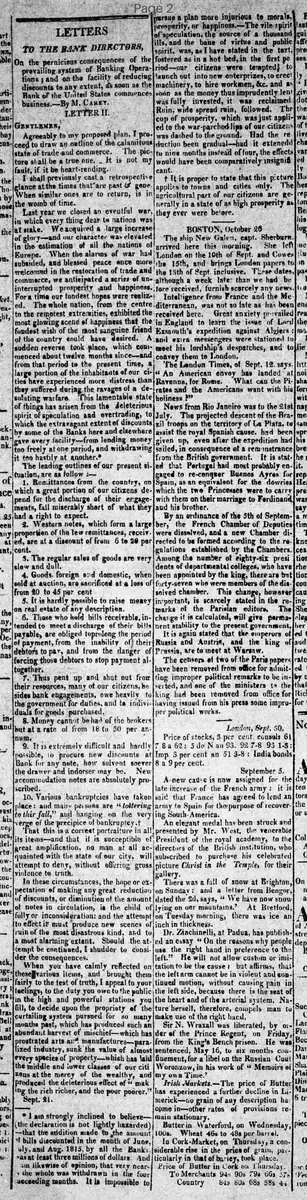
TO THE BANK DIRECTORS
On the pernicious consequences of the prevailing system of Banking Operations; and on the facility of reducing discounts to any extent, as soon as the Bank of the United States commences business. By M. CAREY.
LETTER II.
GENTLEMEN,
Agreeably to my proposed plan, I proceed to draw an outline of the calamitous state of trade and commerce. The picture shall be a true one. - It is not my fault, if it be heart-rending.
I shall previously cast a retrospective glance at the times that are past & gone. When similar ones are to return, is in the womb of time.
Last year we closed an eventful war, in which every thing dear to nations was at stake. We acquired a large increase of glory--and our character was elevated in the estimation of all the nations of Europe. When the alarms of war had subsided, and blessed peace once more welcomed in the restoration of trade and commerce, we anticipated a series of uninterrupted prosperity and happiness.
For a time our fondest hopes were realized. The whole nation, from the centre to the remotest extremities, exhibited the most glowing scene of happiness that the fondest wish of the most sanguine friend of the country could have desired. A sudden reverse took place, which commenced about twelve months since-and from that period to the present time, a large portion of the inhabitants of our cities have experienced more distress than they suffered during the ravages of a desolating warfare. This lamentable state of things has arisen from the deleterious spirit of speculation and overtrading, to which the extravagant extent of discounts by some of the Banks here and elsewhere gave every facility--from lending money too freely at one period, and withdrawing it too hastily at another.
The leading outlines of our present situation, are as follow :--
1. Remittances from the country, on which a great portion of our citizens depend for the discharge of their engagements, fall miserably short of what they had a right to expect.
2. Western notes, which form a large proportion of the few remittances, received, are at a discount of from 6 to 20 per cent.
3. The regular sales of goods are very slow and dull.
4. Goods, foreign and domestic, when sold at auction, are sacrificed at a loss of from 20 to 45 per cent.
5. It is hardly possible to raise money on real estate of any description.
6. Those who hold bills receivable, intended to meet a discharge of their bills payable, are obliged to prolong the period of payment, from the inability of their debtors to pay, and from the danger of forcing those debtors to stop payment altogether.
7. Thus pent up and shut out from their resources, many of our citizens, beside bank engagements, owe heavily to the government for duties, and to individuals for goods purchased.
8. Money cannot be had of the brokers but at a rate of from 18 to 30 per annum.
9. It is extremely difficult and hardly possible, to procure new discounts at Bank for any note, how solvent soever the drawer and indorser may be. New accommodation notes are absolutely proscribed.
10. Various bankruptcies have taken place: and many persons are "tottering to their fall," and hanging on the very verge of the precipice of bankruptcy.
That this is a correct portraiture in all its items-and that it is susceptible of great amplification, no man at all acquainted with the state of our city, will attempt to deny, without offering gross violence to truth.
In these circumstances, the hope or expectation of making any great reduction of discounts, or diminution of the amount of notes in circulation, is the child of folly or inconsideration: and the attempt to effect it must produce new scenes of ruin of the most disastrous kind. and to a most alarming extent. Should the attempt be continued, I shudder to consider the consequences.
When you have calmly reflected on these various items, and brought them fairly to the test of truth, I appeal to your feelings, to the duty you owe to the public in the high and powerful stations you fill, to decide upon the propriety of the curtailing system pursued for so many months past, which has produced such an abundant harvest of mischief-which has prostrated arts and manufactures-paralyzed industry, sunk the value of almost every species of property--which has laid the middle and lower classes of our citizens at the mercy of the wealthy, and produced the deleterious effect of "making the rich richer, and the poor poorer."
Sept. 21.
*I am strongly inclined to believe- (the declaration is not lightly hazarded) --that the addition made to the amount of bills discounted in the month of June, July, and Aug. 1815, by all the Banks. was at least three millions of dollars. And am likewise of opinion, that very nearly the whole was withdrawn in the four succeeding months. It is impossible to pursue a plan more injurious to morals, prosperity, or happiness. - The vile spirit of speculation, the source of a thousand ills, and the bane of virtue and public spirit. was, as I have stated in the text. fostered as in a hot bed, in the first period-our citizens were tempted to launch out into new enterprizes, to erect machinery, to hire workmen, &c. and as soon as the money thus imprudently lent was fully invested, it was reclaimed.
Ruin, wide spread ruin, followed. The cup of prosperity, which was just applied to the war-parched lips of our citizens was dashed to the ground. Had the reduction been gradual-had it extended to nine months instead of four, the effects would have been comparatively insignificant.
It is proper to state that this picture applies to towns and cities only. The agricultural part of our citizens are generally in a state of as high prosperity as they ever were before.
What sub-type of article is it?
Economic Policy
Trade Or Commerce
What keywords are associated?
Banking Operations
Economic Distress
Speculation
Discounts
Trade Commerce
Post War Prosperity
Bank Curtailment
Bankruptcies
What entities or persons were involved?
Bank Directors
Bank Of The United States
M. Carey
Editorial Details
Primary Topic
Critique Of Banking Discounts And Speculation Post War
Stance / Tone
Strongly Critical Of Banking Curtailment And Speculation
Key Figures
Bank Directors
Bank Of The United States
M. Carey
Key Arguments
Excessive Bank Discounts Fueled Speculation And Overtrading
Sudden Withdrawal Of Loans Caused Economic Distress Worse Than War
Current Curtailment Of Discounts Will Lead To Further Ruin
Remittances Short, Western Notes Discounted 6 20%
Sales Slow, Auctions At 20 45% Loss
Difficulty Raising Money On Real Estate
Debtors Unable To Pay, Prolonging Payments
Heavy Debts To Government And Individuals
Broker Money At 18 30% Interest
New Bank Discounts Nearly Impossible
Bankruptcies Occurring, Many On Verge