Thank you for visiting SNEWPapers!
Sign up free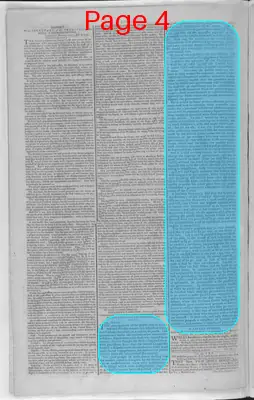
Letter to Editor
February 27, 1790
Gazette Of The United States
New York, New York County, New York
What is this article about?
Letter to Mr. Fenno urges the U.S. government to fully honor Confederation-era debts at promised 6% interest to preserve public faith. Critiques Treasury Secretary's 4% plan as a violation and suggests alternative funding using revenues for redemption.
Clipping
OCR Quality
98%
Excellent
Full Text
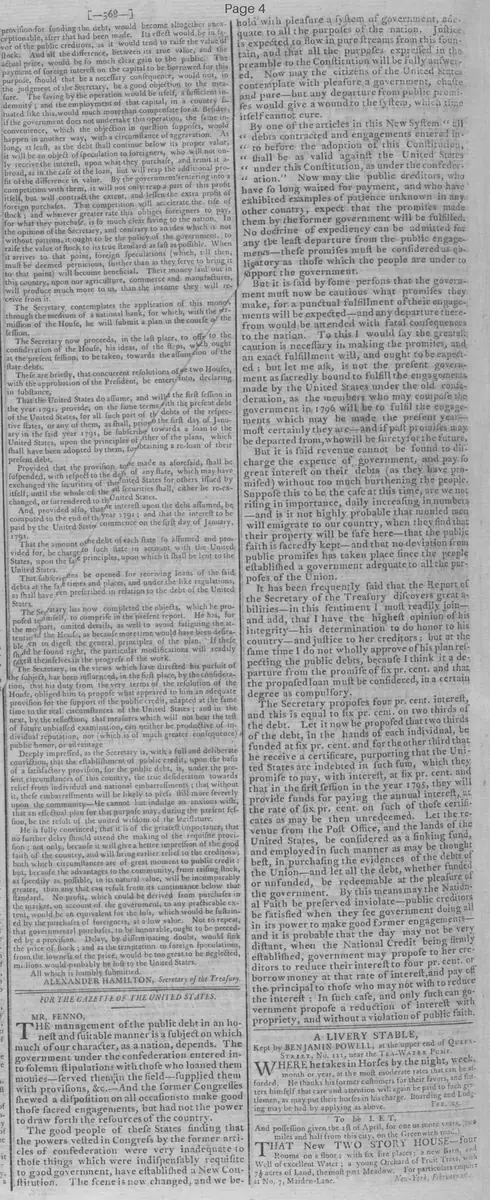
FOR THE GAZETTE OF THE UNITED STATES.
MR. FENNO,
Whether the public debts are funded in a neat and suitable manner is a subject on which much of our character, as a nation, depends. The government under the confederation entered into solemn stipulations with those who loaned them monies—served them in the field—supplied them with provisions, &c.—And the former Congress shewed a disposition on all occasions to make good those sacred engagements, but had not the power to draw forth the resources of the country.
The good people of these States finding that the powers vested in Congress by the former articles of confederation were very inadequate to those things which were indispensably requisite to good government, have established a New Constitution.
The scene is now changed, and we behold with pleasure a system of government, adequate to all the purposes of the nation. Justice is expected to flow in pure streams from this fountain, and that all the purposes expressed in the preamble to the Constitution will be fully answered. Now may the citizens of the United States contemplate with pleasure a government, chaste and pure—but any departure from public promises would give a wound to the system, which time itself cannot cure.
By one of the articles in this New System "all debts contracted and engagements entered into before the adoption of this Constitution, shall be as valid against the United States under this Constitution, as under the confederation." Now may the public creditors, who have so long waited for payment, and who have exhibited examples of patience unknown in any other country, expect that the promises made them by the former government will be fulfilled.
No doctrine of expediency can be admitted for any the least departure from the public engagements—these promises must be considered as obligatory as those which the people are under to support the government.
But it is said by some persons that the government must now be cautious what promises they make, for a punctual fulfillment of their engagements will be expected—and any departure therefrom would be attended with fatal consequences to the nation. To this I would say the greatest caution is necessary in making the promises, and an exact fulfillment will, and ought to be expected; but let me ask, is not the present, government as sacredly bound to fulfill the engagements made by the United States under the old confederation, as the members who may compose the government in 1796 will be to fulfil the engagements which may be made the present year? Most certainly they are—and if past promises may be departed from, who will be surety for the future.
But it is said revenue cannot be found to discharge the expense of government, and pay so great interest on their debts (as they have promised) without too much burdening the people. Suppose this to be the case at this time, are we not rising in importance, daily increasing in numbers—and is it not highly probable that monied men will emigrate to our country, when they find that their property will be safe here—that the public faith is sacredly kept—and that no deviation from public promises has taken place since the people established a government adequate to all the purposes of the Union.
It has been frequently said that the Report of the Secretary of the Treasury discovers great abilities—in this sentiment I most readily join—and add, that I have the highest opinion of his integrity—his determination to do honor to his country—and justice to her creditors; but at the same time I do not wholly approve of his plan respecting the public debts, because I think it a departure from the promise of six pr. cent. and that the proposed loan must be considered, in a certain degree as compulsory.
The Secretary proposes four pr. cent. interest, and this is equal to six pr. cent. on two thirds of the debt. Let it now be proposed that two thirds of the debt, in the hands of each individual, be funded at six pr. cent. and for the other third that he receive a certificate, purporting that the United States are indebted in such sum, which they promise to pay, with interest, at six pr. cent. and that in the first session in the year 1795, they will provide funds for paying the annual interest, at the rate of six pr. cent. on such of those certificates as may be then unredeemed. Let the revenue from the Post Office, and the lands of the United States, be considered as a sinking fund, and employed in such manner as may be thought best, in purchasing the evidences of the debts of the Union—and let all the debt, whether funded or unfunded, be redeemable at the pleasure of the government. By this means may the National Faith be preserved inviolate—public creditors be satisfied when they see government doing all in its power to make good former engagements—and it is probable that the day may not be very distant, when the National Credit being firmly established, government may propose to her creditors to reduce their interest to four pr. cent. or borrow money at that rate of interest, and pay off the interest: In such case, and only such can government propose a reduction of interest with propriety, and without a violation of public faith.
MR. FENNO,
Whether the public debts are funded in a neat and suitable manner is a subject on which much of our character, as a nation, depends. The government under the confederation entered into solemn stipulations with those who loaned them monies—served them in the field—supplied them with provisions, &c.—And the former Congress shewed a disposition on all occasions to make good those sacred engagements, but had not the power to draw forth the resources of the country.
The good people of these States finding that the powers vested in Congress by the former articles of confederation were very inadequate to those things which were indispensably requisite to good government, have established a New Constitution.
The scene is now changed, and we behold with pleasure a system of government, adequate to all the purposes of the nation. Justice is expected to flow in pure streams from this fountain, and that all the purposes expressed in the preamble to the Constitution will be fully answered. Now may the citizens of the United States contemplate with pleasure a government, chaste and pure—but any departure from public promises would give a wound to the system, which time itself cannot cure.
By one of the articles in this New System "all debts contracted and engagements entered into before the adoption of this Constitution, shall be as valid against the United States under this Constitution, as under the confederation." Now may the public creditors, who have so long waited for payment, and who have exhibited examples of patience unknown in any other country, expect that the promises made them by the former government will be fulfilled.
No doctrine of expediency can be admitted for any the least departure from the public engagements—these promises must be considered as obligatory as those which the people are under to support the government.
But it is said by some persons that the government must now be cautious what promises they make, for a punctual fulfillment of their engagements will be expected—and any departure therefrom would be attended with fatal consequences to the nation. To this I would say the greatest caution is necessary in making the promises, and an exact fulfillment will, and ought to be expected; but let me ask, is not the present, government as sacredly bound to fulfill the engagements made by the United States under the old confederation, as the members who may compose the government in 1796 will be to fulfil the engagements which may be made the present year? Most certainly they are—and if past promises may be departed from, who will be surety for the future.
But it is said revenue cannot be found to discharge the expense of government, and pay so great interest on their debts (as they have promised) without too much burdening the people. Suppose this to be the case at this time, are we not rising in importance, daily increasing in numbers—and is it not highly probable that monied men will emigrate to our country, when they find that their property will be safe here—that the public faith is sacredly kept—and that no deviation from public promises has taken place since the people established a government adequate to all the purposes of the Union.
It has been frequently said that the Report of the Secretary of the Treasury discovers great abilities—in this sentiment I most readily join—and add, that I have the highest opinion of his integrity—his determination to do honor to his country—and justice to her creditors; but at the same time I do not wholly approve of his plan respecting the public debts, because I think it a departure from the promise of six pr. cent. and that the proposed loan must be considered, in a certain degree as compulsory.
The Secretary proposes four pr. cent. interest, and this is equal to six pr. cent. on two thirds of the debt. Let it now be proposed that two thirds of the debt, in the hands of each individual, be funded at six pr. cent. and for the other third that he receive a certificate, purporting that the United States are indebted in such sum, which they promise to pay, with interest, at six pr. cent. and that in the first session in the year 1795, they will provide funds for paying the annual interest, at the rate of six pr. cent. on such of those certificates as may be then unredeemed. Let the revenue from the Post Office, and the lands of the United States, be considered as a sinking fund, and employed in such manner as may be thought best, in purchasing the evidences of the debts of the Union—and let all the debt, whether funded or unfunded, be redeemable at the pleasure of the government. By this means may the National Faith be preserved inviolate—public creditors be satisfied when they see government doing all in its power to make good former engagements—and it is probable that the day may not be very distant, when the National Credit being firmly established, government may propose to her creditors to reduce their interest to four pr. cent. or borrow money at that rate of interest, and pay off the interest: In such case, and only such can government propose a reduction of interest with propriety, and without a violation of public faith.
What sub-type of article is it?
Persuasive
Political
Ethical Moral
What themes does it cover?
Economic Policy
Politics
Constitutional Rights
What keywords are associated?
Public Debts
Funding
National Faith
Constitution
Treasury Report
Interest Rates
Confederation Engagements
What entities or persons were involved?
Mr. Fenno
Letter to Editor Details
Recipient
Mr. Fenno
Main Argument
the new u.s. government must strictly honor all public debts and engagements from the confederation era as sacred obligations to maintain national faith and character. it critiques the secretary of the treasury's plan for reducing interest to 4% as a deviation from the promised 6% and proposes funding two-thirds at 6% while using revenues to redeem the rest.
Notable Details
References The U.S. Constitution's Article Validating Prior Debts
Quotes Preamble Purposes
Mentions Secretary Of The Treasury's Report And Integrity
Proposes Use Of Post Office And Lands As Sinking Fund
Suggests Redeemability At Government's Pleasure