Thank you for visiting SNEWPapers!
Sign up free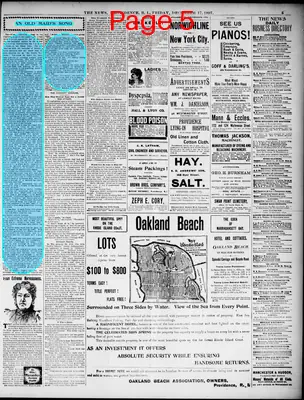
Literary
December 17, 1897
The Providence News
Providence, Providence County, Rhode Island
What is this article about?
In a boarding house, an unassuming old maid stenographer writes anonymous verses about lost love. A visiting singer discovers them, sets them to music, and performs them to acclaim at a concert, bringing her private joy without public recognition.
Clipping
OCR Quality
95%
Excellent
Full Text
AN OLD MAID'S SONG.
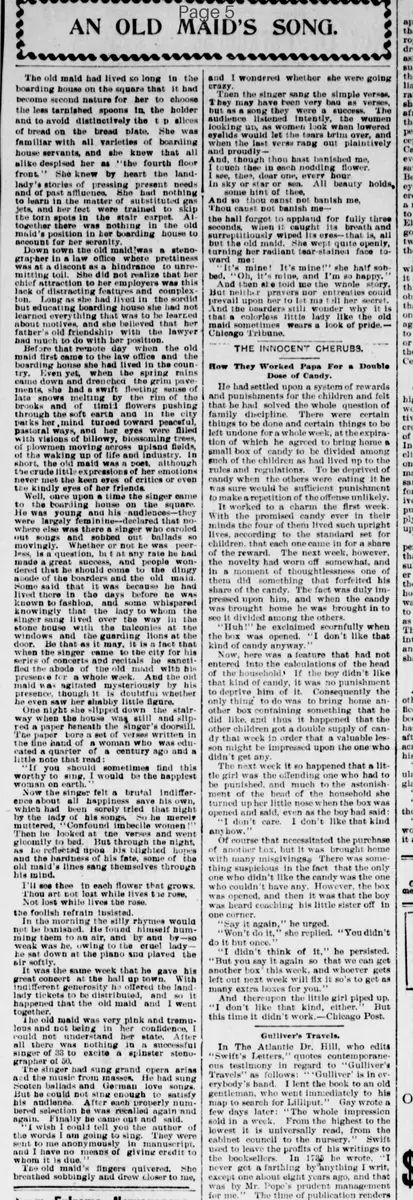
The old maid had lived so long in the boarding house on the square that it had become second nature for her to choose the less tarnished spoons in the holder and to avoid distinctively the top slices of bread on the bread plate. She was familiar with all varieties of boarding house servants, and she knew that all alike despised her as 'the fourth floor front.' She knew by heart the landlady's stories of pressing present needs and of past affluence. She had nothing to learn in the matter of substituted gas jets, and her feet were trained to skip the torn spots in the stair carpet. Altogether there was nothing in the old maid's position in her boarding house to account for her serenity. Down town the old maid was a stenographer in a law office where prettiness was at a discount as a hindrance to unremitting toil. She did not realize that her chief attraction to her employers was this lack of distracting features and complexion. Long as she had lived in the sordid but educating boarding house she had not learned everything that was to be learned about motives, and she believed that her father's old friendship with the lawyer had much to do with her position. Before that remote day when the old maid first came to the law office and the boarding house she had lived in the country. Even yet, when the spring rains came down and drenched the grim pavements, she had a swift fleeting sense of last snows melting by the rim of the brooks and of timid flowers pushing through the soft earth and in the city parks her mind turned toward peaceful, pastoral ways, and her eyes were filled with visions of billowy blossoming trees, of plowmen moving across upland fields, of the waking up of life and industry. In short, the old maid was a poet, although the crude little expressions of her emotions never met the keen eyes of critics or even the kindly eyes of her friends. Well, once upon a time the singer came to the boarding house on the square. He was young and his audiences--they were largely feminine--declared that nowhere else was there a singer who caroled out songs and sobbed out ballads so movingly. Whether or not he was peerless, is a question, but at any rate he had made a great success, and people wondered that he should come to the dingy abode of the boarders and the old maid. Some said that it was because he had lived there in the days before he was known to fashion, and some whispered knowingly that the lady to whom the singer sang lived over the way in the stone house with the balconies at the windows and the guarding lions at the door. Be that as it may, it is a fact that when the singer came to the city for his series of concerts and recitals he sanctified the abode of the old maid with his presence for a whole week. And the old maid was agitated mysteriously by his presence, though it is doubtful whether he even saw her shabby little figure. One night she slipped down the stairway when the house was still and slipped a paper beneath the singer's doorsill. The paper bore a set of verses written in the fine hand of a woman who was educated a quarter of a century ago and a little note that read: "If you should sometimes find this worthy to sing, I would be the happiest woman on earth." Now the singer felt a brutal indifference about all happiness save his own, which had been sorely tried that night by the lady of his songs. So he merely muttered, "Confound imbecile women!" Then he looked at the verses and went gloomily to bed. But through the night, as he reflected upon his blighted hopes and the hardness of his fate, some of the old maid's lines sang themselves through his mind. I'll see thee in each flower that grows. Thou art not lost while lives the rose, Not lost while lives the rose. The foolish refrain insisted. In the morning the silly rhymes would not be banished. He found himself humming them to an air, and by and by--so weak was he, owing to the cruel lady--he sat down at the piano and played the air softly. It was the same week that he gave his great concert at the hall up town. With indifferent generosity he offered the landlady tickets to be distributed, and so it happened that the old maid and I went together. The old maid was very pink and tremulous and not being in her confidence, I could not understand her state. After all there was nothing in a successful singer of 33 to excite a spinster stenographer of 50. The singer had sung grand opera arias and the music from masses. He had sung Scotch ballads and German love songs. But he could not sing enough to satisfy his audience. After each proverbially numbered selection he was recalled again and again. Finally he came out and said, "I wish I could tell you the author of the words I am going to sing. They were sent to me anonymously in manuscript, and I have no means of giving credit to whom it is due." The old maid's fingers quivered. She breathed sobbingly and drew closer to me, and I wondered whether she were going crazy. Then the singer sang the simple verses. They may have been very bad as verses, but as a song they were a success. The audience listened intently, the women looking up, as women look when lowered eyelids would let the tears brim over, and when the last verse rang out plaintively and proudly-- And, though thou hast banished me, I touch thee in each nodding flower. I see thee, dear one, ever hour In sky or star or sea. All beauty holds some hint of thee, And so thou canst not banish me, Thou canst not banish me-- the hall forgot to applaud for fully three seconds, when it caught its breath and surreptitiously wiped its eyes--that is, all but the old maid. She wept quite openly, turning her radiant tear-stained face toward me: "It's mine! It's mine!" she half sobbed. "Oh, it's mine, and I'm so happy." And then she told me the whole story. But neither prayers nor entreaties could prevail upon her to let me tell her secret. And the boarders still wonder why it is that a colorless little lady like the old maid sometimes wears a look of pride.
Chicago Tribune.
The old maid had lived so long in the boarding house on the square that it had become second nature for her to choose the less tarnished spoons in the holder and to avoid distinctively the top slices of bread on the bread plate. She was familiar with all varieties of boarding house servants, and she knew that all alike despised her as 'the fourth floor front.' She knew by heart the landlady's stories of pressing present needs and of past affluence. She had nothing to learn in the matter of substituted gas jets, and her feet were trained to skip the torn spots in the stair carpet. Altogether there was nothing in the old maid's position in her boarding house to account for her serenity. Down town the old maid was a stenographer in a law office where prettiness was at a discount as a hindrance to unremitting toil. She did not realize that her chief attraction to her employers was this lack of distracting features and complexion. Long as she had lived in the sordid but educating boarding house she had not learned everything that was to be learned about motives, and she believed that her father's old friendship with the lawyer had much to do with her position. Before that remote day when the old maid first came to the law office and the boarding house she had lived in the country. Even yet, when the spring rains came down and drenched the grim pavements, she had a swift fleeting sense of last snows melting by the rim of the brooks and of timid flowers pushing through the soft earth and in the city parks her mind turned toward peaceful, pastoral ways, and her eyes were filled with visions of billowy blossoming trees, of plowmen moving across upland fields, of the waking up of life and industry. In short, the old maid was a poet, although the crude little expressions of her emotions never met the keen eyes of critics or even the kindly eyes of her friends. Well, once upon a time the singer came to the boarding house on the square. He was young and his audiences--they were largely feminine--declared that nowhere else was there a singer who caroled out songs and sobbed out ballads so movingly. Whether or not he was peerless, is a question, but at any rate he had made a great success, and people wondered that he should come to the dingy abode of the boarders and the old maid. Some said that it was because he had lived there in the days before he was known to fashion, and some whispered knowingly that the lady to whom the singer sang lived over the way in the stone house with the balconies at the windows and the guarding lions at the door. Be that as it may, it is a fact that when the singer came to the city for his series of concerts and recitals he sanctified the abode of the old maid with his presence for a whole week. And the old maid was agitated mysteriously by his presence, though it is doubtful whether he even saw her shabby little figure. One night she slipped down the stairway when the house was still and slipped a paper beneath the singer's doorsill. The paper bore a set of verses written in the fine hand of a woman who was educated a quarter of a century ago and a little note that read: "If you should sometimes find this worthy to sing, I would be the happiest woman on earth." Now the singer felt a brutal indifference about all happiness save his own, which had been sorely tried that night by the lady of his songs. So he merely muttered, "Confound imbecile women!" Then he looked at the verses and went gloomily to bed. But through the night, as he reflected upon his blighted hopes and the hardness of his fate, some of the old maid's lines sang themselves through his mind. I'll see thee in each flower that grows. Thou art not lost while lives the rose, Not lost while lives the rose. The foolish refrain insisted. In the morning the silly rhymes would not be banished. He found himself humming them to an air, and by and by--so weak was he, owing to the cruel lady--he sat down at the piano and played the air softly. It was the same week that he gave his great concert at the hall up town. With indifferent generosity he offered the landlady tickets to be distributed, and so it happened that the old maid and I went together. The old maid was very pink and tremulous and not being in her confidence, I could not understand her state. After all there was nothing in a successful singer of 33 to excite a spinster stenographer of 50. The singer had sung grand opera arias and the music from masses. He had sung Scotch ballads and German love songs. But he could not sing enough to satisfy his audience. After each proverbially numbered selection he was recalled again and again. Finally he came out and said, "I wish I could tell you the author of the words I am going to sing. They were sent to me anonymously in manuscript, and I have no means of giving credit to whom it is due." The old maid's fingers quivered. She breathed sobbingly and drew closer to me, and I wondered whether she were going crazy. Then the singer sang the simple verses. They may have been very bad as verses, but as a song they were a success. The audience listened intently, the women looking up, as women look when lowered eyelids would let the tears brim over, and when the last verse rang out plaintively and proudly-- And, though thou hast banished me, I touch thee in each nodding flower. I see thee, dear one, ever hour In sky or star or sea. All beauty holds some hint of thee, And so thou canst not banish me, Thou canst not banish me-- the hall forgot to applaud for fully three seconds, when it caught its breath and surreptitiously wiped its eyes--that is, all but the old maid. She wept quite openly, turning her radiant tear-stained face toward me: "It's mine! It's mine!" she half sobbed. "Oh, it's mine, and I'm so happy." And then she told me the whole story. But neither prayers nor entreaties could prevail upon her to let me tell her secret. And the boarders still wonder why it is that a colorless little lady like the old maid sometimes wears a look of pride.
Chicago Tribune.
What sub-type of article is it?
Prose Fiction
What themes does it cover?
Love Romance
Social Manners
What keywords are associated?
Old Maid
Boarding House
Singer
Poetry
Love Song
Stenographer
Secret Success
Literary Details
Title
An Old Maid's Song.
Key Lines
I'll See Thee In Each Flower That Grows. Thou Art Not Lost While Lives The Rose, Not Lost While Lives The Rose.
And, Though Thou Hast Banished Me, I Touch Thee In Each Nodding Flower. I See Thee, Dear One, Ever Hour In Sky Or Star Or Sea. All Beauty Holds Some Hint Of Thee, And So Thou Canst Not Banish Me, Thou Canst Not Banish Me