Thank you for visiting SNEWPapers!
Sign up free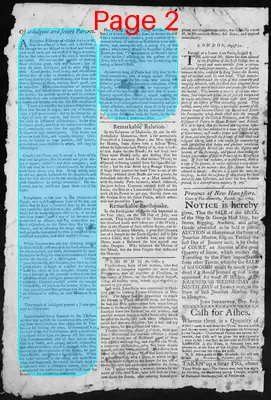
Literary
January 4, 1765
The New Hampshire Gazette And Historical Chronicle
Portsmouth, Greenland, Rockingham County, New Hampshire
What is this article about?
Moral essay on the religious and ethical duties of parents and children, advocating kindness over severity. Illustrated by historical anecdotes of indulgent parents (Charles the Great, Syrophanes, Socrates) and severe ones (Epaminondas, Herod, Artaxerxes), warning against extremes that provoke disobedience or tragedy.
Clipping
OCR Quality
98%
Excellent
Full Text
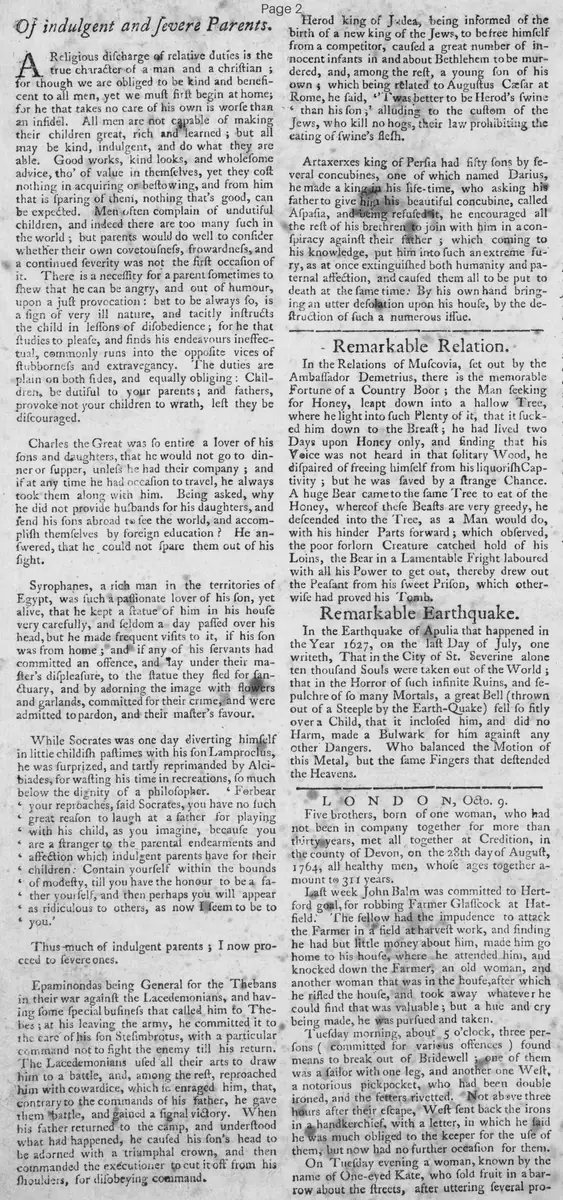
Of indulgent and severe Parents.
Religious discharge of relative duties is the true character of a man and a Christian; for though we are obliged to be kind and beneficent to all men, yet we must first begin at home; for he that takes no care of his own is worse than an infidel. All men are not capable of making their children great, rich and learned; but all may be kind, indulgent, and do what they are able. Good works, kind looks, and wholesome advice, tho' of value in themselves, yet they cost nothing in acquiring or bestowing, and from him that is sparing of them, nothing that's good, can be expected. Men often complain of undutiful children, and indeed there are too many such in the world; but parents would do well to consider whether their own covetousness, frowardness, and a continued severity was not the first occasion of it. There is a necessity for a parent sometimes to shew that he can be angry, and out of humour, upon a just provocation: but to be always so, is a sign of very ill nature, and tacitly instructs the child in lessons of disobedience; for he that studies to please, and finds his endeavours ineffectual, commonly runs into the opposite vices of stubbornness and extravagancy. The duties are plain on both sides, and equally obliging: Children, be dutiful to your parents; and fathers, provoke not your children to wrath, lest they be discouraged.
Charles the Great was so entire a lover of his sons and daughters, that he would not go to dinner or supper, unless he had their company; and if at any time he had occasion to travel, he always took them along with him. Being asked, why he did not provide husbands for his daughters, and send his sons abroad to see the world, and accomplish themselves by foreign education? He answered, that he could not spare them out of his sight.
Syrophanes, a rich man in the territories of Egypt, was such a passionate lover of his son, yet alive, that he kept a statue of him in his house very carefully, and seldom a day passed over his head, but he made frequent visits to it, if his son was from home; and if any of his servants had committed an offence, and lay under their master's displeasure, to the statue they fled for sanctuary, and by adorning the image with flowers and garlands, atoned for their crime, and were admitted to pardon, and their master's favour.
While Socrates was one day diverting himself in little childish pastimes with his son Lamproclus, he was surprised, and tartly reprimanded by Alcibiades, for wasting his time in recreations so much below the dignity of a philosopher. Forbear your reproaches, said Socrates, you have no such great reason to laugh at a father for playing with his child, as you imagine, because you are a stranger to the parental endearments and affection which indulgent parents have for their children: Contain yourself within the bounds of modesty, till you have the honour to be a father yourself, and then perhaps you will appear as ridiculous to others, as now I seem to be to you.
Thus much of indulgent parents; I now proceed to severe ones.
Epaminondas being General for the Thebans in their war against the Lacedemonians, and having some special business that called him to Thebes; at his leaving the army, he committed it to the care of his son Steimbrotus, with a particular command not to fight the enemy till his return. The Lacedemonians used all their arts to draw him to a battle, and, among the rest, reproached him with cowardice, which so enraged him, that, contrary to the commands of his father, he gave them battle, and gained a signal victory. When his father returned to the camp, and understood what had happened, he caused his son's head to be adorned with a triumphal crown, and then commanded the executioner to cut it off from his shoulders, for disobeying command.
Herod king of Judea being informed of the birth of a new king of the Jews, to free himself from a competitor, caused a great number of innocent infants in and about Bethlehem to be murdered, and, among the rest, a young son of his own; which being related to Augustus Caesar at Rome, he said, "Twas better to be Herod's swine than his son: alluding to the custom of the Jews, who kill no hogs, their law prohibiting the eating of swine's flesh.
Artaxerxes king of Persia had fifty sons by several concubines, one of which named Darius, he made a king in his life-time. who asking his father to give him his beautiful concubine, called Aspasia, and being refused it. he encouraged all the rest of his brethren to join with him in a conspiracy against their father; which coming to his knowledge, put him into such an extreme fury, as at once extinguished both humanity and paternal affection, and caused them all to be put to death at the same time: By his own hand bringing an utter desolation upon his house, by the destruction of such a numerous issue.
Religious discharge of relative duties is the true character of a man and a Christian; for though we are obliged to be kind and beneficent to all men, yet we must first begin at home; for he that takes no care of his own is worse than an infidel. All men are not capable of making their children great, rich and learned; but all may be kind, indulgent, and do what they are able. Good works, kind looks, and wholesome advice, tho' of value in themselves, yet they cost nothing in acquiring or bestowing, and from him that is sparing of them, nothing that's good, can be expected. Men often complain of undutiful children, and indeed there are too many such in the world; but parents would do well to consider whether their own covetousness, frowardness, and a continued severity was not the first occasion of it. There is a necessity for a parent sometimes to shew that he can be angry, and out of humour, upon a just provocation: but to be always so, is a sign of very ill nature, and tacitly instructs the child in lessons of disobedience; for he that studies to please, and finds his endeavours ineffectual, commonly runs into the opposite vices of stubbornness and extravagancy. The duties are plain on both sides, and equally obliging: Children, be dutiful to your parents; and fathers, provoke not your children to wrath, lest they be discouraged.
Charles the Great was so entire a lover of his sons and daughters, that he would not go to dinner or supper, unless he had their company; and if at any time he had occasion to travel, he always took them along with him. Being asked, why he did not provide husbands for his daughters, and send his sons abroad to see the world, and accomplish themselves by foreign education? He answered, that he could not spare them out of his sight.
Syrophanes, a rich man in the territories of Egypt, was such a passionate lover of his son, yet alive, that he kept a statue of him in his house very carefully, and seldom a day passed over his head, but he made frequent visits to it, if his son was from home; and if any of his servants had committed an offence, and lay under their master's displeasure, to the statue they fled for sanctuary, and by adorning the image with flowers and garlands, atoned for their crime, and were admitted to pardon, and their master's favour.
While Socrates was one day diverting himself in little childish pastimes with his son Lamproclus, he was surprised, and tartly reprimanded by Alcibiades, for wasting his time in recreations so much below the dignity of a philosopher. Forbear your reproaches, said Socrates, you have no such great reason to laugh at a father for playing with his child, as you imagine, because you are a stranger to the parental endearments and affection which indulgent parents have for their children: Contain yourself within the bounds of modesty, till you have the honour to be a father yourself, and then perhaps you will appear as ridiculous to others, as now I seem to be to you.
Thus much of indulgent parents; I now proceed to severe ones.
Epaminondas being General for the Thebans in their war against the Lacedemonians, and having some special business that called him to Thebes; at his leaving the army, he committed it to the care of his son Steimbrotus, with a particular command not to fight the enemy till his return. The Lacedemonians used all their arts to draw him to a battle, and, among the rest, reproached him with cowardice, which so enraged him, that, contrary to the commands of his father, he gave them battle, and gained a signal victory. When his father returned to the camp, and understood what had happened, he caused his son's head to be adorned with a triumphal crown, and then commanded the executioner to cut it off from his shoulders, for disobeying command.
Herod king of Judea being informed of the birth of a new king of the Jews, to free himself from a competitor, caused a great number of innocent infants in and about Bethlehem to be murdered, and, among the rest, a young son of his own; which being related to Augustus Caesar at Rome, he said, "Twas better to be Herod's swine than his son: alluding to the custom of the Jews, who kill no hogs, their law prohibiting the eating of swine's flesh.
Artaxerxes king of Persia had fifty sons by several concubines, one of which named Darius, he made a king in his life-time. who asking his father to give him his beautiful concubine, called Aspasia, and being refused it. he encouraged all the rest of his brethren to join with him in a conspiracy against their father; which coming to his knowledge, put him into such an extreme fury, as at once extinguished both humanity and paternal affection, and caused them all to be put to death at the same time: By his own hand bringing an utter desolation upon his house, by the destruction of such a numerous issue.
What sub-type of article is it?
Essay
What themes does it cover?
Moral Virtue
Religious
What keywords are associated?
Parental Duties
Indulgent Parents
Severe Parents
Historical Anecdotes
Moral Instruction
Family Obligations
Christian Virtues
Literary Details
Title
Of Indulgent And Severe Parents.
Form / Style
Moral Essay With Historical Exempla
Key Lines
Children, Be Dutiful To Your Parents; And Fathers, Provoke Not Your Children To Wrath, Lest They Be Discouraged.
Forbear Your Reproaches, Said Socrates, You Have No Such Great Reason To Laugh At A Father For Playing With His Child, As You Imagine, Because You Are A Stranger To The Parental Endearments And Affection Which Indulgent Parents Have For Their Children: Contain Yourself Within The Bounds Of Modesty, Till You Have The Honour To Be A Father Yourself, And Then Perhaps You Will Appear As Ridiculous To Others, As Now I Seem To Be To You.
Twas Better To Be Herod's Swine Than His Son: Alluding To The Custom Of The Jews, Who Kill No Hogs, Their Law Prohibiting The Eating Of Swine's Flesh.