Thank you for visiting SNEWPapers!
Sign up free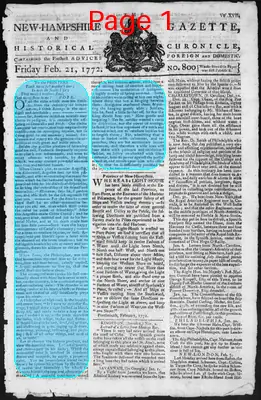
Letter to Editor
February 21, 1772
The New Hampshire Gazette And Historical Chronicle
Portsmouth, Greenland, Rockingham County, New Hampshire
What is this article about?
Philosophical essay to printers decrying revenge as a cowardly vice and promoting mercy and forgiveness as marks of greatness, with examples from Augustus's pardon of Cinna and Zeno's calm response to slander.
Clipping
OCR Quality
95%
Excellent
Full Text
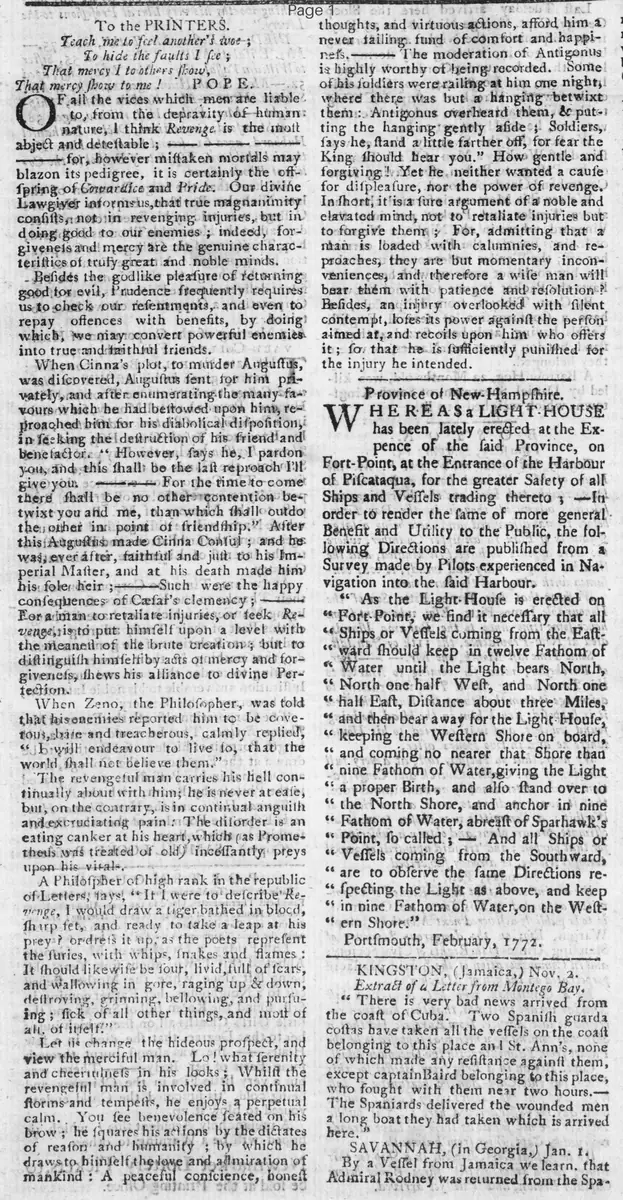
To the PRINTERS.
Teach me to feel another's woe,
To hide the faults I see:
That mercy I to others show,
That mercy show to me! POPE.
Of all the vices which impair human nature, I think Revenge is the most abject and detestable: For however mistaken mortals may blazon its pedigree, it is certainly the offspring of Cowardice and Pride. Our divine Lawgiver informs us, that true magnanimity consists not in revenging injuries, but in doing good to our enemies: Indeed forgiveness and mercy are the genuine characteristics of truly great and noble minds.
Besides the godlike pleasure of returning good for evil, Prudence frequently requires us to check our resentments, and even to repay offences with benefits, by doing which we may convert powerful enemies into truer and faithful friends.
When Cinna's plot to murder Augustus was discovered, Augustus sent for him privately, and after enumerating the many favours which he had bestowed upon him, reproached him for his diabolical disposition in seeking the destruction of his friend and benefactor. "However, says he, I pardon you, and this shall be the last reproach I'll give you:--From the time to come, there shall be no other contention between you and me, than which shall outdo the other in points of friendship." After this Augustus made Cinna Consul: and he was ever after faithful and just to his Imperial Master, and at his death made him his sole heir. Such were the happy consequences of Caesar's clemency.
For a man to retaliate injuries, or seek Revenge, is to put himself upon a level with the meanest of the brute creation; but to distinguish himself by acts of mercy and forgiveness, shows his alliance to divine Perfection.
When Zeno, the Philosopher, was told that his enemies reported him to be covetous, saucy and treacherous, calmly replied, "I will endeavour to live so, that the world shall not believe them."
The revengeful man carries his hell continually about with him: he is never at ease, but, on the contrary, is in continual anguish and excruciating pain: The disorder is an eating canker at his heart, which (as Prometheus was treated of old) incessantly preys upon his vitals.
A Philosopher of high rank in the republic of Letters, says "If I were to describe Revenge, I would draw a tiger bathed in blood, thirst yet, and ready to take a leap at his prey; or dress it up, as the poets represent the furies, with whips, snakes and flames: It should likewise be sour, livid, full of scars, and wallowing in gore, raging up & down, destroying, grinning, bellowing, and pursuing; sick of all other things, and most of all, of itself!"
Let us change the hideous prospect, and view the merciful man. Lo! what serenity and cheerfulness in his looks: Whilst the revengeful man is involved in continual storms and tempests, he enjoys a perpetual calm. You see benevolence seated on his brow: he squares his actions by the dictates of reason and humanity; by which he draws to himself the love and admiration of mankind: A peaceful conscience, honest
Teach me to feel another's woe,
To hide the faults I see:
That mercy I to others show,
That mercy show to me! POPE.
Of all the vices which impair human nature, I think Revenge is the most abject and detestable: For however mistaken mortals may blazon its pedigree, it is certainly the offspring of Cowardice and Pride. Our divine Lawgiver informs us, that true magnanimity consists not in revenging injuries, but in doing good to our enemies: Indeed forgiveness and mercy are the genuine characteristics of truly great and noble minds.
Besides the godlike pleasure of returning good for evil, Prudence frequently requires us to check our resentments, and even to repay offences with benefits, by doing which we may convert powerful enemies into truer and faithful friends.
When Cinna's plot to murder Augustus was discovered, Augustus sent for him privately, and after enumerating the many favours which he had bestowed upon him, reproached him for his diabolical disposition in seeking the destruction of his friend and benefactor. "However, says he, I pardon you, and this shall be the last reproach I'll give you:--From the time to come, there shall be no other contention between you and me, than which shall outdo the other in points of friendship." After this Augustus made Cinna Consul: and he was ever after faithful and just to his Imperial Master, and at his death made him his sole heir. Such were the happy consequences of Caesar's clemency.
For a man to retaliate injuries, or seek Revenge, is to put himself upon a level with the meanest of the brute creation; but to distinguish himself by acts of mercy and forgiveness, shows his alliance to divine Perfection.
When Zeno, the Philosopher, was told that his enemies reported him to be covetous, saucy and treacherous, calmly replied, "I will endeavour to live so, that the world shall not believe them."
The revengeful man carries his hell continually about with him: he is never at ease, but, on the contrary, is in continual anguish and excruciating pain: The disorder is an eating canker at his heart, which (as Prometheus was treated of old) incessantly preys upon his vitals.
A Philosopher of high rank in the republic of Letters, says "If I were to describe Revenge, I would draw a tiger bathed in blood, thirst yet, and ready to take a leap at his prey; or dress it up, as the poets represent the furies, with whips, snakes and flames: It should likewise be sour, livid, full of scars, and wallowing in gore, raging up & down, destroying, grinning, bellowing, and pursuing; sick of all other things, and most of all, of itself!"
Let us change the hideous prospect, and view the merciful man. Lo! what serenity and cheerfulness in his looks: Whilst the revengeful man is involved in continual storms and tempests, he enjoys a perpetual calm. You see benevolence seated on his brow: he squares his actions by the dictates of reason and humanity; by which he draws to himself the love and admiration of mankind: A peaceful conscience, honest
What sub-type of article is it?
Ethical Moral
Philosophical
Reflective
What themes does it cover?
Morality
What keywords are associated?
Revenge
Forgiveness
Mercy
Clemency
Augustus
Cinna
Zeno
Morality
What entities or persons were involved?
To The Printers.
Letter to Editor Details
Recipient
To The Printers.
Main Argument
revenge is the most abject and detestable vice, offspring of cowardice and pride; true magnanimity consists in forgiveness and mercy, as taught by divine law and exemplified by augustus's clemency toward cinna, converting an enemy into a faithful friend.
Notable Details
Quotes Pope On Feeling Another's Woe And Mercy
References Augustus Pardoning Cinna After A Murder Plot, Making Him Consul
Zeno's Response To Enemies' Reports
Philosopher's Vivid Description Of Revenge As A Bloodied Tiger Or Fury
Contrast Between Revengeful Man's Hellish Anguish And Merciful Man's Serene Benevolence