Thank you for visiting SNEWPapers!
Sign up free
Literary
January 12, 1835
Lynchburg Virginian
Lynchburg, Virginia
What is this article about?
Edward Everett's patriotic speech extract contrasts Marquis de Lafayette's steadfast commitment to liberty with Napoleon's tyrannical power, praising Lafayette's honorable retirement at La Grange over Napoleon's imperial splendor, urging the audience to value freedom over servitude.
Clipping
OCR Quality
95%
Excellent
Full Text
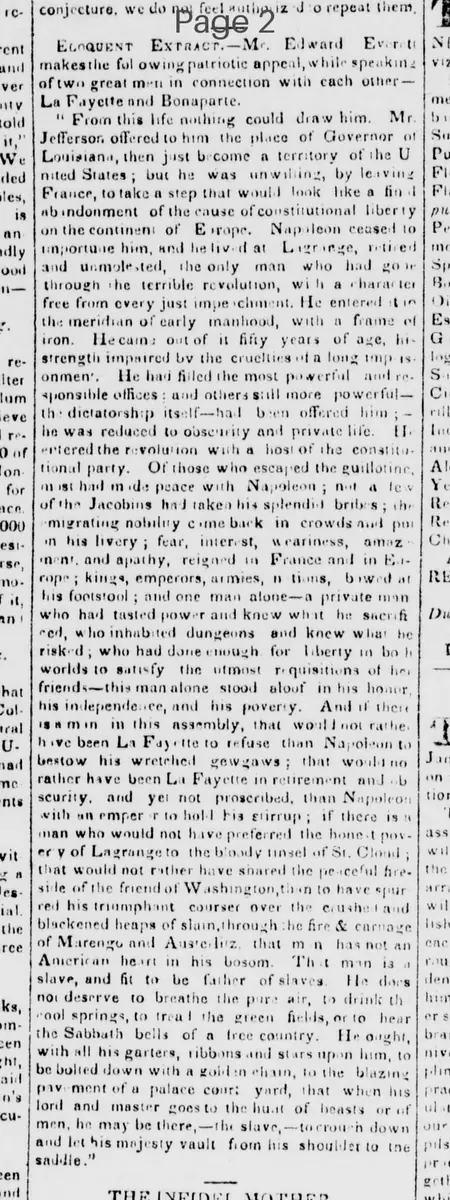
Eloquent Extract.-Mr. Edward Everett makes the following patriotic appeal, while speaking of two great men in connection with each other- La Fayette and Bonaparte.
"From this life nothing could draw him. Mr. Jefferson offered to him the place of Governor of Louisiana, then just become a territory of the United States; but he was unwilling, by leaving France, to take a step that would look like a final abandonment of the cause of constitutional liberty on the continent of Europe. Napoleon ceased to importune him, and he lived at La Grange, retired and unmolested, the only man who had gone through the terrible revolution, with a character free from every just impeachment. He entered the revolution in the meridian of early manhood, with a frame of iron. He came out of it fifty years of age, his strength impaired by the cruelties of a long imprisonment. He had filled the most powerful and responsible offices: and others still more powerful- the dictatorship itself-had been offered him;- he was reduced to obscurity and private life. He entered the revolution with a host of the constitutional party. Of those who escaped the guillotine most had made peace with Napoleon; not a test of the Jacobins had taken his splendid bribes; the emigrant nobility came back in crowds and put on his livery; fear, interest, weariness, amazement, and apathy, reigned in France and in Europe; kings, emperors, armies, nations, bowed at his footstool; and one man alone-a private man who had tasted power and knew what he sacrificed, who had inhabited dungeons and knew what he risked; who had done enough for liberty in both worlds to satisfy the utmost requisitions of his friends-this man alone stood aloof in his honor his independence, and his poverty. And if there is a man in this assembly, that would rather have been La Fayette to refuse than Napoleon to bestow his wretched gewgaws: that would rather have been La Fayette in retirement and obscurity, and yet not proscribed, than Napoleon with an emperor to hold his stirrup; if there is a man who would not have preferred the honest poverty of La Grange to the bloody splendor of St. Cloud; that would not rather have shared the peaceful fireside of the friend of Washington, than to have spurred his triumphant courser over the crushed and blackened heaps of slain, through the fire & carnage of Marengo and Austerlitz, that man has not an American heart in his bosom. That man is a slave, and fit to be father of slaves He does not deserve to breathe the pure air, to drink the cool springs, to tread the green fields, or to hear the Sabbath bells of a free country. He ought, with all his garters, ribbons and stars upon him, to be bolted down with a golden chain, to the blazing pavement of a palace court yard, that when his lord and master goes to the hunt of beasts or of men, he may be there,-the slave,-to crouch down and let his majesty vault from his shoulder to the saddle."
"From this life nothing could draw him. Mr. Jefferson offered to him the place of Governor of Louisiana, then just become a territory of the United States; but he was unwilling, by leaving France, to take a step that would look like a final abandonment of the cause of constitutional liberty on the continent of Europe. Napoleon ceased to importune him, and he lived at La Grange, retired and unmolested, the only man who had gone through the terrible revolution, with a character free from every just impeachment. He entered the revolution in the meridian of early manhood, with a frame of iron. He came out of it fifty years of age, his strength impaired by the cruelties of a long imprisonment. He had filled the most powerful and responsible offices: and others still more powerful- the dictatorship itself-had been offered him;- he was reduced to obscurity and private life. He entered the revolution with a host of the constitutional party. Of those who escaped the guillotine most had made peace with Napoleon; not a test of the Jacobins had taken his splendid bribes; the emigrant nobility came back in crowds and put on his livery; fear, interest, weariness, amazement, and apathy, reigned in France and in Europe; kings, emperors, armies, nations, bowed at his footstool; and one man alone-a private man who had tasted power and knew what he sacrificed, who had inhabited dungeons and knew what he risked; who had done enough for liberty in both worlds to satisfy the utmost requisitions of his friends-this man alone stood aloof in his honor his independence, and his poverty. And if there is a man in this assembly, that would rather have been La Fayette to refuse than Napoleon to bestow his wretched gewgaws: that would rather have been La Fayette in retirement and obscurity, and yet not proscribed, than Napoleon with an emperor to hold his stirrup; if there is a man who would not have preferred the honest poverty of La Grange to the bloody splendor of St. Cloud; that would not rather have shared the peaceful fireside of the friend of Washington, than to have spurred his triumphant courser over the crushed and blackened heaps of slain, through the fire & carnage of Marengo and Austerlitz, that man has not an American heart in his bosom. That man is a slave, and fit to be father of slaves He does not deserve to breathe the pure air, to drink the cool springs, to tread the green fields, or to hear the Sabbath bells of a free country. He ought, with all his garters, ribbons and stars upon him, to be bolted down with a golden chain, to the blazing pavement of a palace court yard, that when his lord and master goes to the hunt of beasts or of men, he may be there,-the slave,-to crouch down and let his majesty vault from his shoulder to the saddle."
What sub-type of article is it?
Essay
Satire
What themes does it cover?
Liberty Freedom
Patriotism
Political
What keywords are associated?
Lafayette
Napoleon
Liberty
Patriotism
Honor
Revolution
France
Constitutional Liberty
What entities or persons were involved?
Mr. Edward Everett
Literary Details
Title
Eloquent Extract
Author
Mr. Edward Everett
Subject
Patriotic Appeal Comparing La Fayette And Bonaparte
Key Lines
He Lived At La Grange, Retired And Unmolested, The Only Man Who Had Gone Through The Terrible Revolution, With A Character Free From Every Just Impeachment.
And If There Is A Man In This Assembly, That Would Rather Have Been La Fayette To Refuse Than Napoleon To Bestow His Wretched Gewgaws:
That Would Not Rather Have Shared The Peaceful Fireside Of The Friend Of Washington, Than To Have Spurred His Triumphant Courser Over The Crushed And Blackened Heaps Of Slain, Through The Fire & Carnage Of Marengo And Austerlitz,
That Man Is A Slave, And Fit To Be Father Of Slaves He Does Not Deserve To Breathe The Pure Air, To Drink The Cool Springs, To Tread The Green Fields, Or To Hear The Sabbath Bells Of A Free Country.