Thank you for visiting SNEWPapers!
Sign up free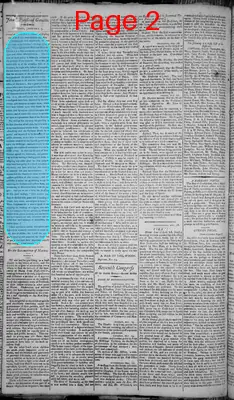
Editorial
January 3, 1803
Jenks' Portland Gazette. Maine Advertiser
Portland, Cumberland County, Maine
What is this article about?
An extract of a letter critiquing President Jefferson's 1802 message to Congress, attributing revenue success to prior administrations, highlighting omissions about Spanish restrictions on the Mississippi and New Orleans, and attacking Jefferson's religious practices and association with Thomas Paine.
Clipping
OCR Quality
96%
Excellent
Full Text
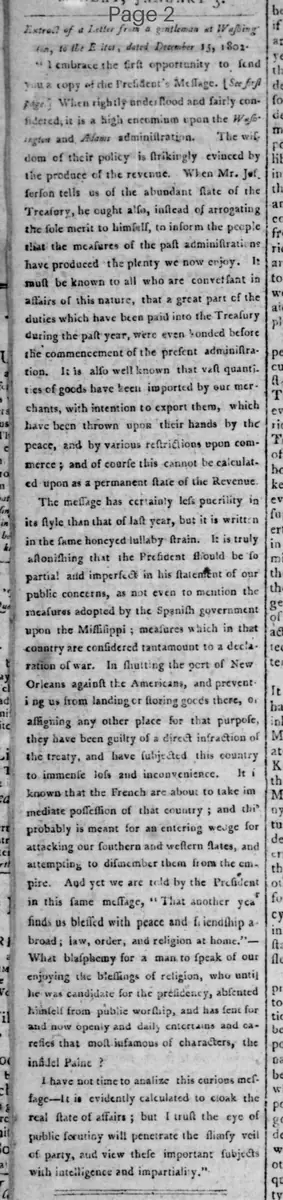
Extract of a Letter from a gentleman at Washington, to the Editor, dated December 15, 1802—
I embrace the first opportunity to send you a copy of the President's Message. [See page ...]
When rightly understood and fairly considered, it is a high encomium upon the Washington and Adams administration. The wisdom of their policy is strikingly evinced by the produce of the revenue. When Mr. Jefferson tells us of the abundant state of the Treasury, he ought also, instead of arrogating the whole merit to himself, to inform the people that the measures of the past administrations have produced the plenty we now enjoy. It must be known to all who are conversant in affairs of this nature, that a great part of the duties which have been paid into the Treasury during the past year, were even bonded before the commencement of the present administration. It is also well known that vast quantities of goods have been imported by our merchants, with intention to export them, which have been thrown upon their hands by the peace, and by various restrictions upon commerce; and of course this cannot be calculated upon as a permanent state of the Revenue.
The message has certainly less puerility in its style than that of last year, but it is written in the same honeyed lullaby strain. It is truly astonishing that the President should be so partial and imperfect in his statement of our public concerns, as not even to mention the measures adopted by the Spanish government upon the Mississippi; measures which in that country are considered tantamount to a declaration of war. In shutting the port of New Orleans against the Americans, and preventing us from landing or storing goods there, assigning any other place for that purpose, they have been guilty of a direct infraction of the treaty, and have subjected this country to immense loss and inconvenience. It is known that the French are about to take immediate possession of that country; and this probably is meant for an entering wedge or attacking our southern and western States, and attempting to dismember them from the empire. And yet we are told by the President in this same message, "That another year finds us blessed with peace and friendship abroad; law, order, and religion at home."—
What blasphemy for a man to speak of our enjoying the blessings of religion, who until he was candidate for the presidency, absented himself from public worship, and has sent for and now openly and daily entertains and caresses that most infamous of characters, the infidel Paine?
I have not time to analyze this curious message—It is evidently calculated to cloak the real state of affairs; but I trust the eye of public scrutiny will penetrate the limy veil of party, and view these important subjects with intelligence and impartiality.
I embrace the first opportunity to send you a copy of the President's Message. [See page ...]
When rightly understood and fairly considered, it is a high encomium upon the Washington and Adams administration. The wisdom of their policy is strikingly evinced by the produce of the revenue. When Mr. Jefferson tells us of the abundant state of the Treasury, he ought also, instead of arrogating the whole merit to himself, to inform the people that the measures of the past administrations have produced the plenty we now enjoy. It must be known to all who are conversant in affairs of this nature, that a great part of the duties which have been paid into the Treasury during the past year, were even bonded before the commencement of the present administration. It is also well known that vast quantities of goods have been imported by our merchants, with intention to export them, which have been thrown upon their hands by the peace, and by various restrictions upon commerce; and of course this cannot be calculated upon as a permanent state of the Revenue.
The message has certainly less puerility in its style than that of last year, but it is written in the same honeyed lullaby strain. It is truly astonishing that the President should be so partial and imperfect in his statement of our public concerns, as not even to mention the measures adopted by the Spanish government upon the Mississippi; measures which in that country are considered tantamount to a declaration of war. In shutting the port of New Orleans against the Americans, and preventing us from landing or storing goods there, assigning any other place for that purpose, they have been guilty of a direct infraction of the treaty, and have subjected this country to immense loss and inconvenience. It is known that the French are about to take immediate possession of that country; and this probably is meant for an entering wedge or attacking our southern and western States, and attempting to dismember them from the empire. And yet we are told by the President in this same message, "That another year finds us blessed with peace and friendship abroad; law, order, and religion at home."—
What blasphemy for a man to speak of our enjoying the blessings of religion, who until he was candidate for the presidency, absented himself from public worship, and has sent for and now openly and daily entertains and caresses that most infamous of characters, the infidel Paine?
I have not time to analyze this curious message—It is evidently calculated to cloak the real state of affairs; but I trust the eye of public scrutiny will penetrate the limy veil of party, and view these important subjects with intelligence and impartiality.
What sub-type of article is it?
Partisan Politics
Foreign Affairs
Moral Or Religious
What keywords are associated?
Jefferson Message
Revenue Policy
Mississippi River
New Orleans Port
Thomas Paine
Partisan Critique
Spanish Treaty Violation
French Louisiana
What entities or persons were involved?
Jefferson
Washington
Adams
Spanish Government
French
Thomas Paine
Editorial Details
Primary Topic
Critique Of Jefferson's 1802 Presidential Message
Stance / Tone
Strongly Critical Of Jefferson, Praising Washington And Adams Administrations
Key Figures
Jefferson
Washington
Adams
Spanish Government
French
Thomas Paine
Key Arguments
Revenue Abundance Results From Policies Of Washington And Adams Administrations, Not Jefferson's
Jefferson Omits Mention Of Spanish Measures On Mississippi, Seen As Near Declaration Of War
Spanish Closure Of New Orleans Port Violates Treaty, Causing Loss To Americans
French Impending Possession Of Louisiana Threatens Dismemberment Of Southern And Western States
Jefferson Hypocritically Claims Blessings Of Religion Despite His Absence From Worship And Entertaining Infidel Paine
Message Cloaks True State Of Affairs With Partial And Imperfect Statements