Thank you for visiting SNEWPapers!
Sign up free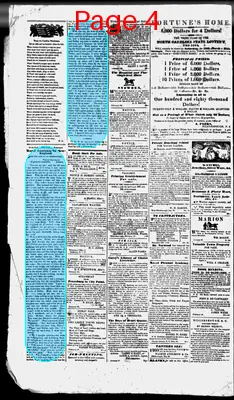
Literary
March 18, 1836
The Hillsborough Recorder
Hillsboro, Orange County, North Carolina
What is this article about?
An octogenarian narrates his rustic courtship in New England, describing how he married Debby, a plain but virtuous and hardworking young woman who joined his family, ultimately won by her irresistible goodness despite initial indifference.
Clipping
OCR Quality
95%
Excellent
Full Text
From the Southern Literary Messenger.
Rustic Courtship in New-England.
FROM THE LIPS OF AN OCTOGENARIAN.
Won by the charms
Of goodness irresistible.
Thomson.
"You see, ma'am," said the old man, "my mother died when I was twelve years old. About that time old Mr. C— came down, and set up for a great merchant. Well, his wife was sick, and she sent to —, where she came from, for a widow woman to come and take care of her. This widow woman had three children. Her husband had been a seafaring man, and he was wrecked and lost down there at Halifax—and left his wife with nothing at all, and these three children to take care of. Well, my daddy, ma'am, fell in with her, some how or other, and married her. She was a nice woman—as good a mother as ever was—and had great learning, and knew how to do every thing—only she didn't know nothing about country-work, you see. Well, her oldest daughter came down, (for my dad had agreed to take one of the children) and she was a nice gal; and a while after the boy came down. Well, here was nothing said; we all worked along: and the daughter she got married—married Mr. H. (you know his folks?—) he broke his neck afterwards, falling from his horse."
"Well, a while after this tother daughter came down. Debby was dreadful plain! I thought she was dreadful plain!! but she was a nice gal—smart, working—and good to every body. You see, there were four young children of the second crop, and they had got ragged; and Debby spun, and wove, and clothed, and mended them up. Well, she went back—but they couldn't live without her, and sent after her again, and so she came. She took care of every thing—saw to my things, and had them all in order—and every thing comfortable for me in the winter, when I went in the woods—but I thought—nothing, no more than if she'd been my sister."
"Well, by this time I was a youngish man; and in my day, the young folks had a sort of a frolic every night. I used to go—and sometimes went home with one gal, sometimes with another—but never thought of Debby. Well, there was a Mr. — came to see her, but she wouldn't have nothing to say to him; and after that, one came from the Shoals—a rich man's son; his father gave him a complete new vessel, and every thing to load her; but Debby wouldn't have nothing to do with him neither. Then I wasn't worth so much as this stick!— Well, I wondered, and so I says to mother, 'Mother, what's the reason Debby won't take this man?—she'll never be herself!' 'Don't you know, John?' says mother. 'No.' So I says to Debby—'Why don't you have him, Debby?' 'Because,' says Debby, says she, 'if I can't have the one I want, I won't have nobody!'"
"Well, I thought nothing—but went on frolicking here, and frolicking there, till one night as I was going home, just towards day, with one of my mates, says I, 'Tom says I, I won't go to another frolic these two months! If I do I'll give you a dollar!' 'You?' says he, 'you'll go afore two nights.' 'Well, you'll see,' says I. Well, I stayed at home steady; and after a while says father, says he to mother, 'Suzy,' says he, (for that was the way he always spoke to her,) 'Suzy,' says he, 'I guess John has got tired of raking about so and I'm glad of it.' 'I hope he has,' says mother."
"Well, one day we were all sitting at table—mother sat there—and father sat there—and the hired man next him—(for we had a hired man, and hired gal,) and Debby was next to mother, and the gal next, and I between the hired man and hired gal. Well, mother was joking the hired man and gal—(she was a great hand to joke)—and I cast an eye at Debby, and I thought, I never see anybody alter as you have, Debby! She looked handsome!—Well, Debby was weaving up stairs; and I was mowing down by the well, close by the house; and I felt kind of uneasy, and made an excuse to go in for a drink of water. Well, I went in: and I went up stairs, and into tother chamber—not the one where Debby was weaving—(for I was kind of bashful, you see)—and then I went in where Debby was—but said nothing—for I had never laid the weight of my finger on the gal in my life. At last, 'Debby,' says I, 'what sort of a weaver are you, Debby?' 'O, I guess I can get off as many yards as anybody,' says she; 'and I want to get my web out, to go up on the hill to sister's, this afternoon.' 'Well,' says I, 'tell her to have something nice, for I shall be up there.' 'We shan't see you there, I guess,' says Debby. 'You will though,' says I; 'see if you don't!'"
"Father had a great pasture on the hill—a kind of farm like. (For my father was a rich man!) so just afore night up I goes, and they had every thing in order. So a while after supper I says to Debby, 'Debby, 'tis time for us to go, for 'twill be milking-time by the time we get home.' So we went right down across; and on the way we talked the business over. I married her and a better wife never wore shoe-leather!"
There is an excellent contagion in goodness: we may be kindled like green wood by a neighboring flame.
Rustic Courtship in New-England.
FROM THE LIPS OF AN OCTOGENARIAN.
Won by the charms
Of goodness irresistible.
Thomson.
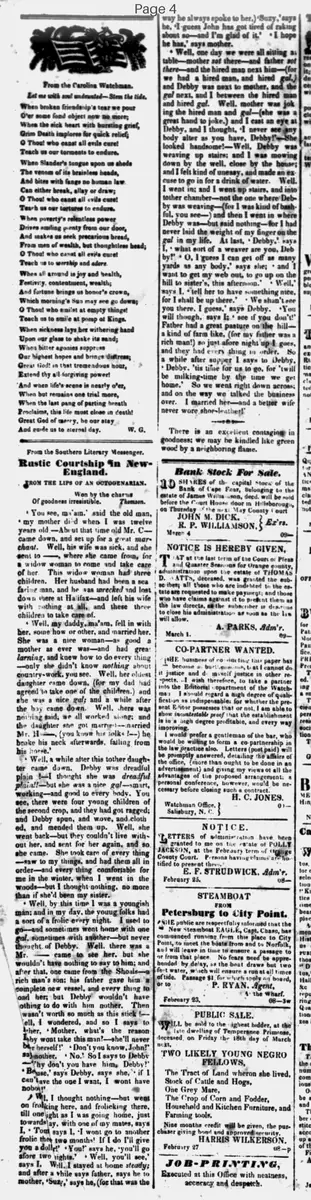
"You see, ma'am," said the old man, "my mother died when I was twelve years old. About that time old Mr. C— came down, and set up for a great merchant. Well, his wife was sick, and she sent to —, where she came from, for a widow woman to come and take care of her. This widow woman had three children. Her husband had been a seafaring man, and he was wrecked and lost down there at Halifax—and left his wife with nothing at all, and these three children to take care of. Well, my daddy, ma'am, fell in with her, some how or other, and married her. She was a nice woman—as good a mother as ever was—and had great learning, and knew how to do every thing—only she didn't know nothing about country-work, you see. Well, her oldest daughter came down, (for my dad had agreed to take one of the children) and she was a nice gal; and a while after the boy came down. Well, here was nothing said; we all worked along: and the daughter she got married—married Mr. H. (you know his folks?—) he broke his neck afterwards, falling from his horse."
"Well, a while after this tother daughter came down. Debby was dreadful plain! I thought she was dreadful plain!! but she was a nice gal—smart, working—and good to every body. You see, there were four young children of the second crop, and they had got ragged; and Debby spun, and wove, and clothed, and mended them up. Well, she went back—but they couldn't live without her, and sent after her again, and so she came. She took care of every thing—saw to my things, and had them all in order—and every thing comfortable for me in the winter, when I went in the woods—but I thought—nothing, no more than if she'd been my sister."
"Well, by this time I was a youngish man; and in my day, the young folks had a sort of a frolic every night. I used to go—and sometimes went home with one gal, sometimes with another—but never thought of Debby. Well, there was a Mr. — came to see her, but she wouldn't have nothing to say to him; and after that, one came from the Shoals—a rich man's son; his father gave him a complete new vessel, and every thing to load her; but Debby wouldn't have nothing to do with him neither. Then I wasn't worth so much as this stick!— Well, I wondered, and so I says to mother, 'Mother, what's the reason Debby won't take this man?—she'll never be herself!' 'Don't you know, John?' says mother. 'No.' So I says to Debby—'Why don't you have him, Debby?' 'Because,' says Debby, says she, 'if I can't have the one I want, I won't have nobody!'"
"Well, I thought nothing—but went on frolicking here, and frolicking there, till one night as I was going home, just towards day, with one of my mates, says I, 'Tom says I, I won't go to another frolic these two months! If I do I'll give you a dollar!' 'You?' says he, 'you'll go afore two nights.' 'Well, you'll see,' says I. Well, I stayed at home steady; and after a while says father, says he to mother, 'Suzy,' says he, (for that was the way he always spoke to her,) 'Suzy,' says he, 'I guess John has got tired of raking about so and I'm glad of it.' 'I hope he has,' says mother."
"Well, one day we were all sitting at table—mother sat there—and father sat there—and the hired man next him—(for we had a hired man, and hired gal,) and Debby was next to mother, and the gal next, and I between the hired man and hired gal. Well, mother was joking the hired man and gal—(she was a great hand to joke)—and I cast an eye at Debby, and I thought, I never see anybody alter as you have, Debby! She looked handsome!—Well, Debby was weaving up stairs; and I was mowing down by the well, close by the house; and I felt kind of uneasy, and made an excuse to go in for a drink of water. Well, I went in: and I went up stairs, and into tother chamber—not the one where Debby was weaving—(for I was kind of bashful, you see)—and then I went in where Debby was—but said nothing—for I had never laid the weight of my finger on the gal in my life. At last, 'Debby,' says I, 'what sort of a weaver are you, Debby?' 'O, I guess I can get off as many yards as anybody,' says she; 'and I want to get my web out, to go up on the hill to sister's, this afternoon.' 'Well,' says I, 'tell her to have something nice, for I shall be up there.' 'We shan't see you there, I guess,' says Debby. 'You will though,' says I; 'see if you don't!'"
"Father had a great pasture on the hill—a kind of farm like. (For my father was a rich man!) so just afore night up I goes, and they had every thing in order. So a while after supper I says to Debby, 'Debby, 'tis time for us to go, for 'twill be milking-time by the time we get home.' So we went right down across; and on the way we talked the business over. I married her and a better wife never wore shoe-leather!"
There is an excellent contagion in goodness: we may be kindled like green wood by a neighboring flame.
What sub-type of article is it?
Prose Fiction
What themes does it cover?
Love Romance
Agriculture Rural
Moral Virtue
What keywords are associated?
Rustic Courtship
New England
Stepfamily Marriage
Virtuous Wife
Rural Life
Goodness Charms
What entities or persons were involved?
From The Lips Of An Octogenarian.
Literary Details
Title
Rustic Courtship In New England.
Author
From The Lips Of An Octogenarian.
Subject
Rustic Courtship Won By Goodness.
Key Lines
"Because," Says Debby, Says She, "If I Can't Have The One I Want, I Won't Have Nobody!"
"I Married Her And A Better Wife Never Wore Shoe Leather!"
There Is An Excellent Contagion In Goodness: We May Be Kindled Like Green Wood By A Neighboring Flame.