Thank you for visiting SNEWPapers!
Sign up free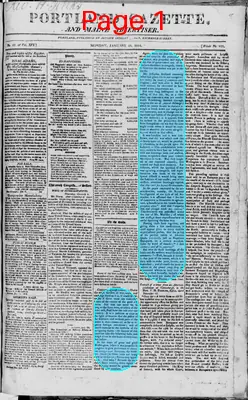
Editorial
January 24, 1814
Portland Gazette, And Maine Advertiser
Portland, Cumberland County, Maine
What is this article about?
An editorial criticizes the anti-commercial policies of southern and western U.S. leaders under Jefferson and Madison, arguing they aim to ruin navigation states' interests through opposition to tonnage preferences, navy building, treaties, non-importation, embargo, and war, favoring agriculture over trade.
Clipping
OCR Quality
95%
Excellent
Full Text
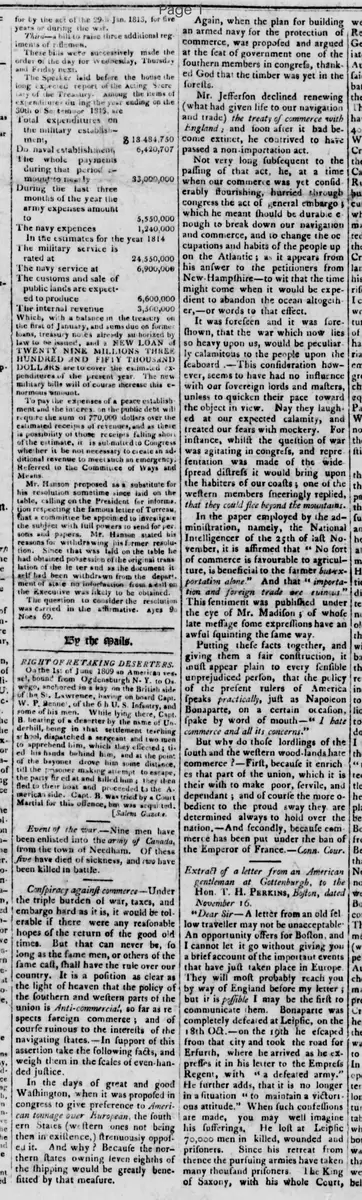
Conspiracy against commerce—Under the triple burden of war, taxes, and embargo hard as it is, it would be tolerable if there were any reasonable hopes of the return of the good old times. But that can never be, so long as the same men, or others of the same cast, shall have the rule over our country. It is a position as clear as the light of heaven that the policy of the southern and western parts of the union is Anti-commercial, so far as respects foreign commerce; and of course ruinous to the interests of the navigating states.—In support of this assertion take the following facts, and weigh them in the scales of even-handed justice.
In the days of great and good Washington, when it was proposed in congress to give preference to American tonnage over European, the southern States (western ones not being then in existence,) strenuously opposed it. And why? Because the northern states owning seven eighths of the shipping would be greatly benefited by that measure.
Again, when the plan for building an armed navy for the protection of commerce, was proposed and argued at the seat of government one of the southern members in congress, thanked God that the timber was yet in the forests.
Mr. Jefferson declined renewing (what had given life to our navigation and trade) the treaty of commerce with England; and soon after it had become extinct, he contrived to have passed a non-importation act.
Not very long subsequent to the passing of that act, he, at a time when our commerce was yet considerably flourishing, hurried through congress the act of general embargo; which he meant should be durable enough to break down our navigation and commerce, and to change the occupations and habits of the people upon the Atlantic; as it appears from his answer to the petitioners from New-Hampshire—to wit that the time might come when it would be expedient to abandon the ocean altogether,—or words to that effect.
It was foreseen and it was foretold, that the war which now lies so heavy upon us, would be peculiarly calamitous to the people upon the seaboard.—This consideration however, seems to have had no influence with our sovereign lords and masters, unless to quicken their pace toward the object in view. Nay they laughed at our expected calamity, and treated our fears with mockery. For instance, whilst the question of war was agitating in congress, and representation was made of the wide-spread distress it would bring upon the habitants of our coasts; one of the western members sneeringly replied, that they could flee beyond the mountains.
In the paper employed by the administration, namely, the National Intelligencer of the 20th of last November, it is affirmed that "No sort of commerce is favourable to agriculture, is beneficial to the farmer but exportation alone." And that "importation and foreign trade are ruinous."
This sentiment was published under the eye of Mr. Madison; of whose late message some expressions have an awful squinting the same way.
Putting these facts together, and giving them a fair construction, it must appear plain to every sensible unprejudiced person, that the policy of the present rulers of America speaks practically, just as Napoleon Bonaparte, on a certain occasion, spoke by word of mouth—“I hate commerce and all its concerns."
But why do those lordlings of the south and the western wood-lands hate commerce?—First, because it enriches that part of the union, which it is their wish to make poor, servile, and dependant; and of course the more obedient to the proud sway they are determined always to hold over the nation.—And secondly, because commerce has been put under the ban of the Emperor of France.
Conn. Cour.
In the days of great and good Washington, when it was proposed in congress to give preference to American tonnage over European, the southern States (western ones not being then in existence,) strenuously opposed it. And why? Because the northern states owning seven eighths of the shipping would be greatly benefited by that measure.
Again, when the plan for building an armed navy for the protection of commerce, was proposed and argued at the seat of government one of the southern members in congress, thanked God that the timber was yet in the forests.
Mr. Jefferson declined renewing (what had given life to our navigation and trade) the treaty of commerce with England; and soon after it had become extinct, he contrived to have passed a non-importation act.
Not very long subsequent to the passing of that act, he, at a time when our commerce was yet considerably flourishing, hurried through congress the act of general embargo; which he meant should be durable enough to break down our navigation and commerce, and to change the occupations and habits of the people upon the Atlantic; as it appears from his answer to the petitioners from New-Hampshire—to wit that the time might come when it would be expedient to abandon the ocean altogether,—or words to that effect.
It was foreseen and it was foretold, that the war which now lies so heavy upon us, would be peculiarly calamitous to the people upon the seaboard.—This consideration however, seems to have had no influence with our sovereign lords and masters, unless to quicken their pace toward the object in view. Nay they laughed at our expected calamity, and treated our fears with mockery. For instance, whilst the question of war was agitating in congress, and representation was made of the wide-spread distress it would bring upon the habitants of our coasts; one of the western members sneeringly replied, that they could flee beyond the mountains.
In the paper employed by the administration, namely, the National Intelligencer of the 20th of last November, it is affirmed that "No sort of commerce is favourable to agriculture, is beneficial to the farmer but exportation alone." And that "importation and foreign trade are ruinous."
This sentiment was published under the eye of Mr. Madison; of whose late message some expressions have an awful squinting the same way.
Putting these facts together, and giving them a fair construction, it must appear plain to every sensible unprejudiced person, that the policy of the present rulers of America speaks practically, just as Napoleon Bonaparte, on a certain occasion, spoke by word of mouth—“I hate commerce and all its concerns."
But why do those lordlings of the south and the western wood-lands hate commerce?—First, because it enriches that part of the union, which it is their wish to make poor, servile, and dependant; and of course the more obedient to the proud sway they are determined always to hold over the nation.—And secondly, because commerce has been put under the ban of the Emperor of France.
Conn. Cour.
What sub-type of article is it?
Economic Policy
Trade Or Commerce
Partisan Politics
What keywords are associated?
Anti Commercial Policy
Southern Opposition
Embargo Act
Non Importation
War On Commerce
Navigation States
Agriculture Vs Trade
What entities or persons were involved?
Southern States
Western Parts Of The Union
Washington
Mr. Jefferson
Mr. Madison
Napoleon Bonaparte
National Intelligencer
Editorial Details
Primary Topic
Conspiracy Against Commerce By Southern And Western States
Stance / Tone
Strongly Anti Administration And Pro Commercial
Key Figures
Southern States
Western Parts Of The Union
Washington
Mr. Jefferson
Mr. Madison
Napoleon Bonaparte
National Intelligencer
Key Arguments
Southern States Opposed Preference To American Tonnage To Prevent Benefiting Northern Shipping.
Southern Member Thanked God Timber Was Still In Forests Against Building Navy For Commerce.
Jefferson Declined Renewing Treaty With England And Passed Non Importation Act.
Jefferson Hurried General Embargo To Break Down Navigation And Commerce, Suggesting Abandoning The Ocean.
Western Member Mocked Coastal Distress By Saying They Could Flee Beyond Mountains.
National Intelligencer Claimed Only Exportation Benefits Agriculture, Importation And Foreign Trade Ruinous.
Madison's Message Squints Toward Anti Commerce Views.
Policy Mirrors Napoleon's Hatred Of Commerce To Impoverish And Control Northern States.