Thank you for visiting SNEWPapers!
Sign up free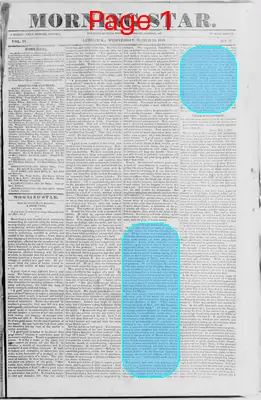
Literary
March 24, 1830
Morning Star
Limerick, York County, Maine
What is this article about?
A reflective prose essay praising the study of nature as the noblest pursuit for intelligent beings, revealing God's infinite power, wisdom, and goodness through the universe's wonders, from microscopic to cosmic scales, inspiring worship and humility.
Clipping
OCR Quality
98%
Excellent
Full Text
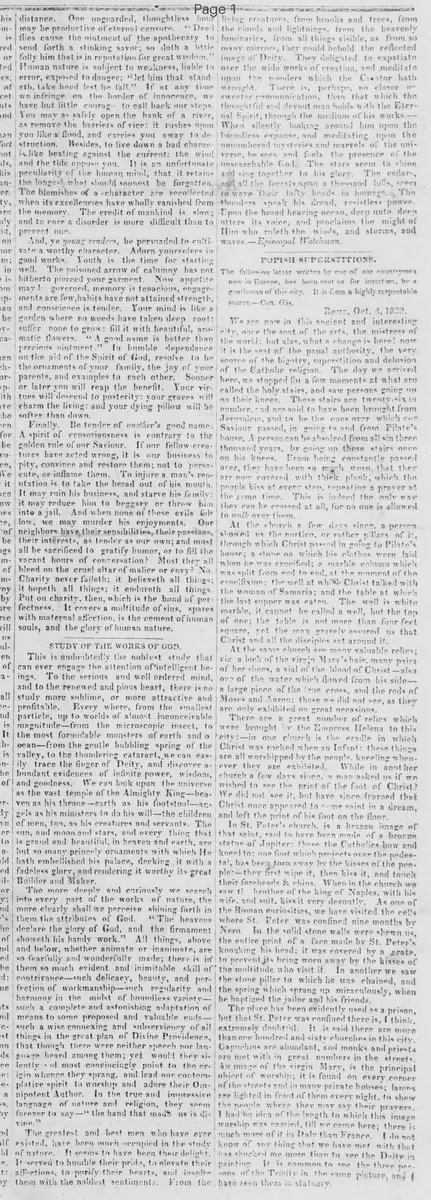
STUDY OF THE WORKS OF GOD.
This is undoubtedly the noblest study that can ever engage the attention of intelligent beings. To the serious and well ordered mind, and to the renewed and pious heart, there is no study more sublime, or more attractive and profitable. Every where, from the smallest particle, up to worlds of almost inconceivable magnitude—from the microscopic insect, to the most formidable monsters of earth and ocean—from the gentle bubbling spring of the valley, to the thundering cataract, we can easily trace the finger of Deity, and discover abundant evidences of infinite power, wisdom, and goodness. We can look upon the universe as the vast temple of the Almighty King—heaven as his throne—earth as his footstool—angels as his ministers to do his will—the children of men, too, as his creatures and servants. The sun, and moon and stars, and every thing that is grand and beautiful, in heaven and earth, are but so many princely ornaments with which He hath embellished his palace, decking it with a fadeless glory, and rendering it worthy its great Builder and Maker.
The more deeply and curiously we search into every part of the works of nature, the more clearly shall we perceive shining forth in them the attributes of God. "The heavens declare the glory of God, and the firmament showeth his handy work." All things, above and below, whether animate or inanimate, are so fearfully and wonderfully made; there is in them so much evident and inimitable skill of contrivance—such delicacy, beauty, and perfection of workmanship—such regularity and harmony in the midst of boundless variety—such a complete and astonishing adaptation of means to some proposed and valuable ends—such a wise connexing and subserviency of all things in the great plan of Divine Providence, that though there were neither speech nor language heard among them; yet would they silently and most convincingly point to the origin whence they sprang, and lead our contemplative spirit to worship and adore their Omnipotent Author. In the true and impressive language of nature and religion, they seem forever to say—“the hand that made us is divine."
The greatest and best men who have ever existed, have been much occupied in the study of nature. It seems to have been their delight. It served to humble their pride, to elevate their affections, to purify their hearts, and inspire them with the noblest sentiments. From the living creatures, from brooks and trees, from the clouds and lightnings, from the heavenly luminaries, from all things visible, as from so many mirrors, they could behold the reflected image of Deity. They delighted to expatiate over the wide works of creation, and meditate upon the wonders which the Creator hath wrought. There is, perhaps, no closer or sweeter communication, than that which the thoughtful and devout man holds with the Eternal Spirit, through the medium of his works.—When silently looking around him upon the boundless expanse, and meditating upon the unnumbered mysteries and marvels of the universe, he sees and feels the presence of the unsearchable God. The stars seem to shine and sing together to his glory. The cedars, and all the forests upon a thousand hills, seem to wave their lofty heads in homage. The thunders speak his dread, resistless power. Upon the broad heaving ocean, deep unto deep utters its voice, and proclaims the might of Him who ruleth the winds, and storms, and waves.—Episcopal Watchman.
This is undoubtedly the noblest study that can ever engage the attention of intelligent beings. To the serious and well ordered mind, and to the renewed and pious heart, there is no study more sublime, or more attractive and profitable. Every where, from the smallest particle, up to worlds of almost inconceivable magnitude—from the microscopic insect, to the most formidable monsters of earth and ocean—from the gentle bubbling spring of the valley, to the thundering cataract, we can easily trace the finger of Deity, and discover abundant evidences of infinite power, wisdom, and goodness. We can look upon the universe as the vast temple of the Almighty King—heaven as his throne—earth as his footstool—angels as his ministers to do his will—the children of men, too, as his creatures and servants. The sun, and moon and stars, and every thing that is grand and beautiful, in heaven and earth, are but so many princely ornaments with which He hath embellished his palace, decking it with a fadeless glory, and rendering it worthy its great Builder and Maker.
The more deeply and curiously we search into every part of the works of nature, the more clearly shall we perceive shining forth in them the attributes of God. "The heavens declare the glory of God, and the firmament showeth his handy work." All things, above and below, whether animate or inanimate, are so fearfully and wonderfully made; there is in them so much evident and inimitable skill of contrivance—such delicacy, beauty, and perfection of workmanship—such regularity and harmony in the midst of boundless variety—such a complete and astonishing adaptation of means to some proposed and valuable ends—such a wise connexing and subserviency of all things in the great plan of Divine Providence, that though there were neither speech nor language heard among them; yet would they silently and most convincingly point to the origin whence they sprang, and lead our contemplative spirit to worship and adore their Omnipotent Author. In the true and impressive language of nature and religion, they seem forever to say—“the hand that made us is divine."
The greatest and best men who have ever existed, have been much occupied in the study of nature. It seems to have been their delight. It served to humble their pride, to elevate their affections, to purify their hearts, and inspire them with the noblest sentiments. From the living creatures, from brooks and trees, from the clouds and lightnings, from the heavenly luminaries, from all things visible, as from so many mirrors, they could behold the reflected image of Deity. They delighted to expatiate over the wide works of creation, and meditate upon the wonders which the Creator hath wrought. There is, perhaps, no closer or sweeter communication, than that which the thoughtful and devout man holds with the Eternal Spirit, through the medium of his works.—When silently looking around him upon the boundless expanse, and meditating upon the unnumbered mysteries and marvels of the universe, he sees and feels the presence of the unsearchable God. The stars seem to shine and sing together to his glory. The cedars, and all the forests upon a thousand hills, seem to wave their lofty heads in homage. The thunders speak his dread, resistless power. Upon the broad heaving ocean, deep unto deep utters its voice, and proclaims the might of Him who ruleth the winds, and storms, and waves.—Episcopal Watchman.
What sub-type of article is it?
Essay
What themes does it cover?
Religious
Nature
Moral Virtue
What keywords are associated?
Nature Study
Divine Attributes
Creation Worship
Providence
Contemplation
What entities or persons were involved?
Episcopal Watchman
Literary Details
Title
Study Of The Works Of God.
Author
Episcopal Watchman
Subject
The Study Of Nature Revealing Divine Attributes
Form / Style
Reflective Prose Essay
Key Lines
"The Heavens Declare The Glory Of God, And The Firmament Showeth His Handy Work."
"The Hand That Made Us Is Divine."