Thank you for visiting SNEWPapers!
Sign up free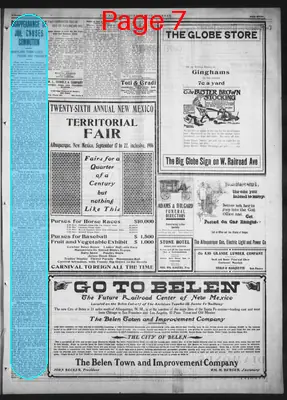
Story
August 1, 1906
Albuquerque Morning Journal
Albuquerque, Bernalillo County, New Mexico
What is this article about?
In August 1906, Kensington, Maryland, uses an old box car as a jail for a drunken hobo. The next day, the jail and prisoner vanish from the tracks, dividing the town into factions over the mishap.
Clipping

OCR Quality
98%
Excellent
Full Text
Wednesday, August 1, 1906.
DISAPPEARANCE OF
JAIL CAUSES
COMMOTION
MARYLAND TOWN LOSES
PRISON AND PRISONER
(From the New York Tribune.)
An advertisement substantially like the following will probably be inserted in the papers by the village fathers of the little town of Kensington, a nearby Maryland suburb of Washington:
"Lost, Strayed or Stolen—A jail.
When last seen it contained one hobo in spirits. Information that will lead to the recovery of the jail, the hobo or the spirits will be suitably rewarded."
The disappearance of the jail and its contents occurred two or three nights ago and bids fair to split the town into two fiercely fighting factions if someone does not restore the lost property in time to avert the trouble.
Kensington reposes in the Maryland hills just beyond the northeast end of the capital.
It is inhabited principally by well-to-do Washington people who have even more leisure to spare than money, for a trip either way generally eats up half a day or so for the commuter. There is a single car on the single track railway which connects it with Washington and a single man to act as motorman and conductor. The motorman-conductor or conductor-motorman, however, has endeared himself to the Kensingtonians by his many genial traits and they would not willingly exchange him for any number of elevated or subway train crews. When any of the regular patrons of the line fail to appear for the morning run to the capital, the Pooh Bah of the line stops the car at the nearest point to the missing commuter's home and waits ten or fifteen minutes. The absentee, who has probably overslept, sees the car from his bedroom window, opens the sash and thrusting his head out, cries:
"Thanks, old man; I'll be with you in just a few minutes." Then he shaves himself, dresses, eats breakfast, reads the paper and strolls down to the waiting electric car. The other passengers make no objection to this program, for they find it convenient themselves. While they are waiting they borrow fishing tackle and bait from the street car man and often catch a mess of trout from the babbling brook which meanders through the town.
Need of Jail Was Felt.
A few months ago, or to be exact, as soon as spring opened up, Kensington was brought face to face with a serious problem. A jail was needed. Of course, no one in Kensington could do anything that would make him or her liable to imprisonment, but the tramps drifting in and out of Washington became a serious menace to the peace of the village. The sheriff made three or four arrests, and was forced to convey his prisoners all the way to Rockville at great expense of money and time. While he was taking one prisoner to jail another hobo was generally frightening the women and children half to death. All the able-bodied men were at work in Washington, and before they could return home in response to a sudden alarm the tramps would be far, far away.
So, after mighty deliberation, the town decided to have a jail of its own. Perhaps President Roosevelt could be persuaded to come out and lay the corner stone, they argued. If he would not come, they felt sure that Secretary Bonaparte of the navy department, a Marylander himself, would attend and deliver an address.
Factional Dispute Over.
The other faction advocated instead an appropriation for more deputy sheriffs, and additional railroad fare for the transportation of prisoners. Kensington had never had a jail, and had always got along well without one. Besides that, the idea was revolting to sensitive minds. Perhaps the mere building of a jail would by suggestion cause any number of their boys to "turn out bad." The strongest argument the anti-jail crowd put up, however, was the matter of cost. A jail could not be constructed for much less than $3,000, and it would be a plain one at that. Better have no jail at all than one that would not reflect credit upon the town.
In the midst of the wrangle the controversy was settled. An old, apparently abandoned box car standing upon the Baltimore and Ohio tracks, was appropriated. The station agent said that the car had been there ever since he reached the town years ago, and he thought the company had forgotten all about it. So the car was freshly painted, shoved further over toward the end of the side track and fitted with a half dozen heavy locks, three on each side door. The sheriff and the mayor fairly danced with impatience to try the new calaboose. All told, it had cost the town only $17, and they were anxious to prove to the world that Kensington was prepared to uphold the dignity of justice by incarcerating within her limits any and all malefactors that dared to break her laws.
Jail and Prisoner Vanished.
One day the opportunity arrived in the shape of a very badly "jagged" specimen of the hobo. Half the town attended the trial before the justice of the peace, and probably nine-tenths of the villagers were eager witnesses of the hobo's landing in the brand new jail. The sheriff brought him, safely manacled, to the track and in spite of his wobbliness of limb got him up into the car and turned the three keys of the three locks upon him. It was a great day for Kensington.
The next morning the sheriff went down to interview the prisoner. Perchance he would be repentant and confess to several murders and bank robberies. If he did the sheriff would get his name in all the great metropolitan dailies, and who knows? might get a place on the detective force of New York or Philadelphia. Stranger things than that have happened, and
But where was the jail? The side track was empty, vacant. The sheriff rushed wildly over to the station in quest of light, but got none to speak of. The station agent had not received any orders for that box car. Neither had anyone else in the neighborhood. No one had seen it go, and no one had any idea where it had gone. Now the faction that had wanted to build a fine jail with presidential corner stone trimmings are saying: "We knew something would happen." The supporters of the box car jail idea admit that something did happen. But what?
DISAPPEARANCE OF
JAIL CAUSES
COMMOTION
MARYLAND TOWN LOSES
PRISON AND PRISONER
(From the New York Tribune.)
An advertisement substantially like the following will probably be inserted in the papers by the village fathers of the little town of Kensington, a nearby Maryland suburb of Washington:
"Lost, Strayed or Stolen—A jail.
When last seen it contained one hobo in spirits. Information that will lead to the recovery of the jail, the hobo or the spirits will be suitably rewarded."
The disappearance of the jail and its contents occurred two or three nights ago and bids fair to split the town into two fiercely fighting factions if someone does not restore the lost property in time to avert the trouble.
Kensington reposes in the Maryland hills just beyond the northeast end of the capital.
It is inhabited principally by well-to-do Washington people who have even more leisure to spare than money, for a trip either way generally eats up half a day or so for the commuter. There is a single car on the single track railway which connects it with Washington and a single man to act as motorman and conductor. The motorman-conductor or conductor-motorman, however, has endeared himself to the Kensingtonians by his many genial traits and they would not willingly exchange him for any number of elevated or subway train crews. When any of the regular patrons of the line fail to appear for the morning run to the capital, the Pooh Bah of the line stops the car at the nearest point to the missing commuter's home and waits ten or fifteen minutes. The absentee, who has probably overslept, sees the car from his bedroom window, opens the sash and thrusting his head out, cries:
"Thanks, old man; I'll be with you in just a few minutes." Then he shaves himself, dresses, eats breakfast, reads the paper and strolls down to the waiting electric car. The other passengers make no objection to this program, for they find it convenient themselves. While they are waiting they borrow fishing tackle and bait from the street car man and often catch a mess of trout from the babbling brook which meanders through the town.
Need of Jail Was Felt.
A few months ago, or to be exact, as soon as spring opened up, Kensington was brought face to face with a serious problem. A jail was needed. Of course, no one in Kensington could do anything that would make him or her liable to imprisonment, but the tramps drifting in and out of Washington became a serious menace to the peace of the village. The sheriff made three or four arrests, and was forced to convey his prisoners all the way to Rockville at great expense of money and time. While he was taking one prisoner to jail another hobo was generally frightening the women and children half to death. All the able-bodied men were at work in Washington, and before they could return home in response to a sudden alarm the tramps would be far, far away.
So, after mighty deliberation, the town decided to have a jail of its own. Perhaps President Roosevelt could be persuaded to come out and lay the corner stone, they argued. If he would not come, they felt sure that Secretary Bonaparte of the navy department, a Marylander himself, would attend and deliver an address.
Factional Dispute Over.
The other faction advocated instead an appropriation for more deputy sheriffs, and additional railroad fare for the transportation of prisoners. Kensington had never had a jail, and had always got along well without one. Besides that, the idea was revolting to sensitive minds. Perhaps the mere building of a jail would by suggestion cause any number of their boys to "turn out bad." The strongest argument the anti-jail crowd put up, however, was the matter of cost. A jail could not be constructed for much less than $3,000, and it would be a plain one at that. Better have no jail at all than one that would not reflect credit upon the town.
In the midst of the wrangle the controversy was settled. An old, apparently abandoned box car standing upon the Baltimore and Ohio tracks, was appropriated. The station agent said that the car had been there ever since he reached the town years ago, and he thought the company had forgotten all about it. So the car was freshly painted, shoved further over toward the end of the side track and fitted with a half dozen heavy locks, three on each side door. The sheriff and the mayor fairly danced with impatience to try the new calaboose. All told, it had cost the town only $17, and they were anxious to prove to the world that Kensington was prepared to uphold the dignity of justice by incarcerating within her limits any and all malefactors that dared to break her laws.
Jail and Prisoner Vanished.
One day the opportunity arrived in the shape of a very badly "jagged" specimen of the hobo. Half the town attended the trial before the justice of the peace, and probably nine-tenths of the villagers were eager witnesses of the hobo's landing in the brand new jail. The sheriff brought him, safely manacled, to the track and in spite of his wobbliness of limb got him up into the car and turned the three keys of the three locks upon him. It was a great day for Kensington.
The next morning the sheriff went down to interview the prisoner. Perchance he would be repentant and confess to several murders and bank robberies. If he did the sheriff would get his name in all the great metropolitan dailies, and who knows? might get a place on the detective force of New York or Philadelphia. Stranger things than that have happened, and
But where was the jail? The side track was empty, vacant. The sheriff rushed wildly over to the station in quest of light, but got none to speak of. The station agent had not received any orders for that box car. Neither had anyone else in the neighborhood. No one had seen it go, and no one had any idea where it had gone. Now the faction that had wanted to build a fine jail with presidential corner stone trimmings are saying: "We knew something would happen." The supporters of the box car jail idea admit that something did happen. But what?
What sub-type of article is it?
Curiosity
Mystery
Extraordinary Event
What themes does it cover?
Misfortune
Social Manners
Fortune Reversal
What keywords are associated?
Jail Disappearance
Box Car Jail
Kensington Maryland
Hobo Prisoner
Town Commotion
What entities or persons were involved?
Sheriff
Hobo
Station Agent
Where did it happen?
Kensington, Maryland
Story Details
Key Persons
Sheriff
Hobo
Station Agent
Location
Kensington, Maryland
Event Date
Two Or Three Nights Before August 1, 1906
Story Details
The town of Kensington repurposes an abandoned box car as a jail to hold tramps. After imprisoning a drunken hobo, the sheriff discovers the next morning that the box car and prisoner have vanished from the tracks, causing factional dispute in the town.