Thank you for visiting SNEWPapers!
Sign up free
Foreign News
March 19, 1772
The Virginia Gazette
Richmond, Williamsburg, Richmond County, Virginia
What is this article about?
Extract from a London letter discusses controversy over the Duke of Cumberland's marriage to Mrs. Horton, deemed foolish but legal, citing historical precedents of royal marriages without parliamentary consent.
Clipping
OCR Quality
95%
Excellent
Full Text
PHILADELPHIA. February 27.
Extract of a Letter from London, November 29.
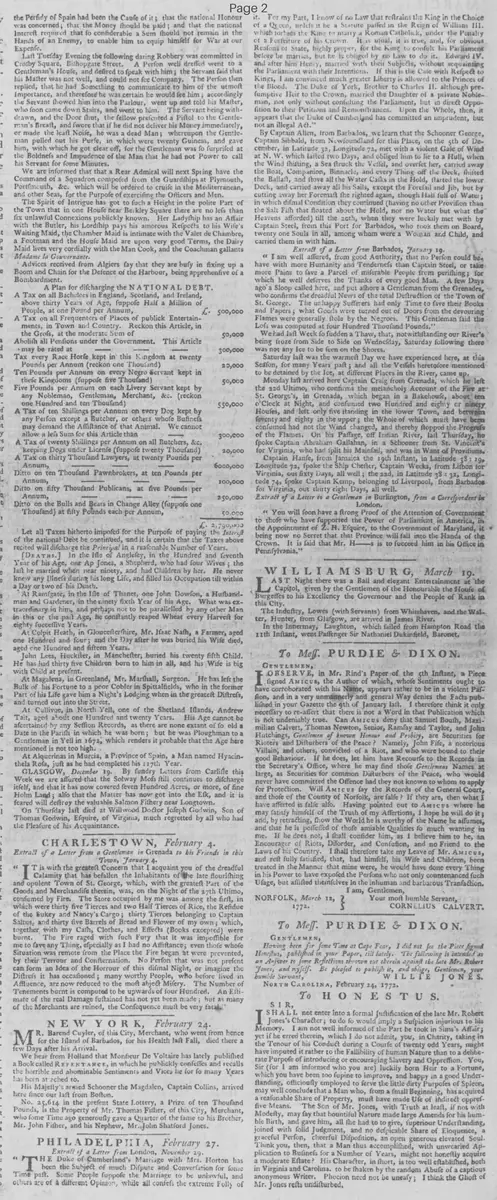
The Duke of Cumberland's Marriage with Mrs. Horton has been the Subject of much Dispute and Conversation for some Time past. Some People suppose the Marriage to be unlawful, and others are of a different Opinion, while all confess the extreme Folly of it. For my Part, I know of no Law that restrains the King in the Choice of a Queen, unless it be a Statute passed in the Reign of William III. which forbids the King to marry a Roman Catholick, under the Penalty of a Forfeiture of his Crown. It is usual, it is true, and, for obvious Reasons of State, highly proper, for the King to consult his Parliament before he marries, but he is obliged by no Law to do it. Edward IV. and after him Henry, married with their Subjects, without acquainting the Parliament with their Intentions. If this is the Case with Respect to Kings, I am convinced much greater Liberty is allowed to the Princes of the Blood. The Duke of York, Brother to Charles II. although presumptive Heir to the Crown, married the Daughter of a private Nobleman, not only without consulting the Parliament, but in direct Opposition to their Petitions and Remonstrances. Upon the Whole, then, it appears that the Duke of Cumberland has committed an imprudent, but not an illegal Act.
Extract of a Letter from London, November 29.
The Duke of Cumberland's Marriage with Mrs. Horton has been the Subject of much Dispute and Conversation for some Time past. Some People suppose the Marriage to be unlawful, and others are of a different Opinion, while all confess the extreme Folly of it. For my Part, I know of no Law that restrains the King in the Choice of a Queen, unless it be a Statute passed in the Reign of William III. which forbids the King to marry a Roman Catholick, under the Penalty of a Forfeiture of his Crown. It is usual, it is true, and, for obvious Reasons of State, highly proper, for the King to consult his Parliament before he marries, but he is obliged by no Law to do it. Edward IV. and after him Henry, married with their Subjects, without acquainting the Parliament with their Intentions. If this is the Case with Respect to Kings, I am convinced much greater Liberty is allowed to the Princes of the Blood. The Duke of York, Brother to Charles II. although presumptive Heir to the Crown, married the Daughter of a private Nobleman, not only without consulting the Parliament, but in direct Opposition to their Petitions and Remonstrances. Upon the Whole, then, it appears that the Duke of Cumberland has committed an imprudent, but not an illegal Act.
What sub-type of article is it?
Royal Event
Court News
What keywords are associated?
Duke Of Cumberland Marriage
Mrs Horton
Royal Legality
British Court Dispute
Parliamentary Consent
What entities or persons were involved?
Duke Of Cumberland
Mrs. Horton
William Iii
Edward Iv
Henry
Duke Of York
Charles Ii
Where did it happen?
London
Foreign News Details
Primary Location
London
Event Date
November 29
Key Persons
Duke Of Cumberland
Mrs. Horton
William Iii
Edward Iv
Henry
Duke Of York
Charles Ii
Outcome
imprudent but not illegal act
Event Details
The Duke of Cumberland's marriage to Mrs. Horton has sparked dispute over its legality, with opinions divided but all agreeing on its folly. The writer argues no law prohibits it for princes of the blood, citing historical royal marriages without parliamentary consultation, except restrictions on marrying Roman Catholics.