Thank you for visiting SNEWPapers!
Sign up free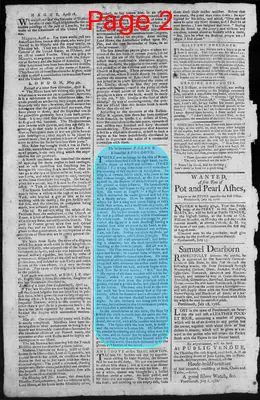
Literary
July 27, 1786
Fowle's New Hampshire Gazette And General Advertiser
Portsmouth, Rockingham County, New Hampshire
What is this article about?
A fable about a clerk who follows an inscription on a Roman image to discover a subterranean palace of wonders symbolizing worldly vanities. He dies in darkness after taking gold, as the moral explains: passions lead to temptations, death ends life, avarice brings doom.
Clipping
OCR Quality
98%
Excellent
Full Text
The Subterraneous PALACE.
A beautiful APOLOGUE.
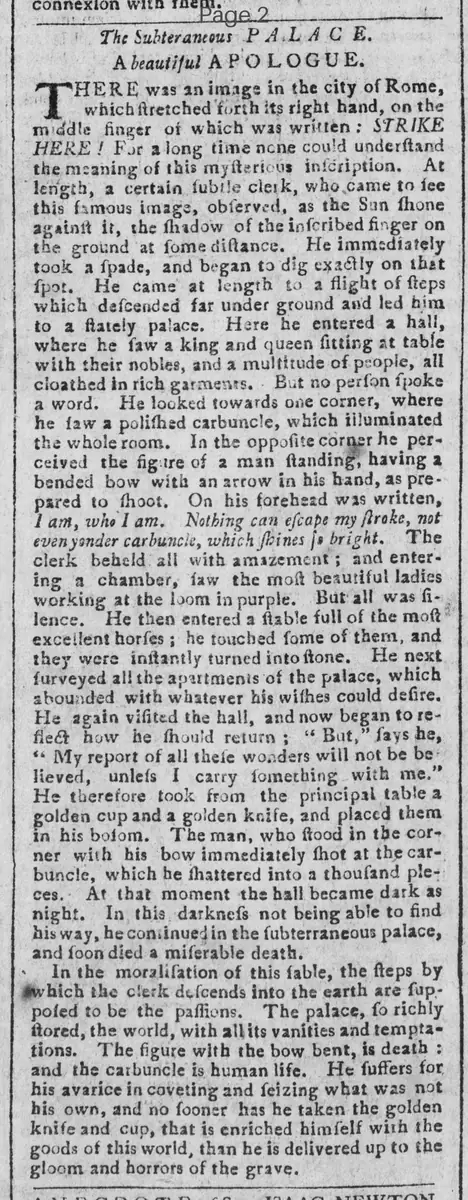
There was an image in the city of Rome, which stretched forth its right hand, on the middle finger of which was written: STRIKE HERE! For a long time none could understand the meaning of this mysterious inscription. At length, a certain subtle clerk, who came to see this famous image, observed, as the Sun shone against it, the shadow of the inscribed finger on the ground at some distance. He immediately took a spade, and began to dig exactly on that spot. He came at length to a flight of steps which descended far under ground and led him to a stately palace. Here he entered a hall, where he saw a king and queen sitting at table with their nobles, and a multitude of people, all clothed in rich garments: But no person spoke a word. He looked towards one corner, where he saw a polished carbuncle, which illuminated the whole room. In the opposite corner he perceived the figure of a man standing, having a bended bow with an arrow in his hand, as prepared to shoot. On his forehead was written, I am, who I am. Nothing can escape my stroke, not even yonder carbuncle, which shines so bright. The clerk beheld all with amazement; and entering a chamber, saw the most beautiful ladies working at the loom in purple. But all was silence. He then entered a table full of the most excellent viands; he touched some of them, and they were instantly turned into stone. He next surveyed all the apartments of the palace, which abounded with whatever his wishes could desire. He again visited the hall, and now began to reflect how he should return: "But," says he, "My report of all these wonders will not be believed, unless I carry something with me." He therefore took from the principal table a golden cup and a golden knife, and placed them in his bosom. The man, who stood in the corner with his bow immediately shot at the carbuncle, which he shattered into a thousand pieces: At that moment the hall became dark as night. In this darkness not being able to find his way, he continued in the subterraneous palace, and soon died a miserable death.
In the moralization of this fable, the steps by which the clerk descends into the earth are supposed to be the passions. The palace, so richly stored, the world, with all its vanities and temptations. The figure with the bow bent, is death: and the carbuncle is human life. He suffers for his avarice in coveting and seizing what was not his own, and no sooner has he taken the golden knife and cup, that is enriched himself with the goods of this world, than he is delivered up to the gloom and horrors of the grave.
A beautiful APOLOGUE.
There was an image in the city of Rome, which stretched forth its right hand, on the middle finger of which was written: STRIKE HERE! For a long time none could understand the meaning of this mysterious inscription. At length, a certain subtle clerk, who came to see this famous image, observed, as the Sun shone against it, the shadow of the inscribed finger on the ground at some distance. He immediately took a spade, and began to dig exactly on that spot. He came at length to a flight of steps which descended far under ground and led him to a stately palace. Here he entered a hall, where he saw a king and queen sitting at table with their nobles, and a multitude of people, all clothed in rich garments: But no person spoke a word. He looked towards one corner, where he saw a polished carbuncle, which illuminated the whole room. In the opposite corner he perceived the figure of a man standing, having a bended bow with an arrow in his hand, as prepared to shoot. On his forehead was written, I am, who I am. Nothing can escape my stroke, not even yonder carbuncle, which shines so bright. The clerk beheld all with amazement; and entering a chamber, saw the most beautiful ladies working at the loom in purple. But all was silence. He then entered a table full of the most excellent viands; he touched some of them, and they were instantly turned into stone. He next surveyed all the apartments of the palace, which abounded with whatever his wishes could desire. He again visited the hall, and now began to reflect how he should return: "But," says he, "My report of all these wonders will not be believed, unless I carry something with me." He therefore took from the principal table a golden cup and a golden knife, and placed them in his bosom. The man, who stood in the corner with his bow immediately shot at the carbuncle, which he shattered into a thousand pieces: At that moment the hall became dark as night. In this darkness not being able to find his way, he continued in the subterraneous palace, and soon died a miserable death.
In the moralization of this fable, the steps by which the clerk descends into the earth are supposed to be the passions. The palace, so richly stored, the world, with all its vanities and temptations. The figure with the bow bent, is death: and the carbuncle is human life. He suffers for his avarice in coveting and seizing what was not his own, and no sooner has he taken the golden knife and cup, that is enriched himself with the goods of this world, than he is delivered up to the gloom and horrors of the grave.
What sub-type of article is it?
Fable
Allegory
Prose Fiction
What themes does it cover?
Moral Virtue
Death Mortality
What keywords are associated?
Subterranean Palace
Apologue
Roman Image
Clerk Adventure
Carbuncle
Death Figure
Avarice Moral
Worldly Vanities
Literary Details
Title
The Subterraneous Palace
Key Lines
Strike Here!
I Am, Who I Am. Nothing Can Escape My Stroke, Not Even Yonder Carbuncle, Which Shines So Bright.
In The Moralization Of This Fable, The Steps By Which The Clerk Descends Into The Earth Are Supposed To Be The Passions. The Palace, So Richly Stored, The World, With All Its Vanities And Temptations.
The Figure With The Bow Bent, Is Death: And The Carbuncle Is Human Life.
He Suffers For His Avarice In Coveting And Seizing What Was Not His Own