Thank you for visiting SNEWPapers!
Sign up free
Story
January 24, 1935
White Bluffs Spokesman
White Bluffs, Benton County, Washington
What is this article about?
Dr. Otto J. Hill explains that high-quality cream production depends on thorough cleansing and sterilization of separators and milk utensils to prevent bacterial contamination and ensure premium prices.
Clipping
OCR Quality
98%
Excellent
Full Text
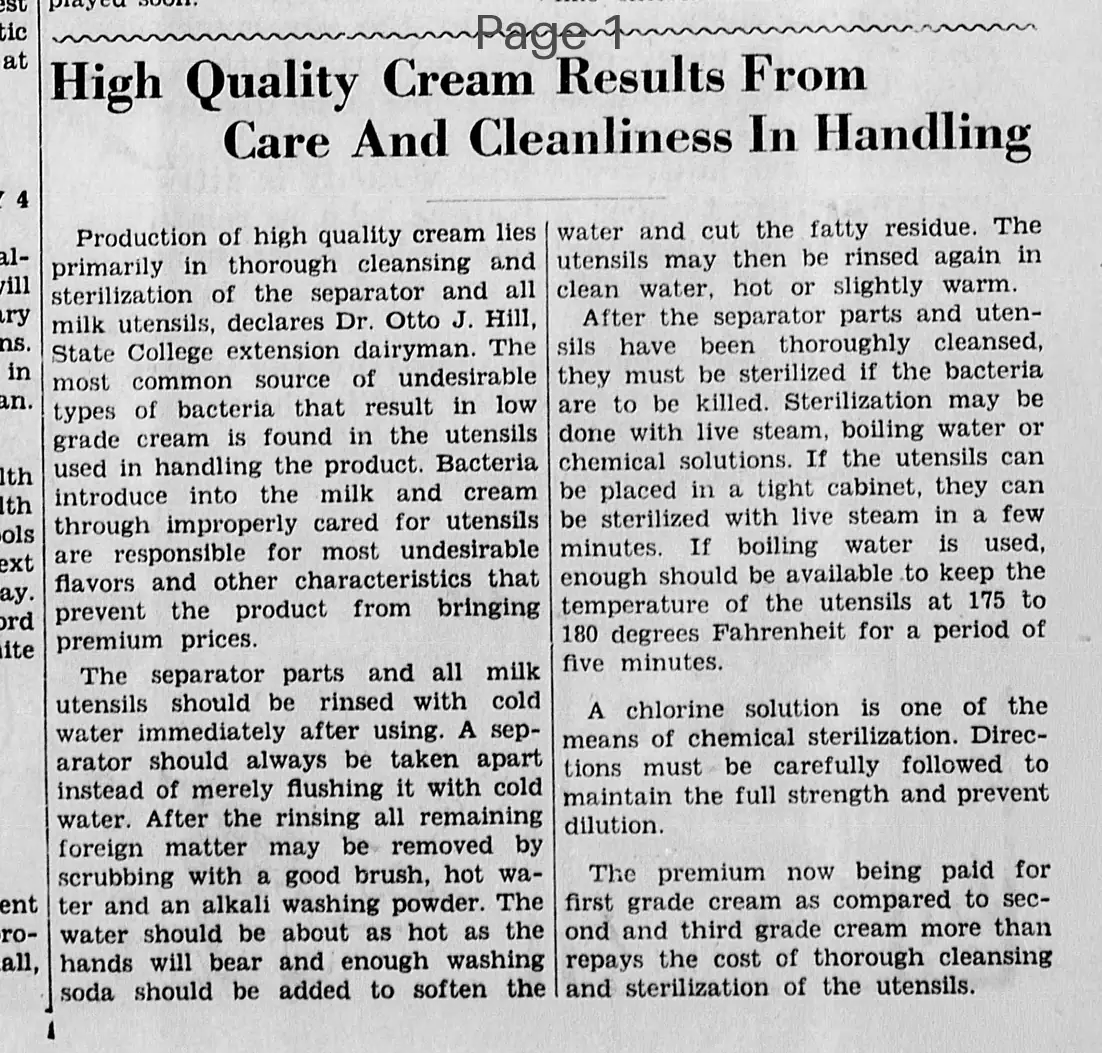
High Quality Cream Results From Care And Cleanliness In Handling
Production of high quality cream lies primarily in thorough cleansing and sterilization of the separator and all milk utensils, declares Dr. Otto J. Hill, State College extension dairyman. The most common source of undesirable types of bacteria that result in low grade cream is found in the utensils used in handling the product. Bacteria introduce into the milk and cream through improperly cared for utensils are responsible for most undesirable flavors and other characteristics that prevent the product from bringing premium prices.
The separator parts and all milk utensils should be rinsed with cold water immediately after using. A separator should always be taken apart instead of merely flushing it with cold water. After the rinsing all remaining foreign matter may be removed by scrubbing with a good brush, hot water and an alkali washing powder. The water should be about as hot as the hands will bear and enough washing soda should be added to soften the water and cut the fatty residue. The utensils may then be rinsed again in clean water, hot or slightly warm.
After the separator parts and utensils have been thoroughly cleansed, they must be sterilized if the bacteria are to be killed. Sterilization may be done with live steam, boiling water or chemical solutions. If the utensils can be placed in a tight cabinet, they can be sterilized with live steam in a few minutes. If boiling water is used, enough should be available to keep the temperature of the utensils at 175 to 180 degrees Fahrenheit for a period of five minutes.
A chlorine solution is one of the means of chemical sterilization. Directions must be carefully followed to maintain the full strength and prevent dilution.
The premium now being paid for first grade cream as compared to second and third grade cream more than repays the cost of thorough cleansing and sterilization of the utensils.
Production of high quality cream lies primarily in thorough cleansing and sterilization of the separator and all milk utensils, declares Dr. Otto J. Hill, State College extension dairyman. The most common source of undesirable types of bacteria that result in low grade cream is found in the utensils used in handling the product. Bacteria introduce into the milk and cream through improperly cared for utensils are responsible for most undesirable flavors and other characteristics that prevent the product from bringing premium prices.
The separator parts and all milk utensils should be rinsed with cold water immediately after using. A separator should always be taken apart instead of merely flushing it with cold water. After the rinsing all remaining foreign matter may be removed by scrubbing with a good brush, hot water and an alkali washing powder. The water should be about as hot as the hands will bear and enough washing soda should be added to soften the water and cut the fatty residue. The utensils may then be rinsed again in clean water, hot or slightly warm.
After the separator parts and utensils have been thoroughly cleansed, they must be sterilized if the bacteria are to be killed. Sterilization may be done with live steam, boiling water or chemical solutions. If the utensils can be placed in a tight cabinet, they can be sterilized with live steam in a few minutes. If boiling water is used, enough should be available to keep the temperature of the utensils at 175 to 180 degrees Fahrenheit for a period of five minutes.
A chlorine solution is one of the means of chemical sterilization. Directions must be carefully followed to maintain the full strength and prevent dilution.
The premium now being paid for first grade cream as compared to second and third grade cream more than repays the cost of thorough cleansing and sterilization of the utensils.
What sub-type of article is it?
Instructional Guide
Agricultural Advice
What keywords are associated?
Cream Production
Dairy Utensils
Sterilization Methods
Bacterial Contamination
Premium Cream
What entities or persons were involved?
Dr. Otto J. Hill
Story Details
Key Persons
Dr. Otto J. Hill
Story Details
Dr. Otto J. Hill advises on producing high-quality cream by thoroughly cleansing and sterilizing separators and milk utensils to eliminate bacteria, detailing steps like rinsing, scrubbing with hot water and alkali, and sterilization methods including steam, boiling water, or chlorine solutions, noting that this ensures premium prices.