Thank you for visiting SNEWPapers!
Sign up free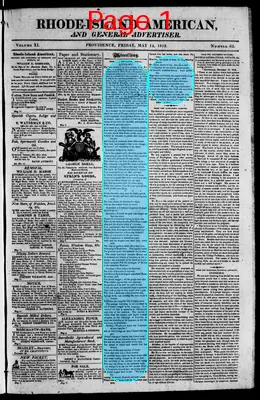
Literary
May 14, 1819
The Rhode Island American, And General Advertiser
Providence, Providence County, Rhode Island
What is this article about?
The New-Haven Journal reviews the first issue of the New-York periodical Villager, featuring poetic extracts from John Howard Payne's historical tragedy Brutus, or the Fall of Tarquin, praising its merit in depicting Lucretia's virtue, domestic happiness, and Brutus's rousing speech against tyranny, despite limited performances.
Clipping
OCR Quality
95%
Excellent
Full Text
FROM THE NEW-HAVEN JOURNAL.
LITERARY.
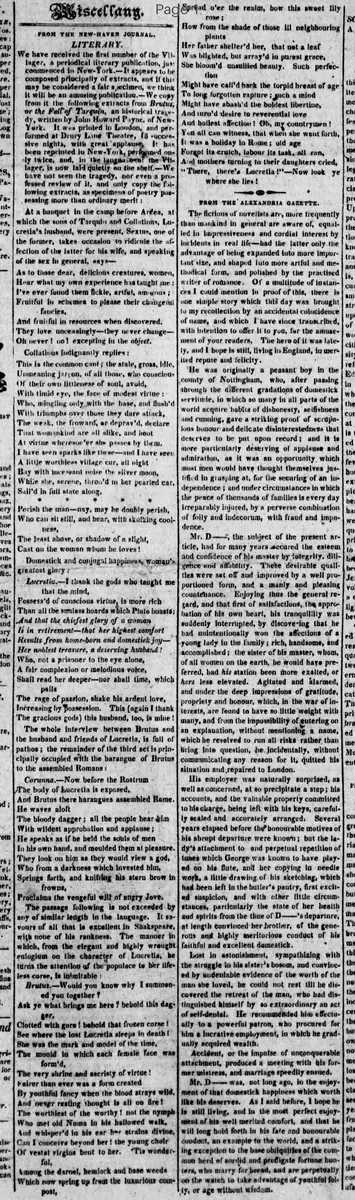
We have received the first number of the Villager, a periodical literary publication, just commenced in New-York.—It appears to be composed principally of extracts, and if this may be considered a fair specimen, we think it will be an amusing publication.—We copy from it the following extracts from Brutus, or the Fall of Tarquin, an historical tragedy, written by John Howard Payne, of New-York. It was printed in London, and performed at Drury Lane Theatre, 18 successive nights, with great applause. It has been reprinted in New-York, performed only twice, and, in the language of the Villager, is now laid quietly on the shelf.—We have not seen the tragedy, nor even a professed review of it, and only copy the following extracts, as specimens of poetry possessing more than ordinary merit:
At a banquet in the camp before Ardea, at which the sons of Tarquin and Collatinus, Lucretia's husband, were present, Sextus, one of the former, takes occasion to ridicule the affection of the latter for his wife, and speaking of the sex in general, says—
As to those dear, delicious creatures, women,
Hear what my own experience has taught me:
I've ever found them fickle, artful, amorous;
Fruitful in schemes to please their changeful fancies,
And fruitful in resources when discovered.
They love unceasingly—they never change—
Oh never! no! excepting in the object.
Collatinus indignantly replies:
This is the common cant; the stale, gross, idle,
Unmeaning jargon, of all those, who conscious
Of their own littleness of soul, avoid,
With timid eye, the face of modest virtue:
Who, mingling only with the base, and flush'd
With triumphs over those they dare attack,
The weak, the froward, or depraved, declare
That womankind are all alike, and hoot
At virtue wheresoe'er she passes by them.
I have seen sparks like these—and I have seen
A little worthless village cur, all night
Bay with incessant noise the silver moon,
While she, serene, thron'd in her pearled car.
Sail'd in full state along.
Perish the man—nay, may he doubly perish,
Who can sit still, and bear, with skulking coolness,
The least abuse, or shadow of a slight,
Cast on the woman whom he loves!
Domestic and conjugal happiness, Woman's greatest glory:
Lucretia.—I thank the gods who taught me that the mind.
Possess'd of conscious virtue, is more rich
Than all the sunless hoards which Pluto boasts;
And that the chiefest glory of a woman
Is in retirement—that her highest comfort
Results from home-born and domestic joy—
Her noblest treasure, a deserving husband!
Who, not a prisoner to the eye alone,
A fair complexion or melodious voice,
Shall read her deeper—nor shall time, which palls
The rage of passion, shake his ardent love,
Increasing by Possession. This (again I thank
The gracious gods) this husband, too, is mine!
The whole interview between Brutus and the husband and friends of Lucretia, is full of pathos; the remainder of the third act is principally occupied with the harangue of Brutus to the assembled Romans:
Corinna.—Now before the Rostrum
The body of Lucretia is exposed,
And Brutus there harangues assembled Rome.
He waves aloft
The bloody dagger; all the people hear him
With wildest approbation and applause;
He speaks as if he held the souls of men
In his own hand, and moulded them at pleasure.
They look on him as they would view a god,
Who from a darkness which invested him,
Springs forth, and knitting his stern brow in frowns,
Proclaims the vengeful will of angry Jove.
The passage following is not exceeded by any of similar length in the language. It savours of all that is excellent in Shakspeare, with note of his rankness. The manner in which, from the elegant and highly wrought eulogium on the character of Lucretia, he turns the attention of the populace to her lifeless corse, is inimitable:
Brutus.—Would you know why I summoned you together?
Ask ye what brings me here? behold this dagger,
Clotted with gore! behold that frozen corse!
See where the lost Lucretia sleeps in death!
She was the mark and model of the time,
The mould in which each female face was form'd,
The very shrine and sacristy of virtue!
Fairer than ever was a form created
By youthful fancy when the blood strays wild,
And never resting thought is all on fire!
The worthiest of the worthy! not the nymph
Who met old Numa in his hallowed walk,
And whisper'd in his ear her strains divine.
Can I conceive beyond her! the young choir
Of vestal virgins bent to her. 'Tis wonderful,
Among the darnel, hemlock and base weeds
Which now spring up from the luxurious soil of Rome;
How from the shade of those ill neighbouring plants
Her father shelter'd her, that not a leaf
Was blighted, but array'd in purest grace,
She bloom'd unsullied beauty. Such perfection
Might have call'd back the torpid breast of age
To long forgotten rapture; such a mind
Might have abash'd the boldest libertine,
And turn'd desire to reverential love
And holiest affection! Oh, my countrymen!
You all can witness, that when she went forth,
It was a holiday in Rome; old age
Forgot its crutch, labour its task, all ran,
And mothers turning to their daughters cried,
There, there's Lucretia!”—Now look ye where she lies!
LITERARY.
We have received the first number of the Villager, a periodical literary publication, just commenced in New-York.—It appears to be composed principally of extracts, and if this may be considered a fair specimen, we think it will be an amusing publication.—We copy from it the following extracts from Brutus, or the Fall of Tarquin, an historical tragedy, written by John Howard Payne, of New-York. It was printed in London, and performed at Drury Lane Theatre, 18 successive nights, with great applause. It has been reprinted in New-York, performed only twice, and, in the language of the Villager, is now laid quietly on the shelf.—We have not seen the tragedy, nor even a professed review of it, and only copy the following extracts, as specimens of poetry possessing more than ordinary merit:
At a banquet in the camp before Ardea, at which the sons of Tarquin and Collatinus, Lucretia's husband, were present, Sextus, one of the former, takes occasion to ridicule the affection of the latter for his wife, and speaking of the sex in general, says—
As to those dear, delicious creatures, women,
Hear what my own experience has taught me:
I've ever found them fickle, artful, amorous;
Fruitful in schemes to please their changeful fancies,
And fruitful in resources when discovered.
They love unceasingly—they never change—
Oh never! no! excepting in the object.
Collatinus indignantly replies:
This is the common cant; the stale, gross, idle,
Unmeaning jargon, of all those, who conscious
Of their own littleness of soul, avoid,
With timid eye, the face of modest virtue:
Who, mingling only with the base, and flush'd
With triumphs over those they dare attack,
The weak, the froward, or depraved, declare
That womankind are all alike, and hoot
At virtue wheresoe'er she passes by them.
I have seen sparks like these—and I have seen
A little worthless village cur, all night
Bay with incessant noise the silver moon,
While she, serene, thron'd in her pearled car.
Sail'd in full state along.
Perish the man—nay, may he doubly perish,
Who can sit still, and bear, with skulking coolness,
The least abuse, or shadow of a slight,
Cast on the woman whom he loves!
Domestic and conjugal happiness, Woman's greatest glory:
Lucretia.—I thank the gods who taught me that the mind.
Possess'd of conscious virtue, is more rich
Than all the sunless hoards which Pluto boasts;
And that the chiefest glory of a woman
Is in retirement—that her highest comfort
Results from home-born and domestic joy—
Her noblest treasure, a deserving husband!
Who, not a prisoner to the eye alone,
A fair complexion or melodious voice,
Shall read her deeper—nor shall time, which palls
The rage of passion, shake his ardent love,
Increasing by Possession. This (again I thank
The gracious gods) this husband, too, is mine!
The whole interview between Brutus and the husband and friends of Lucretia, is full of pathos; the remainder of the third act is principally occupied with the harangue of Brutus to the assembled Romans:
Corinna.—Now before the Rostrum
The body of Lucretia is exposed,
And Brutus there harangues assembled Rome.
He waves aloft
The bloody dagger; all the people hear him
With wildest approbation and applause;
He speaks as if he held the souls of men
In his own hand, and moulded them at pleasure.
They look on him as they would view a god,
Who from a darkness which invested him,
Springs forth, and knitting his stern brow in frowns,
Proclaims the vengeful will of angry Jove.
The passage following is not exceeded by any of similar length in the language. It savours of all that is excellent in Shakspeare, with note of his rankness. The manner in which, from the elegant and highly wrought eulogium on the character of Lucretia, he turns the attention of the populace to her lifeless corse, is inimitable:
Brutus.—Would you know why I summoned you together?
Ask ye what brings me here? behold this dagger,
Clotted with gore! behold that frozen corse!
See where the lost Lucretia sleeps in death!
She was the mark and model of the time,
The mould in which each female face was form'd,
The very shrine and sacristy of virtue!
Fairer than ever was a form created
By youthful fancy when the blood strays wild,
And never resting thought is all on fire!
The worthiest of the worthy! not the nymph
Who met old Numa in his hallowed walk,
And whisper'd in his ear her strains divine.
Can I conceive beyond her! the young choir
Of vestal virgins bent to her. 'Tis wonderful,
Among the darnel, hemlock and base weeds
Which now spring up from the luxurious soil of Rome;
How from the shade of those ill neighbouring plants
Her father shelter'd her, that not a leaf
Was blighted, but array'd in purest grace,
She bloom'd unsullied beauty. Such perfection
Might have call'd back the torpid breast of age
To long forgotten rapture; such a mind
Might have abash'd the boldest libertine,
And turn'd desire to reverential love
And holiest affection! Oh, my countrymen!
You all can witness, that when she went forth,
It was a holiday in Rome; old age
Forgot its crutch, labour its task, all ran,
And mothers turning to their daughters cried,
There, there's Lucretia!”—Now look ye where she lies!
What sub-type of article is it?
Dialogue
Soliloquy
Poem
What themes does it cover?
Political
Liberty Freedom
Moral Virtue
What keywords are associated?
Historical Tragedy
Lucretia
Tarquin
Brutus
Roman Virtue
Tyranny
Poetic Extracts
What entities or persons were involved?
John Howard Payne, Of New York
Literary Details
Title
Brutus, Or The Fall Of Tarquin
Author
John Howard Payne, Of New York
Subject
Historical Tragedy On The Fall Of Tarquin
Form / Style
Historical Tragedy In Verse
Key Lines
As To Those Dear, Delicious Creatures, Women,
Hear What My Own Experience Has Taught Me:
I've Ever Found Them Fickle, Artful, Amorous;
Fruitful In Schemes To Please Their Changeful
Fancies,
And Fruitful In Resources When Discovered.
They Love Unceasingly—They Never Change—
Oh Never! No! Excepting In The Object.
This Is The Common Cant; The Stale, Gross, Idle,
Unmeaning Jargon, Of All Those, Who Conscious
Of Their Own Littleness Of Soul, Avoid,
With Timid Eye, The Face Of Modest Virtue:
I Thank The Gods Who Taught Me
That The Mind.
Possess'd Of Conscious Virtue, Is More Rich
Than All The Sunless Hoards Which Pluto Boasts;
Would You Know Why I Summoned You Together?
Ask Ye What Brings Me Here? Behold This Dag
Ger,
Clotted With Gore! Behold That Frozen Corse!
See Where The Lost Lucretia Sleeps In Death!
She Was The Mark And Model Of The Time,
The Mould In Which Each Female Face Was
Form'd,
The Very Shrine And Sacristy Of Virtue!
Fairer Than Ever Was A Form Created
By Youthful Fancy When The Blood Strays Wild,
And Never Resting Thought Is All On Fire!
The Worthiest Of The Worthy! Not The Nymph
Who Met Old Numa In His Hallowed Walk,
And Whisper'd In His Ear Her Strains Divine.
Can I Conceive Beyond Her! The Young Choir
Of Vestal Virgins Bent To Her. 'Tis Wonder
Ful,
Among The Darnel, Hemlock And Base Weeds
Which Now Spring Up From The Luxurious Soil
Of Rome;
How From The Shade Of Those Ill Neighbouring
Plants
Her Father Shelter'd Her, That Not A Leaf
Was Blighted, But Array'd In Purest Grace,
She Bloom'd Unsullied Beauty. Such Perfec
Tion
Might Have Call'd Back The Torpid Breast Of Age
To Long Forgotten Rapture; Such A Mind
Might Have Abash'd The Boldest Libertine,
And Turn'd Desire To Reverential Love
And Holiest Affection! Oh, My Countrymen!
You All Can Witness, That When She Went Forth,
It Was A Holiday In Rome; Old Age
Forgot Its Crutch, Labour Its Task, All Ran,
And Mothers Turning To Their Daughters Cried,
There, There's Lucretia!”—Now Look Ye
Where She Lies!