Thank you for visiting SNEWPapers!
Sign up free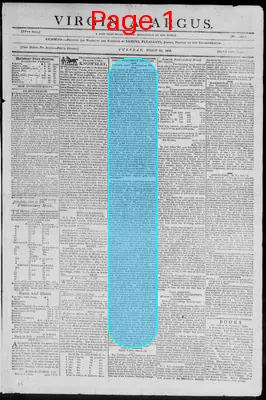
Virginia Argus
Richmond, Virginia
What is this article about?
Sampson's Memoirs excerpt on 1798 Ireland: British army's abuses fueled rebellion; Cornwallis reforms curbed tortures and crimes, offered pardons, but faced opposition with post-surrender murders; punished yeomen for boy's killing despite acquittal.
Clipping

OCR Quality
Full Text
BRITISH ARMY IN IRELAND, 1798.
" At length, to pass over a world of odious details, came the marquis Cornwallis, bringing words of peace. Civil and military licentiousness were now at their height. You must have heard, that when the gallant and respected Abercrombie, since dead in the field of honor, was sent to command the army in Ireland, he found it impossible to make head against so much crime and anarchy. The combined efforts of Clare and Carhampton, and the weakness of what they called a strong government, had driven the whole people to rebellion, and made enemies of almost every honest man. The old and respectable magistrates, men of property and reputation in the country, were struck out of the commission of the peace, and foreign mercenaries put into it. The population of whole districts were swept without remorse on board tenders and prison ships; and fathers of families torn from their poor and peaceful cottages, to be sent on board the British fleet, where the tale of their bitter and just complaint was necessarily to form the leaven of that fearful event so aptly called Carhampton's mutiny : and which was like to have cost the king of England more than the violence of a million of such men, with their strong governments, could ever do him good. Weak men, they had not minds to conceive that the only strong government, is that which is strong in the confidence of the people governed. They called these crimes, dictated by their own petty passions, by the name of "vigor beyond the law." So Robespierre called his. In short, he and his associates, seemed in every thing. except sincerity, to be their model. The difference was, that his cruelties fell chiefly on the rich and great- theirs afflicted the humble and the poor.-- The eloquence of Europe has been exhausted in reprobating his crime. The mention of theirs, is still treason and death. Alas! the advocates of the poor, are few, and their reward is ruin. To celebrate successful villainy, is the sure road to gain and to preferment."
"Lord Cornwallis, something wiser than his predecessors, or at least unactuated by party spite, saw how nearly all was lost, and formed a better plan. He shut up the houses of torture. He forbade pitched caps to be burned on mens heads. He put an end, in a great measure, to the ravishing of women, and the killing or whipping of Irishmen for sport. He interdicted half hanging to extort confessions. He put a stop to much of the petty-fogging and chicaning part of the administration; and he offered pardon and protection to such as would lay down their arms and return to their homes. But unhappily, whether it was that the faction were too strong for him, and wished to blacken him as faithless and disloyal, and to gratify their jealousy by thwarting his measures, certain it is that many had no sooner laid down their arms. than they were murdered defenceless, and in one instance particularly,the massacre of Glencoe was acted over on the Curragh of Kildare.
" It is but justice, however, to this nobleman, to relate one instance in which he asserted his dignity with true energy. Two yeomen, so they called themselves, had gone to the house of a poor widow; whilst one guarded the door, the other went in, dragged a young boy from his sickbed, and in contempt of every protection which he had received from the government, shot the son in the arms of his mother. The culprit, on his trial, avowed the fact: and audaciously called several officers to justify him under military orders, and to depose upon their oaths that what he did was his duty. And in their sense so it certainly was, and he was readily acquitted. But Lord Cornwallis saw it differently, and ordered his disapprobation of the sentence to be read in open court, to Lord Enniskillen the president and the other officers composing the court martial; disqualified them forever from sitting on any other court martial, and the yeomen from ever serving the king. And this, as it was strongly stated, in his order published officially in the newspapers, " for having acquitted, without any pretext, a man guilty upon the clearest and uncontradicted evidence of a wilful and deliberate murder."— Perhaps you will wonder that I should state this fact as any thing extraordinary: you will be surprised, possibly, to hear, that any country, where the British constitution was professed, should be in such' a state of wretchedness, that an act of justice no stronger than the punishment of murder and misprision by a reprimand, should excite furious animosity on one side, and transports of admiration on the other. But so long had the reign of terror lasted, that the very mention of bringing any of this faction to justice, was looked upon by the rest, as an insolent encroachment upon their murderous prerogatives. Nor would this story ever been known either to Lord Cornwallis or to the public, more than thousands of others buried with the victims in the grave, had it not been for the accidental protection afforded to this poor widow, by a lady of fortune and fashion-Mrs. Latouche."
What sub-type of article is it?
What keywords are associated?
What entities or persons were involved?
Where did it happen?
Foreign News Details
Primary Location
Ireland
Event Date
1798
Key Persons
Outcome
reforms curbed abuses including torture and murders; opposition led to post-surrender killings like massacre on curragh of kildare; yeomen punished for murder via disqualification from service and court martials
Event Details
Excerpt from Sampson's Memoirs details British army's licentiousness in Ireland 1798 under weak government driving rebellion; Abercrombie unable to control; abuses like imprisonments, tortures, rapes; Cornwallis arrives, shuts torture houses, ends abuses, offers pardons but faces factional opposition resulting in murders of disarmed; specific case of yeomen murdering boy, acquitted then overruled by Cornwallis with severe reprimands