Thank you for visiting SNEWPapers!
Sign up free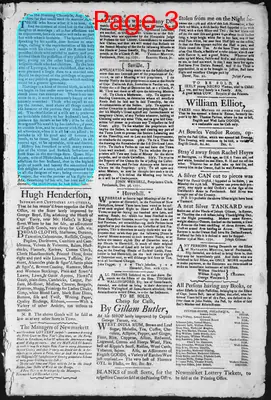
Literary
December 6, 1771
The New Hampshire Gazette And Historical Chronicle
Portsmouth, Greenland, Rockingham County, New Hampshire
What is this article about?
An essay from the Morning Chronicle extolling the virtues of marriage, its divine and legal endorsements in ancient societies, spousal duties, and historical examples of heroic marital loyalty, such as Hypsicratea accompanying Mithridates in exile.
Clipping
OCR Quality
95%
Excellent
Full Text
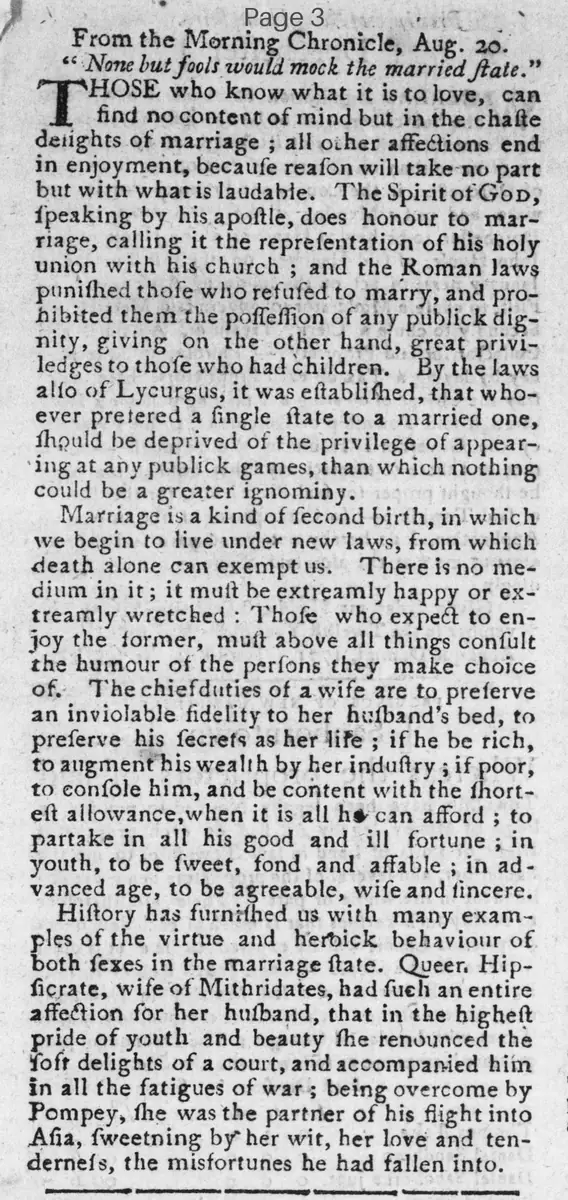
From the Morning Chronicle. Aug. 20.
None but fools would mock the married state.
Those who know what it is to love, can find no content of mind but in the chaste delights of marriage: all other affections end in enjoyment, because reason will take no part but with what is laudable. The Spirit of God, speaking by his apostle, does honour to marriage, calling it the representation of his holy union with his church; and the Roman laws punished those who refused to marry, and prohibited them the possession of any public dignity, giving on the other hand, great privileges to those who had children. By the laws also of Lycurgus, it was established, that whoever preferred a single state to a married one, should be deprived of the privilege of appearing at any public games, than which nothing could be a greater ignominy.
Marriage is a kind of second birth, in which we begin to live under new laws, from which death alone can exempt us. There is no medium in it; it must be extremely happy or extremely wretched: Those who expect to enjoy the former, must above all things consult the humour of the persons they make choice of. The chief duties of a wife are to preserve an inviolable fidelity to her husband's bed, to preserve his secrets as her life; if he be rich, to augment his wealth by her industry; if poor, to console him, and be content with the shortest allowance, when it is all he can afford: to partake in all his good and ill fortune; in youth, to be sweet, fond and affable: in advanced age, to be agreeable, wise and sincere.
History has furnished us with many examples of the virtue and heroick behaviour of both sexes in the marriage state. Hypsicrate, wife of Mithridates, had such an entire affection for her husband, that in the highest pride of youth and beauty she renounced the soft delights of a court, and accompanied him in all the fatigues of war; being overcome by Pompey, she was the partner of his flight into Asia, sweetening by her wit, her love and tenderness, the misfortunes he had fallen into.
None but fools would mock the married state.
Those who know what it is to love, can find no content of mind but in the chaste delights of marriage: all other affections end in enjoyment, because reason will take no part but with what is laudable. The Spirit of God, speaking by his apostle, does honour to marriage, calling it the representation of his holy union with his church; and the Roman laws punished those who refused to marry, and prohibited them the possession of any public dignity, giving on the other hand, great privileges to those who had children. By the laws also of Lycurgus, it was established, that whoever preferred a single state to a married one, should be deprived of the privilege of appearing at any public games, than which nothing could be a greater ignominy.
Marriage is a kind of second birth, in which we begin to live under new laws, from which death alone can exempt us. There is no medium in it; it must be extremely happy or extremely wretched: Those who expect to enjoy the former, must above all things consult the humour of the persons they make choice of. The chief duties of a wife are to preserve an inviolable fidelity to her husband's bed, to preserve his secrets as her life; if he be rich, to augment his wealth by her industry; if poor, to console him, and be content with the shortest allowance, when it is all he can afford: to partake in all his good and ill fortune; in youth, to be sweet, fond and affable: in advanced age, to be agreeable, wise and sincere.
History has furnished us with many examples of the virtue and heroick behaviour of both sexes in the marriage state. Hypsicrate, wife of Mithridates, had such an entire affection for her husband, that in the highest pride of youth and beauty she renounced the soft delights of a court, and accompanied him in all the fatigues of war; being overcome by Pompey, she was the partner of his flight into Asia, sweetening by her wit, her love and tenderness, the misfortunes he had fallen into.
What sub-type of article is it?
Essay
What themes does it cover?
Moral Virtue
Love Romance
Religious
What keywords are associated?
Marriage Virtues
Spousal Duties
Historical Examples
Roman Laws
Lycurgus Laws
Hypsicrate Mithridates
Literary Details
Key Lines
None But Fools Would Mock The Married State.
Marriage Is A Kind Of Second Birth, In Which We Begin To Live Under New Laws, From Which Death Alone Can Exempt Us.
The Chief Duties Of A Wife Are To Preserve An Inviolable Fidelity To Her Husband's Bed, To Preserve His Secrets As Her Life;
History Has Furnished Us With Many Examples Of The Virtue And Heroick Behaviour Of Both Sexes In The Marriage State.
Hypsicrate, Wife Of Mithridates, Had Such An Entire Affection For Her Husband, That In The Highest Pride Of Youth And Beauty She Renounced The Soft Delights Of A Court,