Thank you for visiting SNEWPapers!
Sign up free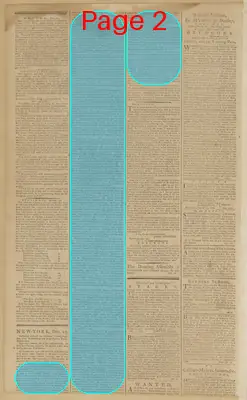
Literary
December 23, 1788
The Daily Advertiser
New York, New York County, New York
What is this article about?
This essay explores the history of medicine from ancient times, arguing that diseases predated luxury and were addressed through early practices like surgery. It praises Greek advancements, especially Hippocrates, critiques over-reliance on ancient texts versus practical experience, condemns empirics and quackery, and calls for licensing and societal honor for the profession to curb abuses while preserving liberty.
Clipping
OCR Quality
98%
Excellent
Full Text
It is evident from history that the human body in the earliest ages, and before the universal prevalence of luxury, was exposed to various diseases: Its complicated organization rendered its motion easy to be retarded or obstructed by the unavoidable influence of an atmosphere. We find that animals, who approach nearly to a state of nature, are yet subject to a variety of distempers. The most useful auxiliary of man is known to labor under many violent disorders, though his food is a pure, vegetable production, presented to him in its highest perfection, and not adulterated by the hand of man. In the infancy of the world, it may reasonably be concluded from the scriptures, that Adam was produced in a stronger and sounder state than after the lapse of many thousand ages, when vice had contaminated the very sources of population. Fresh from the hand of plastic nature, the body was not only more beautiful and proportionate, but less disposed to admit morbid commixtures, and better enabled to expel them. Yet even then, the effects of the weather, of accidents, of long fasting, or repletion, were necessarily felt, and were followed by disease: thus medicine was early cultivated as an art, founded on certain principles and confided in by the sensible part of mankind, as the most probable means of relief. The slaughter of victims for sacrifice, and of animals for food, gave an opportunity of inspecting the parts of organized bodies, which bore a great analogy to the human constitution. Chirurgery and physic derived from this source equal opportunities for improvement. Indeed, it is presumed, that chirurgical operations were the first efforts of the medical art. External maladies, as they were most visible, called more immediately for relief; and external application was the easiest and the most obvious to reflection. Both branches of the art, long after its invention, were united in the same professor, as they are at present among our practitioners. There is, indeed, sufficient reason for their combination, since a skill in them must, in a great measure, result from a knowledge of the same principles, yet, at the same time, each of them will probably be carried to a greater height, when separately pursued by different persons. This indeed seems to accord with the decisions of experience; for of those who have arrived at singular eminence in either of these arts, few have chosen to invade the province of the other. Cheselden did not prescribe in a fever, nor did Radcliffe undertake an amputation.
The Greeks, whose happy policy was admirably adapted to call forth all those fine qualities of the mind, with which they were singularly furnished by nature, advanced not only the ornamental arts of painting, poetry and sculpture, to perfection, but cultivated the useful one of physic with a success, which has enabled the moderns to make their boasted improvements. The writings of Hippocrates, though, for obvious reasons, slighted by the busy practitioner, are held in high estimation by the learned physician. And if the prescriptions of the Coan seem to want simplicity, and fail of their effect at this period, and in our climate; yet have they been of essential service to the art, by introducing what is called the dogmatical method, in the place of the empirical; and their failure as remedies may be reasonably attributed to the alterations which the human frame is found to undergo in the revolution of ages, by a general change of dietetic regimen; by removing to different climates and incorporating with races of men, who seem to be distinguished from the rest even in their bodily organization.
Though the writings of the ancients, of the Grecian Hippocrates and Galen, and of the Arabian Rhazes and Avicenna, are often talked of by the modern professor, yet are they seldom read. Experience, which, after all, is the surest test of utility, seems to justify the neglect. Practical medicine is less indebted to books than any other liberal art. The occasional varieties of distempers are infinite; their complications disguise them, and often produce a new species, or one that has never been described with accuracy. He who has recourse to system, is at a stand when he sees a symptom unobserved before; but he who has studied nature in the original, knows how to change his intentions, and adopt endless remedies to the endless variety of disorders. Yet theory should certainly go before practice, in the preparation for this profession; and the physician who has not read a great deal in his youth, will appear not only illiberal, but grossly ignorant.
From many similar instances, Radcliffe may be selected to prove, that great practical skill, as well as fame in this art, is attainable merely by the aid of experimental physiology. He indeed, it is said, was a genius in medicine. To books he owed but little, and was ambitious to appear less indebted to them than he really was. He knew, it is true, that experience, the safest guide after the mind is prepared for her instructions by previous institution, is apt, without such preparation, to degenerate to a vulgar and presumptuous empiricism. He therefore laid a foundation of general and liberal knowledge, derived from books, on which he erected a noble superstructure, with materials supplied by observation—He certainly possessed in an eminent degree, a sagacity which nature had bestowed; but he was not a man of profound and accurate science. Perhaps, like many of his profession, he owed a great part of his fame and fortune to the caprice of fashion and the concurrence of favorable circumstances.
When we turn our attention to the lowest order of practitioners, empirics and pretenders, we see this noble art most disgracefully perverted. It is, indeed, much to be lamented, that the inferior and more numerous class of mankind, who are most exposed to accidents, and who have the fewest alleviations, are constrained by indigence to seek relief from men, who have no other preparation for the exercise of this important art, but the humble employment of macerating drugs in a mortar, tying labels to the necks of vials, conveying medicines to patients and wearing a shop. Such are often the most daring in the treatment of maladies. But how shall an evil thus generally felt and complained of be obviated, without an infringement of civil liberty, that boasted privilege, of which we are sometimes more jealously tenacious than of health and life? Admonition is ineffectual; for of those who suffer, few have not been apprised of the danger of trusting to empiricism.
The progress of empirical fame and success is easily traced, though not easily retarded. A powerful medicine is exhibited to some wretched individual, whose indigence induces him to be grateful for the notice and assistance of the ignorant. If this complaint is removed, as it would otherwise have been, by the silent operation of time, he is triumphantly dragged forth to public view, and his name is added to attest the wonderful efficacy of the pretender's nostrum. The regular practitioner is insulted. Facts speak for themselves, and even men of sense hear and believe. The gaping crowd press round the mountebank, and swallow the dose of death with avidity, led on by the sunshine of delusive hope, like the poor fluttering insect, that is allured to its own destruction by a deceitful blaze.
The wisdom and authority of the legislature might, indeed, lessen or remove the evil; but it has never yet interfered, not only from an unwillingness to multiply restraint in a free country, but perhaps from a doubt, whether some equivalent advantage may not arise from the liberty of attempting medical experiments. It is a truth somewhat mortifying to the regular votaries of science, that many of the most important discoveries have been made by the ignorant and by chance. Those who have been taught to adhere to systems are sometimes too much attached to the straight and known path, to permit themselves to venture even on a proper deviation. While the uneducated experimentalist, a stranger to the prepossessions unavoidably derived from learning, is almost sure to acquire the merit of originality. Unacquainted with the paths of those who have gone before, he is under a necessity of pursuing a track of his own. He is commonly bewildered, it is true, but yet it sometimes happens that he finds out a shorter or more agreeable road. In the infinite trials which his boldness instigates him to make, he blunders on a useful discovery, which would never have been known to the more expert and cautious. Unfortunate individuals suffer in the course of his inquiries, but mankind are benefited by an accession to experimental knowledge.
In no profession is it more desirable, that there should be examinations previous to a licence to practice. The want of a strict examination will render a profession low and contemptible, which at all times should be highly esteemed.
It was indeed natural that medicine should be highly honored, and its first inventors or improvers exalted to Gods and demi Gods. As life itself is of small value without health, no wonder the restorers of health were ranked among the bestowers of life. The profession has always obtained a high rank in the scale of civil subordination, except indeed, among the Romans. In this instance the moderns act the more wisely, if there is a truth in the maxim, that honor is the nurse of arts.
It is however greatly to be regretted, that popular esteem is often misplaced, and rather tends to encourage bold, presumptuous and unblushing ignorance, than to raise merit from the vale of obscurity. Fashion it is allowed has contributed more to the establishment of many celebrated physicians than any superiority of knowledge that they possessed. This popularity however, has sometimes been the cause of that merit, of which it ought to have been the effect. It has given men of moderate abilities and attainments, such numerous and extensive opportunities of improving by experiments, as could not be obtained by the able, yet unemployed.
Fashion may be allowed to rule with absolute sway in her proper province, in the mundus muliebris; but let her not dictate in matters of importance, as the means of restoring health. Among physicians of integrity and liberal education, let her select whom she pleases: but let her not set aside the votary of science and philosophy, to ask the advice of the needy, the illiterate, the bold empiric.
The Greeks, whose happy policy was admirably adapted to call forth all those fine qualities of the mind, with which they were singularly furnished by nature, advanced not only the ornamental arts of painting, poetry and sculpture, to perfection, but cultivated the useful one of physic with a success, which has enabled the moderns to make their boasted improvements. The writings of Hippocrates, though, for obvious reasons, slighted by the busy practitioner, are held in high estimation by the learned physician. And if the prescriptions of the Coan seem to want simplicity, and fail of their effect at this period, and in our climate; yet have they been of essential service to the art, by introducing what is called the dogmatical method, in the place of the empirical; and their failure as remedies may be reasonably attributed to the alterations which the human frame is found to undergo in the revolution of ages, by a general change of dietetic regimen; by removing to different climates and incorporating with races of men, who seem to be distinguished from the rest even in their bodily organization.
Though the writings of the ancients, of the Grecian Hippocrates and Galen, and of the Arabian Rhazes and Avicenna, are often talked of by the modern professor, yet are they seldom read. Experience, which, after all, is the surest test of utility, seems to justify the neglect. Practical medicine is less indebted to books than any other liberal art. The occasional varieties of distempers are infinite; their complications disguise them, and often produce a new species, or one that has never been described with accuracy. He who has recourse to system, is at a stand when he sees a symptom unobserved before; but he who has studied nature in the original, knows how to change his intentions, and adopt endless remedies to the endless variety of disorders. Yet theory should certainly go before practice, in the preparation for this profession; and the physician who has not read a great deal in his youth, will appear not only illiberal, but grossly ignorant.
From many similar instances, Radcliffe may be selected to prove, that great practical skill, as well as fame in this art, is attainable merely by the aid of experimental physiology. He indeed, it is said, was a genius in medicine. To books he owed but little, and was ambitious to appear less indebted to them than he really was. He knew, it is true, that experience, the safest guide after the mind is prepared for her instructions by previous institution, is apt, without such preparation, to degenerate to a vulgar and presumptuous empiricism. He therefore laid a foundation of general and liberal knowledge, derived from books, on which he erected a noble superstructure, with materials supplied by observation—He certainly possessed in an eminent degree, a sagacity which nature had bestowed; but he was not a man of profound and accurate science. Perhaps, like many of his profession, he owed a great part of his fame and fortune to the caprice of fashion and the concurrence of favorable circumstances.
When we turn our attention to the lowest order of practitioners, empirics and pretenders, we see this noble art most disgracefully perverted. It is, indeed, much to be lamented, that the inferior and more numerous class of mankind, who are most exposed to accidents, and who have the fewest alleviations, are constrained by indigence to seek relief from men, who have no other preparation for the exercise of this important art, but the humble employment of macerating drugs in a mortar, tying labels to the necks of vials, conveying medicines to patients and wearing a shop. Such are often the most daring in the treatment of maladies. But how shall an evil thus generally felt and complained of be obviated, without an infringement of civil liberty, that boasted privilege, of which we are sometimes more jealously tenacious than of health and life? Admonition is ineffectual; for of those who suffer, few have not been apprised of the danger of trusting to empiricism.
The progress of empirical fame and success is easily traced, though not easily retarded. A powerful medicine is exhibited to some wretched individual, whose indigence induces him to be grateful for the notice and assistance of the ignorant. If this complaint is removed, as it would otherwise have been, by the silent operation of time, he is triumphantly dragged forth to public view, and his name is added to attest the wonderful efficacy of the pretender's nostrum. The regular practitioner is insulted. Facts speak for themselves, and even men of sense hear and believe. The gaping crowd press round the mountebank, and swallow the dose of death with avidity, led on by the sunshine of delusive hope, like the poor fluttering insect, that is allured to its own destruction by a deceitful blaze.
The wisdom and authority of the legislature might, indeed, lessen or remove the evil; but it has never yet interfered, not only from an unwillingness to multiply restraint in a free country, but perhaps from a doubt, whether some equivalent advantage may not arise from the liberty of attempting medical experiments. It is a truth somewhat mortifying to the regular votaries of science, that many of the most important discoveries have been made by the ignorant and by chance. Those who have been taught to adhere to systems are sometimes too much attached to the straight and known path, to permit themselves to venture even on a proper deviation. While the uneducated experimentalist, a stranger to the prepossessions unavoidably derived from learning, is almost sure to acquire the merit of originality. Unacquainted with the paths of those who have gone before, he is under a necessity of pursuing a track of his own. He is commonly bewildered, it is true, but yet it sometimes happens that he finds out a shorter or more agreeable road. In the infinite trials which his boldness instigates him to make, he blunders on a useful discovery, which would never have been known to the more expert and cautious. Unfortunate individuals suffer in the course of his inquiries, but mankind are benefited by an accession to experimental knowledge.
In no profession is it more desirable, that there should be examinations previous to a licence to practice. The want of a strict examination will render a profession low and contemptible, which at all times should be highly esteemed.
It was indeed natural that medicine should be highly honored, and its first inventors or improvers exalted to Gods and demi Gods. As life itself is of small value without health, no wonder the restorers of health were ranked among the bestowers of life. The profession has always obtained a high rank in the scale of civil subordination, except indeed, among the Romans. In this instance the moderns act the more wisely, if there is a truth in the maxim, that honor is the nurse of arts.
It is however greatly to be regretted, that popular esteem is often misplaced, and rather tends to encourage bold, presumptuous and unblushing ignorance, than to raise merit from the vale of obscurity. Fashion it is allowed has contributed more to the establishment of many celebrated physicians than any superiority of knowledge that they possessed. This popularity however, has sometimes been the cause of that merit, of which it ought to have been the effect. It has given men of moderate abilities and attainments, such numerous and extensive opportunities of improving by experiments, as could not be obtained by the able, yet unemployed.
Fashion may be allowed to rule with absolute sway in her proper province, in the mundus muliebris; but let her not dictate in matters of importance, as the means of restoring health. Among physicians of integrity and liberal education, let her select whom she pleases: but let her not set aside the votary of science and philosophy, to ask the advice of the needy, the illiterate, the bold empiric.
What sub-type of article is it?
Essay
What themes does it cover?
Moral Virtue
Political
Liberty Freedom
What keywords are associated?
Medicine
History
Empirics
Physicians
Hippocrates
Experience
Quackery
Regulation
Greek
Radcliffe
Literary Details
Form / Style
Prose Essay On The History And Ethics Of Medicine
Key Lines
It Is Evident From History That The Human Body In The Earliest Ages, And Before The Universal Prevalence Of Luxury, Was Exposed To Various Diseases
The Writings Of Hippocrates, Though, For Obvious Reasons, Slighted By The Busy Practitioner, Are Held In High Estimation By The Learned Physician.
Practical Medicine Is Less Indebted To Books Than Any Other Liberal Art.
When We Turn Our Attention To The Lowest Order Of Practitioners, Empirics And Pretenders, We See This Noble Art Most Disgracefully Perverted.
In No Profession Is It More Desirable, That There Should Be Examinations Previous To A Licence To Practice.