Thank you for visiting SNEWPapers!
Sign up free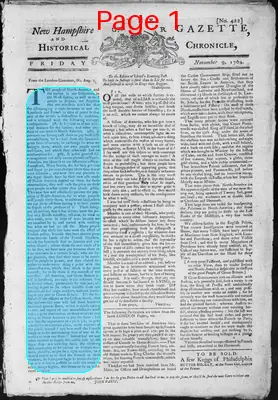
Editorial
November 9, 1764
The New Hampshire Gazette And Historical Chronicle
Portsmouth, Greenland, Rockingham County, New Hampshire
What is this article about?
Editorial criticizes British ministers for restricting trade between North American colonies and Spanish/French in West Indies during peace, arguing it deprives markets for produce, cash for British goods, raises prices for essentials, hinders settlement, and benefits sugar planters in Parliament at the expense of broader British and colonial interests, including reduced customs revenue.
Clipping
OCR Quality
98%
Excellent
Full Text
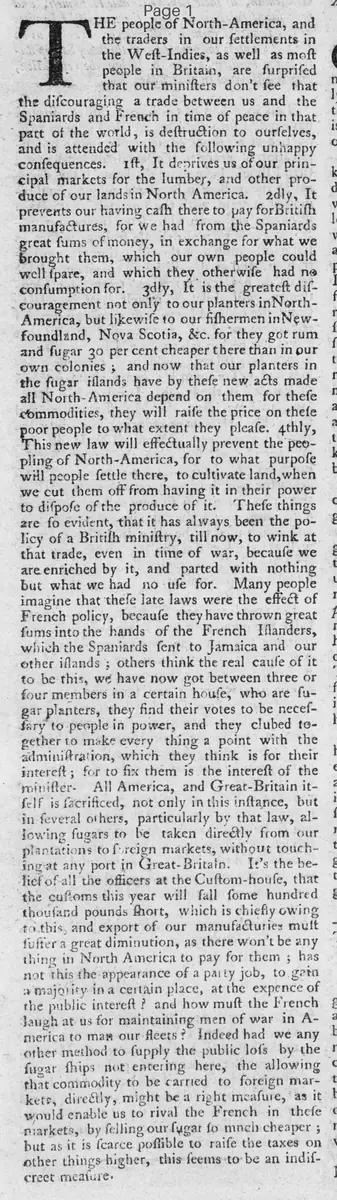
THE people of North-America, and the traders in our settlements in the West-Indies, as well as most people in Britain, are surprised that our ministers don't see that the discouraging a trade between us and the Spaniards and French in time of peace in that part of the world, is destruction to ourselves, and is attended with the following unhappy consequences.
First, It deprives us of our principal markets for the lumber, and other produce of our lands in North America.
2dly, It prevents our having cash there to pay for British manufactures, for we had from the Spaniards great sums of money, in exchange for what we brought them, which our own people could well spare, and which they otherwise had no consumption for.
3dly, It is the greatest discouragement not only to our planters in North-America, but likewise to our fishermen in Newfoundland, Nova Scotia, &c. for they got rum and sugar 30 per cent cheaper there than in our own colonies; and now that our planters in the sugar islands have by these new acts made all North-America depend on them for these commodities, they will raise the price on these poor people to what extent they please.
4thly, This new law will effectually prevent the peopling of North-America, for to what purpose will people settle there, to cultivate land, when we cut them off from having it in their power to dispose of the produce of it.
These things are so evident, that it has always been the policy of a British ministry, till now, to wink at that trade, even in time of war, because we are enriched by it, and parted with nothing but what we had no use for.
Many people imagine that these late laws were the effect of French policy, because they have thrown great sums into the hands of the French Islanders, which the Spaniards sent to Jamaica and our other islands: others think the real cause of it to be this, we have now got between three or four members in a certain house, who are sugar planters, they find their votes to be necessary to people in power, and they clubbed together to make every thing a point with the administration, which they think is for their interest: for to fix them is the interest of the minister.
All America, and Great-Britain itself is sacrificed, not only in this instance, but in several others, particularly by that law, allowing sugars to be taken directly from our plantations to foreign markets, without touching at any port in Great-Britain.
It's the belief of all the officers at the Custom-house, that the customs this year will fall some hundred thousand pounds short, which is chiefly owing to this, and export of our manufactures must suffer a great diminution, as there won't be any thing in North America to pay for them; has not this the appearance of a party job, to gain a majority in a certain place, at the expense of the public interest? and how must the French laugh at us for maintaining men of war in America to man our fleets?
Indeed had we any other method to supply the public loss by the sugar ships not entering here, the allowing that commodity to be carried to foreign markets, directly, might be a right measure, as it would enable us to rival the French in these markets, by selling our sugar so much cheaper; but as it is scarce possible to raise the taxes on other things higher, this seems to be an indiscreet measure.
First, It deprives us of our principal markets for the lumber, and other produce of our lands in North America.
2dly, It prevents our having cash there to pay for British manufactures, for we had from the Spaniards great sums of money, in exchange for what we brought them, which our own people could well spare, and which they otherwise had no consumption for.
3dly, It is the greatest discouragement not only to our planters in North-America, but likewise to our fishermen in Newfoundland, Nova Scotia, &c. for they got rum and sugar 30 per cent cheaper there than in our own colonies; and now that our planters in the sugar islands have by these new acts made all North-America depend on them for these commodities, they will raise the price on these poor people to what extent they please.
4thly, This new law will effectually prevent the peopling of North-America, for to what purpose will people settle there, to cultivate land, when we cut them off from having it in their power to dispose of the produce of it.
These things are so evident, that it has always been the policy of a British ministry, till now, to wink at that trade, even in time of war, because we are enriched by it, and parted with nothing but what we had no use for.
Many people imagine that these late laws were the effect of French policy, because they have thrown great sums into the hands of the French Islanders, which the Spaniards sent to Jamaica and our other islands: others think the real cause of it to be this, we have now got between three or four members in a certain house, who are sugar planters, they find their votes to be necessary to people in power, and they clubbed together to make every thing a point with the administration, which they think is for their interest: for to fix them is the interest of the minister.
All America, and Great-Britain itself is sacrificed, not only in this instance, but in several others, particularly by that law, allowing sugars to be taken directly from our plantations to foreign markets, without touching at any port in Great-Britain.
It's the belief of all the officers at the Custom-house, that the customs this year will fall some hundred thousand pounds short, which is chiefly owing to this, and export of our manufactures must suffer a great diminution, as there won't be any thing in North America to pay for them; has not this the appearance of a party job, to gain a majority in a certain place, at the expense of the public interest? and how must the French laugh at us for maintaining men of war in America to man our fleets?
Indeed had we any other method to supply the public loss by the sugar ships not entering here, the allowing that commodity to be carried to foreign markets, directly, might be a right measure, as it would enable us to rival the French in these markets, by selling our sugar so much cheaper; but as it is scarce possible to raise the taxes on other things higher, this seems to be an indiscreet measure.
What sub-type of article is it?
Trade Or Commerce
Economic Policy
Partisan Politics
What keywords are associated?
North America Trade
West Indies Commerce
British Ministers
Sugar Planters Influence
Colonial Markets
Economic Consequences
French Policy
Customs Revenue Loss
What entities or persons were involved?
British Ministers
Sugar Planters
Spaniards
French
People Of North America
Traders In West Indies
People In Britain
Editorial Details
Primary Topic
Criticism Of British Trade Restrictions With Spanish And French In West Indies
Stance / Tone
Strongly Opposed To New Trade Laws Harming Colonial And British Interests
Key Figures
British Ministers
Sugar Planters
Spaniards
French
People Of North America
Traders In West Indies
People In Britain
Key Arguments
Deprives Principal Markets For Lumber And Produce
Prevents Cash For British Manufactures From Spanish Trade
Discourages North American Planters And Fishermen With Higher Rum And Sugar Prices
Prevents Peopling Of North America By Limiting Produce Disposal
Past British Policy Winked At Trade Even In War For Enrichment
Laws Possibly Effect Of French Policy Benefiting French Islanders
Influence Of Sugar Planters In Parliament Sacrificing Broader Interests
Allows Sugars To Foreign Markets Directly Reducing British Customs
Appearance Of Party Job For Majority At Public Expense
Indiscreet Measure Without Tax Compensation