Thank you for visiting SNEWPapers!
Sign up free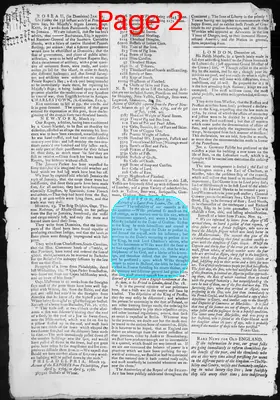
The New Hampshire Gazette And Historical Chronicle
Portsmouth, Greenland, Rockingham County, New Hampshire
What is this article about?
Extract from a London letter dated Dec. 18 describes British political instability. Wilks seeks royal pardon via the Duke of Grafton, but Lord Chatham advises against it, citing Wilks as a blasphemer and libeler. Wilks then flees to Holland due to debts in France and impending legal action as an outlaw.
Clipping
OCR Quality
Full Text
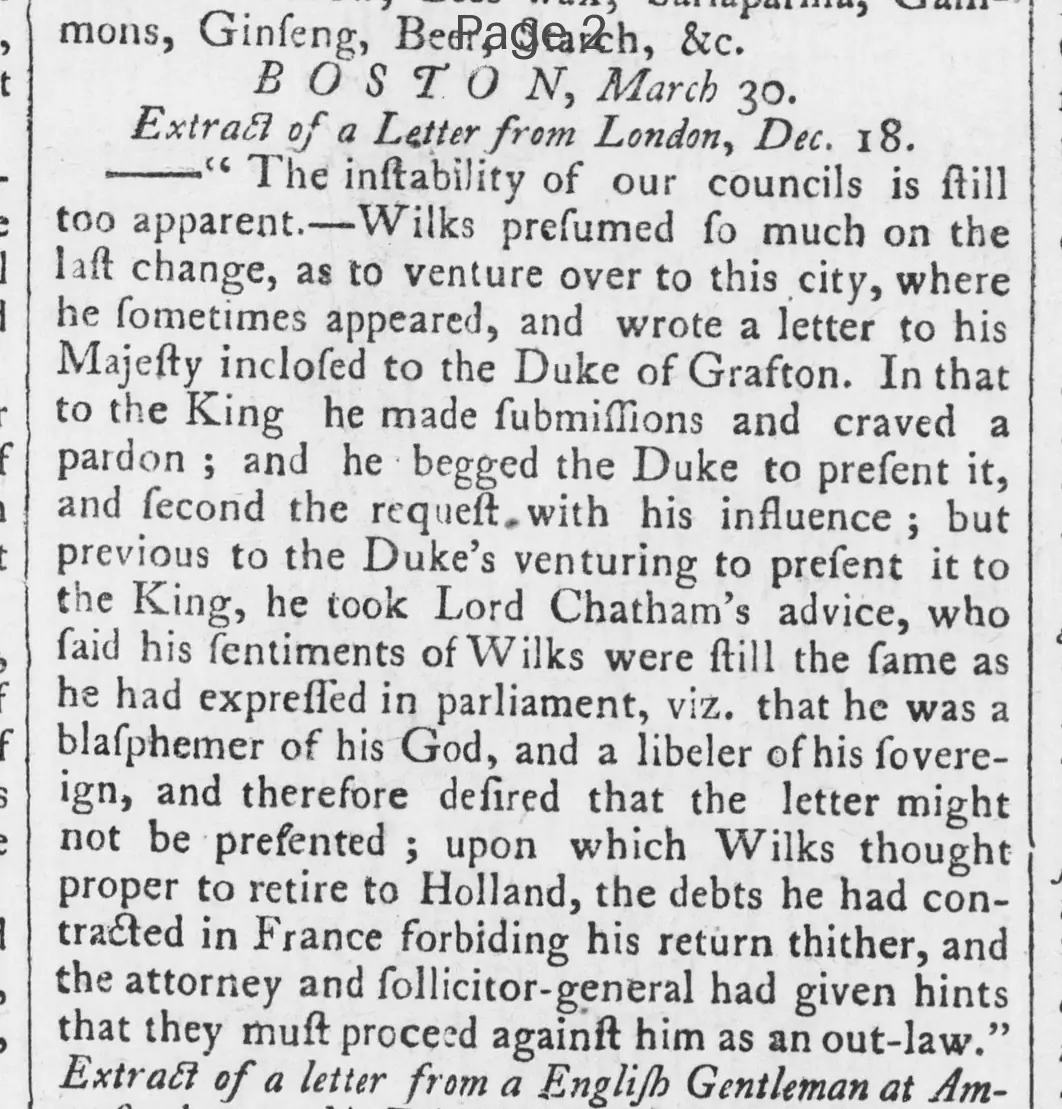
Extract of a Letter from London, Dec. 18.
"The instability of our councils is still too apparent.--Wilks presumed so much on the last change, as to venture over to this city, where he sometimes appeared, and wrote a letter to his Majesty inclosed to the Duke of Grafton. In that to the King he made submissions and craved a pardon; and he begged the Duke to present it, and second the request with his influence; but previous to the Duke's venturing to present it to the King, he took Lord Chatham's advice, who said his sentiments of Wilks were still the same as he had expressed in parliament, viz. that he was a blasphemer of his God, and a libeler of his sovereign, and therefore desired that the letter might not be presented; upon which Wilks thought proper to retire to Holland, the debts he had contracted in France forbidding his return thither, and the attorney and solicitor-general had given hints that they must proceed against him as an out-law."
What sub-type of article is it?
What keywords are associated?
What entities or persons were involved?
Where did it happen?
Foreign News Details
Primary Location
London
Event Date
Dec. 18
Key Persons
Outcome
wilks retires to holland due to debts in france and threats of proceeding against him as an outlaw
Event Details
The instability of our councils is still too apparent.--Wilks presumed so much on the last change, as to venture over to this city, where he sometimes appeared, and wrote a letter to his Majesty inclosed to the Duke of Grafton. In that to the King he made submissions and craved a pardon; and he begged the Duke to present it, and second the request with his influence; but previous to the Duke's venturing to present it to the King, he took Lord Chatham's advice, who said his sentiments of Wilks were still the same as he had expressed in parliament, viz. that he was a blasphemer of his God, and a libeler of his sovereign, and therefore desired that the letter might not be presented; upon which Wilks thought proper to retire to Holland, the debts he had contracted in France forbidding his return thither, and the attorney and solicitor-general had given hints that they must proceed against him as an out-law.