Thank you for visiting SNEWPapers!
Sign up free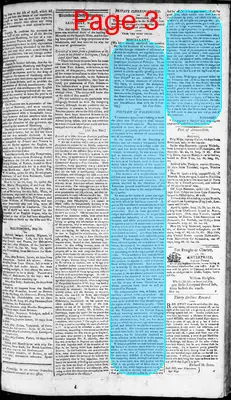
Literary
May 24, 1806
Alexandria Daily Advertiser
Alexandria, Virginia
What is this article about?
A laudatory essay by Fontanes, published in The Port Folio, portrays George Washington's character: his solid military judgment, humanity in war, role in American independence, resignation of power post-war, prudent and mild administration, embodiment of good sense, order, and love of liberty, drawing parallels to ancient virtues.
Clipping
OCR Quality
95%
Excellent
Full Text
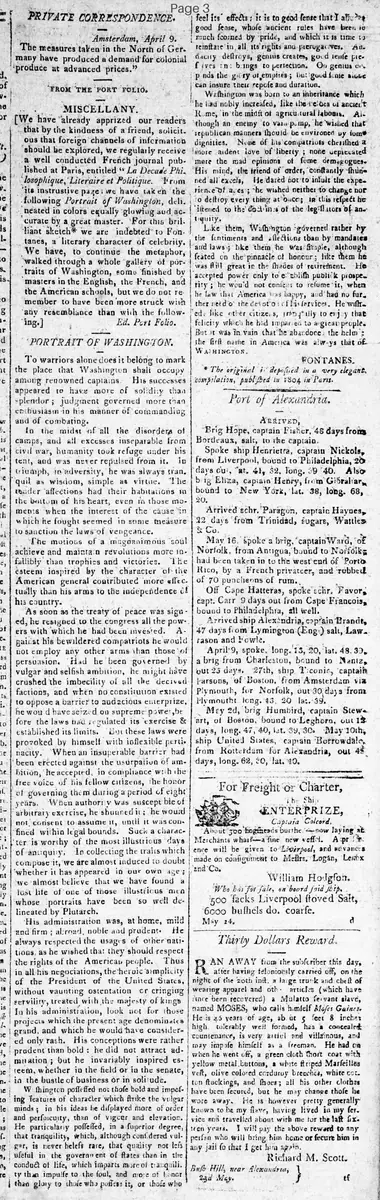
FROM THE PORT FOLIO.
MISCELLANY
[We have already apprised our readers that by the kindness of a friend, solicitous that foreign channels of information should be explored, we regularly receive a well conducted French journal published at Paris, entitled "La Decade Philosophique, Literaire et Politique." From its instructive pages we have taken the following Portrait of Washington, delineated in colors equally glowing and accurate by a great master. For this brilliant sketch we are indebted to Fontanes, a literary character of celebrity. We have, to continue the metaphor, walked through a whole gallery of portraits of Washington, some finished by masters in the English, the French, and the American schools, but we do not remember to have been more struck with any resemblance than with the following.]
Ed. Port Folio.
PORTRAIT OF WASHINGTON.
To warriors alone does it belong to mark the place that Washington shall occupy among renowned captains. His successes appeared to have more of solidity than splendor; judgment governed more than enthusiasm in his manner of commanding and of combating.
In the midst of all the disorders of camps, and all excesses inseparable from civil war, humanity took refuge under his tent, and was never repulsed from it. In triumph, in adversity, he was always tranquil as wisdom, simple as virtue. The broader affections had their habitations in the bottom of his heart, even in those moments when the interest of the cause in which he fought seemed in some measure to sanction the laws of vengeance.
The motions of a magnanimous soul achieve and maintain revolutions more infallibly than trophies and victories. The esteem inspired by the character of the American general contributed more effectually than his arms to the independence of his country.
As soon as the treaty of peace was signed, he resigned to the congress all the powers with which he had been invested. Against his bewildered compatriots he would not employ any other arms than those of persuasion. Had he been governed by vulgar and selfish ambition, he might have crushed the imbecility of all the deceived factions, and when no constitution existed to oppose a barrier to audacious enterprise, he would have seized on supreme power, before the laws had regulated its exercise and established its limits. But these laws were provoked by himself with inflexible pertinacity. When an insuperable barrier had been erected against the usurpation of ambition, he accepted, in compliance with the free voice of his fellow citizens, the honor of governing them during a period of eight years. When authority was susceptible of arbitrary exercise, he shunned it; he would not consent to assume it, until it was confined within legal bounds. Such a character is worthy of the most illustrious days of antiquity. In collecting the traits which compose it, we are almost induced to doubt whether it has appeared in our own age; we almost believe that we have found a lost life of one of those illustrious men whose portraits have been so well delineated by Plutarch.
His administration was, at home, mild and firm; abroad, noble and prudent. He always respected the usages of other nations, as he wished that they should respect the rights of the American people. Thus in all his negociations, the heroic simplicity of the President of the United States, without vaunting ostentation or cringing servility, treated with the majesty of kings.
In his administration, look not for those projects which the present age denominates grand, and which he would have considered only rash. His conceptions were rather prudent than bold: he did not attract admiration; but he invariably inspired esteem, whether in the field or in the senate, in the bustle of business or in solitude.
Washington possessed not those bold and imposing features of character which strike the vulgar minds; in his ideas he displayed more of order and perspicuity, than of vigor and elevation. He particularly possessed, in a superior degree, that tranquility, which, although considered vulgar, is never the less rare, that quality not less useful in the government of states than in the conduct of life, which imparts more of tranquility than impulse to the soul, and more of honor than glory to those who possess it, or those who feel its effects: it is to good sense that I ascribe it.
Good sense, whose ancient rules have been too much contemned by pride, and which it is time to reinstate in all its rights and prerogatives. Audacity destroys, genius creates, good sense preserves: it brings to perfection. On genius depends the glory or empires; but good sense alone can insure their repose and duration.
Washington was born to an inheritance which he had nobly increased, like the decemvirs of ancient Rome, in the midst of agricultural labours. Although an enemy to vain pomp, he wished that republican manners should be environed by some dignities. None of his compatriots cherished a more ardent love of liberty; none deprecated more the mad opinions of some demagogues.
His mind, the friend of order, constantly shunned all excess. He dared not to insult the experience of ages; he wished neither to change nor to destroy everything at once; in this respect he listened to the doctrines of the legislators of antiquity.
Like them, Washington governed rather by the sentiments and affections than by mandates and laws; like them he was simple, although seated on the pinnacle of honour; like them he was still great in the shades of retirement. He accepted power only to establish public prosperity; he would not consent to resume it, when he saw that America was happy, and had no further need of the devotion of his services. He wished, like other citizens, quietly to enjoy that felicity which he had imparted to a great people.
But it was in vain that he abandoned the helm: the first name in America was always that of WASHINGTON.
FONTANES.
* The original is deposited in a very elegant compilation, published in 1804 in Paris.
MISCELLANY
[We have already apprised our readers that by the kindness of a friend, solicitous that foreign channels of information should be explored, we regularly receive a well conducted French journal published at Paris, entitled "La Decade Philosophique, Literaire et Politique." From its instructive pages we have taken the following Portrait of Washington, delineated in colors equally glowing and accurate by a great master. For this brilliant sketch we are indebted to Fontanes, a literary character of celebrity. We have, to continue the metaphor, walked through a whole gallery of portraits of Washington, some finished by masters in the English, the French, and the American schools, but we do not remember to have been more struck with any resemblance than with the following.]
Ed. Port Folio.
PORTRAIT OF WASHINGTON.
To warriors alone does it belong to mark the place that Washington shall occupy among renowned captains. His successes appeared to have more of solidity than splendor; judgment governed more than enthusiasm in his manner of commanding and of combating.
In the midst of all the disorders of camps, and all excesses inseparable from civil war, humanity took refuge under his tent, and was never repulsed from it. In triumph, in adversity, he was always tranquil as wisdom, simple as virtue. The broader affections had their habitations in the bottom of his heart, even in those moments when the interest of the cause in which he fought seemed in some measure to sanction the laws of vengeance.
The motions of a magnanimous soul achieve and maintain revolutions more infallibly than trophies and victories. The esteem inspired by the character of the American general contributed more effectually than his arms to the independence of his country.
As soon as the treaty of peace was signed, he resigned to the congress all the powers with which he had been invested. Against his bewildered compatriots he would not employ any other arms than those of persuasion. Had he been governed by vulgar and selfish ambition, he might have crushed the imbecility of all the deceived factions, and when no constitution existed to oppose a barrier to audacious enterprise, he would have seized on supreme power, before the laws had regulated its exercise and established its limits. But these laws were provoked by himself with inflexible pertinacity. When an insuperable barrier had been erected against the usurpation of ambition, he accepted, in compliance with the free voice of his fellow citizens, the honor of governing them during a period of eight years. When authority was susceptible of arbitrary exercise, he shunned it; he would not consent to assume it, until it was confined within legal bounds. Such a character is worthy of the most illustrious days of antiquity. In collecting the traits which compose it, we are almost induced to doubt whether it has appeared in our own age; we almost believe that we have found a lost life of one of those illustrious men whose portraits have been so well delineated by Plutarch.
His administration was, at home, mild and firm; abroad, noble and prudent. He always respected the usages of other nations, as he wished that they should respect the rights of the American people. Thus in all his negociations, the heroic simplicity of the President of the United States, without vaunting ostentation or cringing servility, treated with the majesty of kings.
In his administration, look not for those projects which the present age denominates grand, and which he would have considered only rash. His conceptions were rather prudent than bold: he did not attract admiration; but he invariably inspired esteem, whether in the field or in the senate, in the bustle of business or in solitude.
Washington possessed not those bold and imposing features of character which strike the vulgar minds; in his ideas he displayed more of order and perspicuity, than of vigor and elevation. He particularly possessed, in a superior degree, that tranquility, which, although considered vulgar, is never the less rare, that quality not less useful in the government of states than in the conduct of life, which imparts more of tranquility than impulse to the soul, and more of honor than glory to those who possess it, or those who feel its effects: it is to good sense that I ascribe it.
Good sense, whose ancient rules have been too much contemned by pride, and which it is time to reinstate in all its rights and prerogatives. Audacity destroys, genius creates, good sense preserves: it brings to perfection. On genius depends the glory or empires; but good sense alone can insure their repose and duration.
Washington was born to an inheritance which he had nobly increased, like the decemvirs of ancient Rome, in the midst of agricultural labours. Although an enemy to vain pomp, he wished that republican manners should be environed by some dignities. None of his compatriots cherished a more ardent love of liberty; none deprecated more the mad opinions of some demagogues.
His mind, the friend of order, constantly shunned all excess. He dared not to insult the experience of ages; he wished neither to change nor to destroy everything at once; in this respect he listened to the doctrines of the legislators of antiquity.
Like them, Washington governed rather by the sentiments and affections than by mandates and laws; like them he was simple, although seated on the pinnacle of honour; like them he was still great in the shades of retirement. He accepted power only to establish public prosperity; he would not consent to resume it, when he saw that America was happy, and had no further need of the devotion of his services. He wished, like other citizens, quietly to enjoy that felicity which he had imparted to a great people.
But it was in vain that he abandoned the helm: the first name in America was always that of WASHINGTON.
FONTANES.
* The original is deposited in a very elegant compilation, published in 1804 in Paris.
What sub-type of article is it?
Essay
What themes does it cover?
Liberty Freedom
Political
Patriotism
What keywords are associated?
Washington Portrait
American Independence
Leadership Virtue
Good Sense
Republican Government
Liberty Love
What entities or persons were involved?
Fontanes.
Literary Details
Title
Portrait Of Washington.
Author
Fontanes.
Subject
Portrait Of George Washington
Key Lines
To Warriors Alone Does It Belong To Mark The Place That Washington Shall Occupy Among Renowned Captains.
The Esteem Inspired By The Character Of The American General Contributed More Effectually Than His Arms To The Independence Of His Country.
Such A Character Is Worthy Of The Most Illustrious Days Of Antiquity.
Good Sense, Whose Ancient Rules Have Been Too Much Contemned By Pride, And Which It Is Time To Reinstate In All Its Rights And Prerogatives.
But It Was In Vain That He Abandoned The Helm: The First Name In America Was Always That Of Washington.