Thank you for visiting SNEWPapers!
Sign up free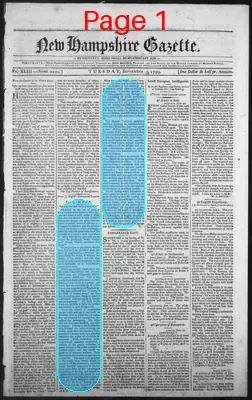
Literary
September 3, 1799
The New Hampshire Gazette
Portsmouth, Rockingham County, New Hampshire
What is this article about?
An essay by The Limner reflecting on the universal desire for praise, its enriching effects, personal experiences of overhearing compliments on his work, and the superior value of genuine approbation from friends and the public over flattery.
Clipping
OCR Quality
95%
Excellent
Full Text
THE LIMNER.
"And I, the little hero of each tale."
PRAISE to the ear of man, is like a cordial to his spirits. Who that does not court it with ardor? Who that does not devour it with avidity? Alexander fought for glory and applause in purple scenes of carnage; Cleopatra's ambition was the admiration of her beauty; Cato was happy, when his inflexible patriotism drew the plaudits of a senate; and characters of every description, age, and nation might be produced, whose "object was" Praise, "whose ambition was Fame."
In proportion to his deserts, should man receive from his fellow man, the smile of approbation. Without impoverishing the donor, it enriches the object of his praise; and who that could so easily confer happiness, would be so unfriendly as to withhold the unexpensive boon.
There are certain moments in my life when I find society has charms, which even my phlegmatic disposition cannot withstand. Tho' in my youth, from some unfortunate circumstances, I was rarely in a group, yet I now find the conversation of extensive circles frequently not unpleasing. It has been observed that "Luxury is the child of society alone," and that the "luxurious man stands in need of a thousand different artists to furnish out his happiness." Of these truths I am too sensible, to suffer the present opportunity to pass disregarded.
To be the witness of encomiums on one's self, and yet in one sense be invisible, (that is, unknown,) is a pleasure too exquisite for conception, too refined for description. He, only, who has thus been situated, can thus be happy. Joining a small assembly of both sexes the other evening, (at which, cards were not necessary to enjoyment) I heard, with very pleasing emotions, the name of Limner introduced. With undiverted attention, though apparent carelessness, I listened to the gentle criticisms of grave urbanity, the polite remarks of polished youth, and the kindly expressions of feminine wisdom. Each observation closed with an appropriate encomium. The aged were gratified at the moral vein, which might be traced in all his numbers; judicious youth heartily concurred in his censures upon some of the extravagant juvenilities of the day, and female excellence rejoiced in the union he had cemented, of morality and politeness.
I was peculiarly delighted with this remark of the Fair, having always conceived that the character of virtue and gallantry were originally designed to be "one and indivisible."
What few errors were noticed, I treasured with care, and as a recompense for the pleasure of my evening, determined to avoid them in successive speculations. I find the plaudits of all classes grateful to my feelings: the unanimity of praise constitutes my felicity. In this particular I am luxurious, but it is only in this particular, for indulged myself in no food of variegated cookery, excepting PRAISE. This may be cooked by all ranks, and in every fashion, and will always prove savory, when I am conscious it is merited.
The elegant Voiture, epistolary memory, speaking in commendation of cardinal Richelieu, says "that praise is more affecting which proceeds from the mouth of the common people, than that which flows from the pens of poets." I feel the force of this observation; and would prefer the blunt approbation of some honest, though humble, characters to all the delicate and fine spun compliments, prose or poetic, which were ever manufactured in the loom of flattery.
Panegyric to have an enviable flavor, should be the genuine offspring of undissembled friendship. It should proceed from a conviction that our instructions deserve, and our conduct demands it. For those merit but a partial and scanty reward, whose actions nullify their precepts, who while they declaim against folly with their lips, practice it in their lives. Those who commend, should themselves deserve commendation; for the applause of the vicious is worthless incense.
To the feeling mind, susceptible of every generous emotion, what can be more gratifying than the cordial approbation of a valued friend? To the mental sense, what more fragrant than the breath of his admiration? To experience the candour and partial favor of the public is desirable: to be noticed with attention by respected individuals, is highly pleasing: but the unreserved and hearty plaudits of friendship, prove more grateful to the soul, than the pencil of language can delineate.
E:
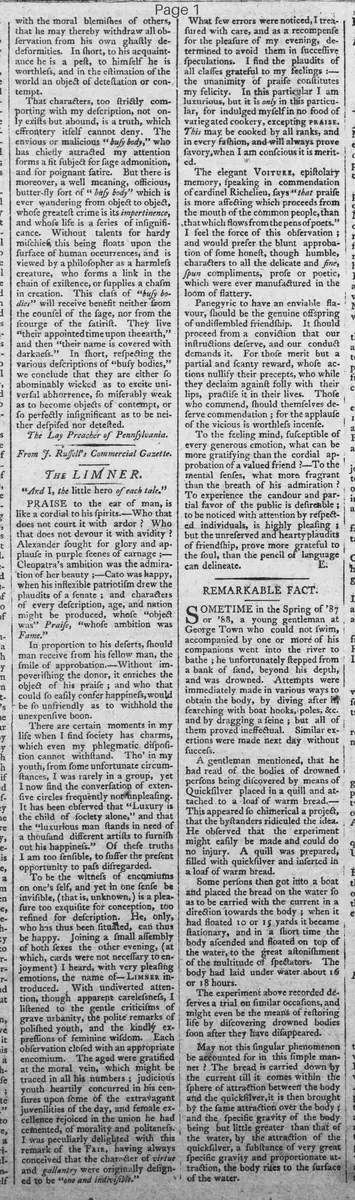
"And I, the little hero of each tale."
PRAISE to the ear of man, is like a cordial to his spirits. Who that does not court it with ardor? Who that does not devour it with avidity? Alexander fought for glory and applause in purple scenes of carnage; Cleopatra's ambition was the admiration of her beauty; Cato was happy, when his inflexible patriotism drew the plaudits of a senate; and characters of every description, age, and nation might be produced, whose "object was" Praise, "whose ambition was Fame."
In proportion to his deserts, should man receive from his fellow man, the smile of approbation. Without impoverishing the donor, it enriches the object of his praise; and who that could so easily confer happiness, would be so unfriendly as to withhold the unexpensive boon.
There are certain moments in my life when I find society has charms, which even my phlegmatic disposition cannot withstand. Tho' in my youth, from some unfortunate circumstances, I was rarely in a group, yet I now find the conversation of extensive circles frequently not unpleasing. It has been observed that "Luxury is the child of society alone," and that the "luxurious man stands in need of a thousand different artists to furnish out his happiness." Of these truths I am too sensible, to suffer the present opportunity to pass disregarded.
To be the witness of encomiums on one's self, and yet in one sense be invisible, (that is, unknown,) is a pleasure too exquisite for conception, too refined for description. He, only, who has thus been situated, can thus be happy. Joining a small assembly of both sexes the other evening, (at which, cards were not necessary to enjoyment) I heard, with very pleasing emotions, the name of Limner introduced. With undiverted attention, though apparent carelessness, I listened to the gentle criticisms of grave urbanity, the polite remarks of polished youth, and the kindly expressions of feminine wisdom. Each observation closed with an appropriate encomium. The aged were gratified at the moral vein, which might be traced in all his numbers; judicious youth heartily concurred in his censures upon some of the extravagant juvenilities of the day, and female excellence rejoiced in the union he had cemented, of morality and politeness.
I was peculiarly delighted with this remark of the Fair, having always conceived that the character of virtue and gallantry were originally designed to be "one and indivisible."
What few errors were noticed, I treasured with care, and as a recompense for the pleasure of my evening, determined to avoid them in successive speculations. I find the plaudits of all classes grateful to my feelings: the unanimity of praise constitutes my felicity. In this particular I am luxurious, but it is only in this particular, for indulged myself in no food of variegated cookery, excepting PRAISE. This may be cooked by all ranks, and in every fashion, and will always prove savory, when I am conscious it is merited.
The elegant Voiture, epistolary memory, speaking in commendation of cardinal Richelieu, says "that praise is more affecting which proceeds from the mouth of the common people, than that which flows from the pens of poets." I feel the force of this observation; and would prefer the blunt approbation of some honest, though humble, characters to all the delicate and fine spun compliments, prose or poetic, which were ever manufactured in the loom of flattery.
Panegyric to have an enviable flavor, should be the genuine offspring of undissembled friendship. It should proceed from a conviction that our instructions deserve, and our conduct demands it. For those merit but a partial and scanty reward, whose actions nullify their precepts, who while they declaim against folly with their lips, practice it in their lives. Those who commend, should themselves deserve commendation; for the applause of the vicious is worthless incense.
To the feeling mind, susceptible of every generous emotion, what can be more gratifying than the cordial approbation of a valued friend? To the mental sense, what more fragrant than the breath of his admiration? To experience the candour and partial favor of the public is desirable: to be noticed with attention by respected individuals, is highly pleasing: but the unreserved and hearty plaudits of friendship, prove more grateful to the soul, than the pencil of language can delineate.
E:
What sub-type of article is it?
Essay
What themes does it cover?
Moral Virtue
Social Manners
What keywords are associated?
Praise
Approbation
Society
Morality
Friendship
Limner
Literary Details
Title
The Limner.
Subject
On The Value Of Praise And Approbation
Key Lines
"And I, The Little Hero Of Each Tale."
Praise To The Ear Of Man, Is Like A Cordial To His Spirits.
To Be The Witness Of Encomiums On One's Self, And Yet In One Sense Be Invisible, (That Is, Unknown,) Is A Pleasure Too Exquisite For Conception, Too Refined For Description.
The Character Of Virtue And Gallantry Were Originally Designed To Be "One And Indivisible."
Panegyric To Have An Enviable Flavor, Should Be The Genuine Offspring Of Undissembled Friendship.