Thank you for visiting SNEWPapers!
Sign up free
Editorial
June 1, 1853
The Spirit Of Democracy
Woodsfield, Monroe County, Ohio
What is this article about?
An editorial urging Ohio voters and party members to nominate intelligent, moral, and capable men for legislative positions, emphasizing the importance of character over wealth or vice, from a Democratic perspective criticizing poor choices and calling for principled lawmakers to advance good principles.
Clipping
OCR Quality
95%
Excellent
Full Text
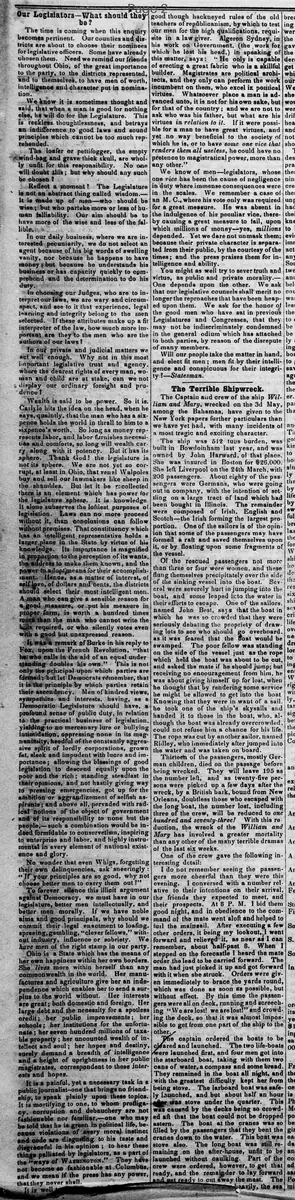
The time is coming when this enquiry becomes pertinent. Our counties and districts are about to choose their nominees for legislative officers. Some have already chosen them. Need we remind our friends throughout Ohio, of the great importance to the party, to the districts represented, and to themselves, to have men of worth, intelligence and character put in nomination.
We know it is sometimes thought and said, that when a man is good for nothing else, he will do for the Legislature. This is reckless thoughtlessness, and betrays an indifference to good laws and sound principles which cannot be too much reprehended.
The lawyer or pettifogger, the empty wind-bag and grave thick skull, are wholly unfit for this responsibility. No one will doubt this; but why should any such be chosen?
Reflect a moment! The Legislature is not an abstract thing called wisdom. It is made up of men—who should be wise; but who partake more or less of human fallibility. Our aim should be to have more of the wise and less of the fallible.
In our daily business, where we are interested, pecuniarily, we do not select an agent because of his big words of swelling vanity, nor because he happens to have money but because he understands his business or has capacity quickly to comprehend and the determination to do his duty as
In choosing our Judges, who are to interpret our laws, we are wary and circumspect, and see to it that experience, legal learning and integrity belong to the men selected. If these attributes make up a fit interpreter of the law, how much more important are they to the men who are the authors of our laws?
In our private and judicial matters we act well enough. Why not in this most important legislative trust and agency, where the dearest rights of every man, woman and child are at stake, can we not display our ordinary foresight and prudence!
Wealth is said to be power. So it is. Carlyle hits the idea on the head, when he says, quaintly, that the man who has a sixpence holds the world in thrall to him to a sixpence's worth. So long as money represents labor, and labor furnishes necessities and comforts, so long will wealth carry along with it potency. But it has its sphere. Thank God! the legislature is not its sphere. We are not yet so corrupt, at least in Ohio, that venal Walpoles buy and sell our lawmakers like sheep in the shambles. But let it be recollected there is an element which has power for the legislative sphere. It is, knowledge. It alone subserves the loftiest purposes of legislation. Laws can no more proceed without it, than conclusions can follow without premises. That constituency which has an intelligent representative holds a larger place in the State by virtue of his knowledge. Its importance is magnified in proportion to the perception of its wants, the address to make them known, and the power to adopt means for their accomplishment. Hence, as a matter of interest, of self love, of dollars and cents, the districts should select their most intelligent men.
A man who can give a sensible reason for a good measure, or put his measure in proper form; is worth a hundred times more than the man who cannot write the bills required, or who silently votes even with a good but unexpressed reason.
It was a remark of Burke in his reply to Fox, upon the French Revolution, "that he who calls in the aid of an equal understanding doubles his own." This is not only the principle upon which parties are formed; but let Democrats remember, that it is the principle by which parties retain their ascendency. Men of kindred views, sympathies and interests, having, as a Democratic Legislature should have, a profound sense of public duty, in relation to the practical business of legislation, yielding to no mercenary lure or bullying intimidation, oppressing none in its magnanimity, heedful of the constantly aggressive spirit of lordly corporations, grown fat, sleek and impudent with lucre and importance; allowing the blessings of good legislation to descend equally upon the poor and the rich; standing steadfast in their opinions, and not hastily giving way to pressing emergencies, got up for the ambition or aggrandizement of selfish aspirants; and above all, pervaded with radical notions of the object of government and of its responsibility to none but the people, such a combination would be indeed formidable to conservatism, inspiring to enterprise and labor, and highly instrumental in every element of national existence and glory.
No wonder that even Whigs, forgetting their own delinquencies, ask sneeringly: "If your principles are so good, why not choose better men to carry them out?"
To forever silence this illicit argument against Democracy, we must have in our legislature, better men intellectually, and better men morally. If we have noble aims and good principles, why should we commit their legal enactment to loafing, spreeing, gambling, "clever fellows," without industry, influence or sobriety. We have men of the right stamp in our party. Ohio is a State which has the means of her own happiness within her own borders. She lives more within herself than any commonwealth in the world. Her manufactures and agriculture give her an independence which enables her to send a surplus to the world without. Her interests are great; both domestic and foreign. Her large debt and the necessity for a spotless credit; her public improvements; her schools; her institutions for the unfortunate; her seven hundred millions of taxable property; her uncounted wealth of intellect and soul; her hopes and destiny, surely demand a breadth of intelligence and a height of uprightness in her public magistrates, correspondent to these interests and hopes.
It is a painful, yet a necessary task in a public journalist—one that brings no friendship, to speak plainly upon these topics. It is mortifying to one, to whom profligacy, corruption and debauchery are not fashionable nor familiar, —one who may be told that he is green in political life, because violations of every moral instinct and code are disgusting to his taste and disgraceful in his opinion ; to hear these things palliated by legislators, as a part of the ways of Washington." They have not become so fashionable at Columbus, and we mean if the press has any power, that they never shall.
good though hackneyed rules of the old teachers of republicanism, by which to test our men for the high qualifications, requisite in a law giver. Algernon Sydney, in his work on Government, (the work for which he lost his head.) in speaking of this matter, says: " He only is capable of erecting a great fabric who is a skillful builder. Magistrates are political architects, and they only can perform the work incumbent on them, who excel in political virtues. Whatsoever place a man is advanced unto, it is not for his own sake, but for that of the country; and we are not to ask who was his father, but what are his virtues in relation to it. If it were possible for a man to have great virtues, and yet no way beneficial to the society of which he is, or to have some one vice that renders them all useless, he could have no pretence to magistratical power, more than any other."
We know of men—legislators, whose one vice has been the cause of negligence in duty where immense consequences were in the scales. We remember a case of an M. C., where his vote only was required for a great measure. He was absent in the indulgence of his peculiar vice, thereby causing a great measure to fail, upon which millions of money—yes, millions depended. Yet we dare not unmask them: because their private character is separated from their public, by the courtesy of the times; and the press praises them for intelligence and ability.
You might as well try to sever truth and virtue, as public and private morality. One depends upon the other. We ask that our legislative counsels shall merit no longer the reproaches that have been heaped upon them. We ask for the honor of the good men who have sat in previous Legislatures and Congresses, that they may not be indiscriminately condemned in the general odium which has attached to both parties, by reason of the disrepute of many members.
Will our people take the matter in hand, and elect fit men : men fit by their intelligence and conspicuous for their integrity ?—Statesman.
We know it is sometimes thought and said, that when a man is good for nothing else, he will do for the Legislature. This is reckless thoughtlessness, and betrays an indifference to good laws and sound principles which cannot be too much reprehended.
The lawyer or pettifogger, the empty wind-bag and grave thick skull, are wholly unfit for this responsibility. No one will doubt this; but why should any such be chosen?
Reflect a moment! The Legislature is not an abstract thing called wisdom. It is made up of men—who should be wise; but who partake more or less of human fallibility. Our aim should be to have more of the wise and less of the fallible.
In our daily business, where we are interested, pecuniarily, we do not select an agent because of his big words of swelling vanity, nor because he happens to have money but because he understands his business or has capacity quickly to comprehend and the determination to do his duty as
In choosing our Judges, who are to interpret our laws, we are wary and circumspect, and see to it that experience, legal learning and integrity belong to the men selected. If these attributes make up a fit interpreter of the law, how much more important are they to the men who are the authors of our laws?
In our private and judicial matters we act well enough. Why not in this most important legislative trust and agency, where the dearest rights of every man, woman and child are at stake, can we not display our ordinary foresight and prudence!
Wealth is said to be power. So it is. Carlyle hits the idea on the head, when he says, quaintly, that the man who has a sixpence holds the world in thrall to him to a sixpence's worth. So long as money represents labor, and labor furnishes necessities and comforts, so long will wealth carry along with it potency. But it has its sphere. Thank God! the legislature is not its sphere. We are not yet so corrupt, at least in Ohio, that venal Walpoles buy and sell our lawmakers like sheep in the shambles. But let it be recollected there is an element which has power for the legislative sphere. It is, knowledge. It alone subserves the loftiest purposes of legislation. Laws can no more proceed without it, than conclusions can follow without premises. That constituency which has an intelligent representative holds a larger place in the State by virtue of his knowledge. Its importance is magnified in proportion to the perception of its wants, the address to make them known, and the power to adopt means for their accomplishment. Hence, as a matter of interest, of self love, of dollars and cents, the districts should select their most intelligent men.
A man who can give a sensible reason for a good measure, or put his measure in proper form; is worth a hundred times more than the man who cannot write the bills required, or who silently votes even with a good but unexpressed reason.
It was a remark of Burke in his reply to Fox, upon the French Revolution, "that he who calls in the aid of an equal understanding doubles his own." This is not only the principle upon which parties are formed; but let Democrats remember, that it is the principle by which parties retain their ascendency. Men of kindred views, sympathies and interests, having, as a Democratic Legislature should have, a profound sense of public duty, in relation to the practical business of legislation, yielding to no mercenary lure or bullying intimidation, oppressing none in its magnanimity, heedful of the constantly aggressive spirit of lordly corporations, grown fat, sleek and impudent with lucre and importance; allowing the blessings of good legislation to descend equally upon the poor and the rich; standing steadfast in their opinions, and not hastily giving way to pressing emergencies, got up for the ambition or aggrandizement of selfish aspirants; and above all, pervaded with radical notions of the object of government and of its responsibility to none but the people, such a combination would be indeed formidable to conservatism, inspiring to enterprise and labor, and highly instrumental in every element of national existence and glory.
No wonder that even Whigs, forgetting their own delinquencies, ask sneeringly: "If your principles are so good, why not choose better men to carry them out?"
To forever silence this illicit argument against Democracy, we must have in our legislature, better men intellectually, and better men morally. If we have noble aims and good principles, why should we commit their legal enactment to loafing, spreeing, gambling, "clever fellows," without industry, influence or sobriety. We have men of the right stamp in our party. Ohio is a State which has the means of her own happiness within her own borders. She lives more within herself than any commonwealth in the world. Her manufactures and agriculture give her an independence which enables her to send a surplus to the world without. Her interests are great; both domestic and foreign. Her large debt and the necessity for a spotless credit; her public improvements; her schools; her institutions for the unfortunate; her seven hundred millions of taxable property; her uncounted wealth of intellect and soul; her hopes and destiny, surely demand a breadth of intelligence and a height of uprightness in her public magistrates, correspondent to these interests and hopes.
It is a painful, yet a necessary task in a public journalist—one that brings no friendship, to speak plainly upon these topics. It is mortifying to one, to whom profligacy, corruption and debauchery are not fashionable nor familiar, —one who may be told that he is green in political life, because violations of every moral instinct and code are disgusting to his taste and disgraceful in his opinion ; to hear these things palliated by legislators, as a part of the ways of Washington." They have not become so fashionable at Columbus, and we mean if the press has any power, that they never shall.
good though hackneyed rules of the old teachers of republicanism, by which to test our men for the high qualifications, requisite in a law giver. Algernon Sydney, in his work on Government, (the work for which he lost his head.) in speaking of this matter, says: " He only is capable of erecting a great fabric who is a skillful builder. Magistrates are political architects, and they only can perform the work incumbent on them, who excel in political virtues. Whatsoever place a man is advanced unto, it is not for his own sake, but for that of the country; and we are not to ask who was his father, but what are his virtues in relation to it. If it were possible for a man to have great virtues, and yet no way beneficial to the society of which he is, or to have some one vice that renders them all useless, he could have no pretence to magistratical power, more than any other."
We know of men—legislators, whose one vice has been the cause of negligence in duty where immense consequences were in the scales. We remember a case of an M. C., where his vote only was required for a great measure. He was absent in the indulgence of his peculiar vice, thereby causing a great measure to fail, upon which millions of money—yes, millions depended. Yet we dare not unmask them: because their private character is separated from their public, by the courtesy of the times; and the press praises them for intelligence and ability.
You might as well try to sever truth and virtue, as public and private morality. One depends upon the other. We ask that our legislative counsels shall merit no longer the reproaches that have been heaped upon them. We ask for the honor of the good men who have sat in previous Legislatures and Congresses, that they may not be indiscriminately condemned in the general odium which has attached to both parties, by reason of the disrepute of many members.
Will our people take the matter in hand, and elect fit men : men fit by their intelligence and conspicuous for their integrity ?—Statesman.
What sub-type of article is it?
Partisan Politics
Moral Or Religious
What keywords are associated?
Ohio Legislature
Nominees Selection
Intelligence Character
Democratic Principles
Moral Integrity
Political Virtues
Legislative Responsibility
What entities or persons were involved?
Democrats
Whigs
Ohio Legislature
Algernon Sydney
Burke
Carlyle
Editorial Details
Primary Topic
Selection Of Intelligent And Moral Nominees For Ohio Legislature
Stance / Tone
Strongly Advocating For Principled And Capable Democratic Lawmakers
Key Figures
Democrats
Whigs
Ohio Legislature
Algernon Sydney
Burke
Carlyle
Key Arguments
Nominate Men Of Worth, Intelligence, And Character For Legislature
Unfit Men Like Pettifoggers Or Empty Wind Bags Harm Good Laws
Knowledge Is Essential For Effective Legislation Over Wealth
Democratic Principles Require Morally Upright Representatives To Counter Corruption And Corporations
Private Vices Affect Public Duty, As Seen In Past Legislative Failures
Ohio's Interests Demand Intelligent And Upright Public Magistrates