Thank you for visiting SNEWPapers!
Sign up free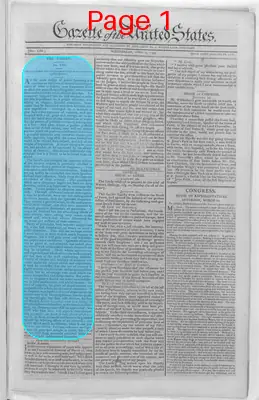
Literary
April 7, 1790
Gazette Of The United States
New York, New York County, New York
What is this article about?
This essay argues that an unblemished moral character is more crucial for a public speaker's lasting influence than eloquent oratory alone. It contrasts the fleeting appeal of rhetoric with the enduring power of virtue, drawing on ancient orators as examples.
Clipping
OCR Quality
98%
Excellent
Full Text
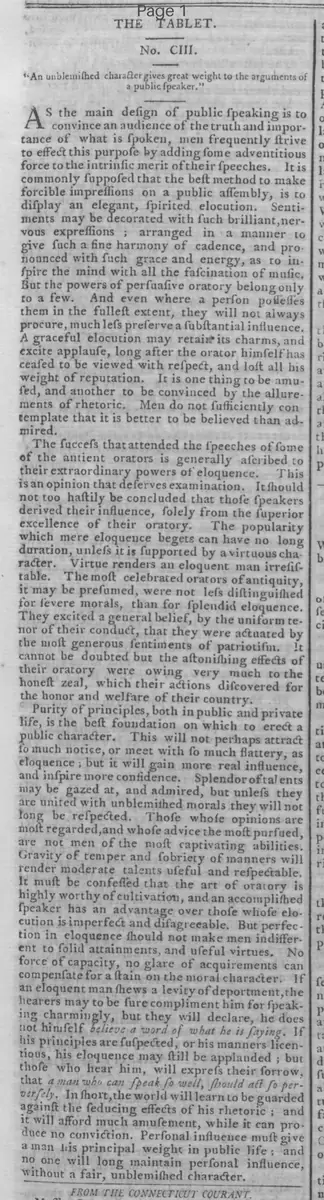
THE TABLET.
No. CIII.
"An unblemished character gives great weight to the arguments of a public speaker."
As the main design of public speaking is to convince an audience of the truth and importance of what is spoken, men frequently strive to effect this purpose by adding some adventitious force to the intrinsic merit of their speeches. It is commonly supposed that the best method to make forcible impressions on a public assembly, is to display an elegant, spirited elocution. Sentiments may be decorated with such brilliant, nervous expressions; arranged in a manner to give such a fine harmony of cadence, and pronounced with such grace and energy, as to inspire the mind with all the fascination of music.
But the powers of persuasive oratory belong only to a few. And even where a person possesses them in the fullest extent, they will not always procure, much less preserve a substantial influence. A graceful elocution may retain its charms, and excite applause, long after the orator himself has ceased to be viewed with respect, and lost all his weight of reputation. It is one thing to be amused, and another to be convinced by the allurements of rhetoric. Men do not sufficiently contemplate that it is better to be believed than admired.
The success that attended the speeches of some of the ancient orators is generally ascribed to their extraordinary powers of eloquence. This is an opinion that deserves examination. It should not too hastily be concluded that those speakers derived their influence, solely from the superior excellence of their oratory. The popularity which mere eloquence begets can have no long duration, unless it is supported by a virtuous character. Virtue renders an eloquent man irresistible. The most celebrated orators of antiquity, it may be presumed, were not less distinguished for severe morals, than for splendid eloquence. They excited a general belief, by the uniform tenor of their conduct, that they were actuated by the most generous sentiments of patriotism. It cannot be doubted but the astonishing effects of their oratory were owing very much to the honest zeal, which their actions discovered for the honor and welfare of their country.
Purity of principles, both in public and private life, is the best foundation on which to erect a public character. This will not perhaps attract so much notice, or meet with so much flattery, as eloquence; but it will gain more real influence, and inspire more confidence. Splendor of talents may be gazed at, and admired, but unless they are united with unblemished morals they will not long be respected. Those whose opinions are most regarded, and whose advice is the most pursued, are not men of the most captivating abilities. Gravity of temper and sobriety of manners will render moderate talents useful and respectable.
It must be confessed that the art of oratory is highly worthy of cultivation, and an accomplished speaker has an advantage over those whose elocution is imperfect and disagreeable. But perfection in eloquence should not make men indifferent to solid attainments, and useful virtues. No force of capacity, no glare of acquirements can compensate for a stain on the moral character. If an eloquent man shows a levity of deportment, the hearers may to be sure compliment him for speaking charmingly, but they will declare, he does not himself believe a word of what he is saying. If his principles are suspected, or his manners licentious, his eloquence may still be applauded; but those who hear him, will express their sorrow, that a man who can speak so well, should act so perversely. In short, the world will learn to be guarded against the seducing effects of his rhetoric; and it will afford much amusement, while it can produce no conviction. Personal influence must give a man his principal weight in public life; and no one will long maintain personal influence, without a fair, unblemished character.
No. CIII.
"An unblemished character gives great weight to the arguments of a public speaker."
As the main design of public speaking is to convince an audience of the truth and importance of what is spoken, men frequently strive to effect this purpose by adding some adventitious force to the intrinsic merit of their speeches. It is commonly supposed that the best method to make forcible impressions on a public assembly, is to display an elegant, spirited elocution. Sentiments may be decorated with such brilliant, nervous expressions; arranged in a manner to give such a fine harmony of cadence, and pronounced with such grace and energy, as to inspire the mind with all the fascination of music.
But the powers of persuasive oratory belong only to a few. And even where a person possesses them in the fullest extent, they will not always procure, much less preserve a substantial influence. A graceful elocution may retain its charms, and excite applause, long after the orator himself has ceased to be viewed with respect, and lost all his weight of reputation. It is one thing to be amused, and another to be convinced by the allurements of rhetoric. Men do not sufficiently contemplate that it is better to be believed than admired.
The success that attended the speeches of some of the ancient orators is generally ascribed to their extraordinary powers of eloquence. This is an opinion that deserves examination. It should not too hastily be concluded that those speakers derived their influence, solely from the superior excellence of their oratory. The popularity which mere eloquence begets can have no long duration, unless it is supported by a virtuous character. Virtue renders an eloquent man irresistible. The most celebrated orators of antiquity, it may be presumed, were not less distinguished for severe morals, than for splendid eloquence. They excited a general belief, by the uniform tenor of their conduct, that they were actuated by the most generous sentiments of patriotism. It cannot be doubted but the astonishing effects of their oratory were owing very much to the honest zeal, which their actions discovered for the honor and welfare of their country.
Purity of principles, both in public and private life, is the best foundation on which to erect a public character. This will not perhaps attract so much notice, or meet with so much flattery, as eloquence; but it will gain more real influence, and inspire more confidence. Splendor of talents may be gazed at, and admired, but unless they are united with unblemished morals they will not long be respected. Those whose opinions are most regarded, and whose advice is the most pursued, are not men of the most captivating abilities. Gravity of temper and sobriety of manners will render moderate talents useful and respectable.
It must be confessed that the art of oratory is highly worthy of cultivation, and an accomplished speaker has an advantage over those whose elocution is imperfect and disagreeable. But perfection in eloquence should not make men indifferent to solid attainments, and useful virtues. No force of capacity, no glare of acquirements can compensate for a stain on the moral character. If an eloquent man shows a levity of deportment, the hearers may to be sure compliment him for speaking charmingly, but they will declare, he does not himself believe a word of what he is saying. If his principles are suspected, or his manners licentious, his eloquence may still be applauded; but those who hear him, will express their sorrow, that a man who can speak so well, should act so perversely. In short, the world will learn to be guarded against the seducing effects of his rhetoric; and it will afford much amusement, while it can produce no conviction. Personal influence must give a man his principal weight in public life; and no one will long maintain personal influence, without a fair, unblemished character.
What sub-type of article is it?
Essay
What themes does it cover?
Moral Virtue
Political
Patriotism
What keywords are associated?
Oratory
Eloquence
Moral Character
Public Speaking
Virtue
Patriotism
Ancient Orators
Literary Details
Title
The Tablet. No. Ciii.
Key Lines
"An Unblemished Character Gives Great Weight To The Arguments Of A Public Speaker."
Virtue Renders An Eloquent Man Irresistible.
It Is Better To Be Believed Than Admired.
Purity Of Principles, Both In Public And Private Life, Is The Best Foundation On Which To Erect A Public Character.