Thank you for visiting SNEWPapers!
Sign up free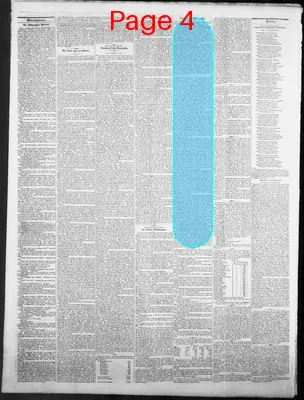
Foreign News
November 20, 1845
Hill's New Hampshire Patriot
Concord, Merrimack County, New Hampshire
What is this article about?
A traveler describes Queen Victoria's lavish possessions at Windsor, including a costly new kitchen garden at Frogmore, a vast gold plate collection worth $12 million, 30,000 deer on 12,000 acres, and luxurious stables, emphasizing royal opulence amid poverty.
Clipping

OCR Quality
95%
Excellent
Full Text
Extravagance of Royalty.
The royal plate, kitchen garden, deer, dogs and ponies, are thus described by the editor of Smith's Weekly Volume, who is now travelling in England:
After lunch, we went to visit the Queen's new kitchen garden, near Frogmore; Mr. Jesse's station admitted us where strangers cannot otherwise penetrate. One hundred and sixty thousand dollars have lately been expended on this new garden for royalty; the forcing houses are extensive; the glasses move by machinery like watch or clock work. We paced the superb graperies, pineries, peach and nectarine forcing-houses, and tasted fine specimens of the Queen's fruits; the Chasselas grapes and Prince Albert strawberries were certainly never exceeded for excellence.
On my observing that Dr. Brinckle, of Philadelphia, had solved that difficult problem in which European gardeners had failed, of hybridising the Alpine strawberry with the large cultivated kinds, and thus producing a perpetual bearer, the head-gardener, Mr. Ingram, expressed the strongest interest; said he had not succeeded in his various attempts, and begged that I would endeavor to forward him a few plants, in order that he might serve the royal table with this delicious fruit at unseasonable periods. I have promised for my friend, Dr. B., that the Queen shall be gratified; she has already eaten canvass back ducks from America with gusto, from a parcel sent over to the late Granville Penn, who forwarded a portion to his neighbor at Windsor. I little thought, when going to England, that I could suggest any novelty for the Queen's table. By the frequency with which the subject was mentioned, I was impressed with its importance, and have written to Dr. Brinckle to induce him to fulfil my promise made in his name.
From the library we went to the apartment called technically "the gold room;" it is this to which I wish to call your attention. I surveyed it leisurely, and I do not remember to have read a description of its contents, nor can I give even an outline of its various treasures; I commenced taking notes from the mouth of the custode, who with his various assistants is every day of the year fully employed in cleaning the plate, but he said it was contrary to orders to allow any notes to be taken. What memoranda I did make, and what I remember accurately, I will state, trusting that my letter will not be opened, and I convicted of treason
To begin;—the whole collection is valued at twelve millions of dollars! There are glass cases like a silversmith's shop, and behind the glass are the principal articles; would you believe that I there saw a dinner service of silver gilt of the most gorgeous kind, presented by the merchants of Liverpool, to the late William the Fourth, long before he was king, in reward for his advocacy of the slave trade? Believe or not, there it is, with the inscription telling the tale.
There is a salver of an immense size, made from the gold snuff boxes alone of George the Fourth—the lids and inscriptions curiously preserved on the surface in a kind of mosaic of gold; its value fifty thousand dollars. Then you may see near it Nell Gwynn's bellows—the handles, nozzle, &c. of gold! the golden peacock inlaid with diamonds and rubies from Delhi -not as large as a pheasant, but valued at one hundred and fifty thousand dollars; the footstool of Tippoo Saib, a solid gold lion with crystal eyes, the value of its gold seventy-five thousand dollars; George the Fourth's celebrated golden candelabra for a dinner table, valued at fifty thousand dollars, so heavy that two men are required to lift each. Piles upon piles of golden plates, sufficient to dine two hundred and fifty persons, with ample changes, were spread about or in the cleaner's hands.
If this enumeration does not satisfy your aching vision, we will ask the custode, who seems extremely anxious, in the midst of so much treasure, and would evidently be glad to get rid of us, to open a long series of drawers. Here are 140 dozen each of gold knives and forks of various patterns of which he repeats the names; as "oak," "stag," "George the Third," and so on. Another set of dressers! what can they contain? Only 140 dozen each of gold table and tea spoons, all arranged in the most perfect order. Take another walk up and down the room, with glass cases on tables in the middle, filled with gorgeous gold, and try to impress some form of taste more elegant than another. It is vain—memory only carries away a confused idea of riches, such as must have cost poor underground laborers lives of toil, and sweat, and pain, to procure, merely to pamper wealth and royalty; to do no good—to be almost as useless as it was in the mine, for it is rarely produced, and requires a host of human beings merely to keep it bright.
A little conversation with this king of the gold-room informed us that it was a poor time to see the plate because fifty chests were removed to be used by the Queen at Buckingham Palace! He said it was an awful thing to have to get the plate out for a state dinner, it was so heavy; and the frequent changes made it a labor to the pages more onerous than the most overtasked worker in iron. Mr. Jesse asked him if the recently inserted iron bars in a certain window had relieved his mind from anxiety respecting robbers. He said it had; "but you know" he added, turning to me, "with so much plate one could hardly sleep, when we knew one of the guards outside might be bribed at any time, the wall mounted by means of ladders, and a great theft be committed."
I could scarcely refrain from saying what I thought -that it would be a great blessing to many of the poor of England and Ireland, if the metal was put in circulation. Here they do not think its being otherwise used than as it is would do any good. Even the radical Joseph Hume does not begrudge, he says, Windsor and all its contents; the whole nation is proud of it -proud to have it shown to foreign royalty, and to boast that no other nation on the globe can make such an exhibition. Is it or is it not an empty boast?
The royal pair have twelve thousand acres of land in all appropriated to them and their deer—this is the quantity of land in the royal parks and grounds.— They have thirty thousand deer ranging these grounds; land expensive, and there is not too much of it. It is true that a few people are begging bread all about, but then thirty thousand deer are requisite for royal state. Many a poor creature in Ireland would be glad of half that is expended upon one little dog at Windsor.
As dogs have been named, let us leave St. George's Hall and the pictures for the present, and take a snuff of the stables and kennels, and equestrian palaces.
An appropriation was recently made in Parliament of three hundred thousand dollars to rebuild these appurtenances, and accordingly they are luxuriously large, neat and airy. The rows of gray ponies—there are forty when the Queen is here—look sleek and comfortable, as if they knew what royal horse fare was. Among the horses is a Java nag, about the height of one's knee, presented to the Queen by some Eastern potentate. Several of the royal carriages are plain— such as you might drive at Philadelphia without exciting attention as ostentatious.
The royal plate, kitchen garden, deer, dogs and ponies, are thus described by the editor of Smith's Weekly Volume, who is now travelling in England:
After lunch, we went to visit the Queen's new kitchen garden, near Frogmore; Mr. Jesse's station admitted us where strangers cannot otherwise penetrate. One hundred and sixty thousand dollars have lately been expended on this new garden for royalty; the forcing houses are extensive; the glasses move by machinery like watch or clock work. We paced the superb graperies, pineries, peach and nectarine forcing-houses, and tasted fine specimens of the Queen's fruits; the Chasselas grapes and Prince Albert strawberries were certainly never exceeded for excellence.
On my observing that Dr. Brinckle, of Philadelphia, had solved that difficult problem in which European gardeners had failed, of hybridising the Alpine strawberry with the large cultivated kinds, and thus producing a perpetual bearer, the head-gardener, Mr. Ingram, expressed the strongest interest; said he had not succeeded in his various attempts, and begged that I would endeavor to forward him a few plants, in order that he might serve the royal table with this delicious fruit at unseasonable periods. I have promised for my friend, Dr. B., that the Queen shall be gratified; she has already eaten canvass back ducks from America with gusto, from a parcel sent over to the late Granville Penn, who forwarded a portion to his neighbor at Windsor. I little thought, when going to England, that I could suggest any novelty for the Queen's table. By the frequency with which the subject was mentioned, I was impressed with its importance, and have written to Dr. Brinckle to induce him to fulfil my promise made in his name.
From the library we went to the apartment called technically "the gold room;" it is this to which I wish to call your attention. I surveyed it leisurely, and I do not remember to have read a description of its contents, nor can I give even an outline of its various treasures; I commenced taking notes from the mouth of the custode, who with his various assistants is every day of the year fully employed in cleaning the plate, but he said it was contrary to orders to allow any notes to be taken. What memoranda I did make, and what I remember accurately, I will state, trusting that my letter will not be opened, and I convicted of treason
To begin;—the whole collection is valued at twelve millions of dollars! There are glass cases like a silversmith's shop, and behind the glass are the principal articles; would you believe that I there saw a dinner service of silver gilt of the most gorgeous kind, presented by the merchants of Liverpool, to the late William the Fourth, long before he was king, in reward for his advocacy of the slave trade? Believe or not, there it is, with the inscription telling the tale.
There is a salver of an immense size, made from the gold snuff boxes alone of George the Fourth—the lids and inscriptions curiously preserved on the surface in a kind of mosaic of gold; its value fifty thousand dollars. Then you may see near it Nell Gwynn's bellows—the handles, nozzle, &c. of gold! the golden peacock inlaid with diamonds and rubies from Delhi -not as large as a pheasant, but valued at one hundred and fifty thousand dollars; the footstool of Tippoo Saib, a solid gold lion with crystal eyes, the value of its gold seventy-five thousand dollars; George the Fourth's celebrated golden candelabra for a dinner table, valued at fifty thousand dollars, so heavy that two men are required to lift each. Piles upon piles of golden plates, sufficient to dine two hundred and fifty persons, with ample changes, were spread about or in the cleaner's hands.
If this enumeration does not satisfy your aching vision, we will ask the custode, who seems extremely anxious, in the midst of so much treasure, and would evidently be glad to get rid of us, to open a long series of drawers. Here are 140 dozen each of gold knives and forks of various patterns of which he repeats the names; as "oak," "stag," "George the Third," and so on. Another set of dressers! what can they contain? Only 140 dozen each of gold table and tea spoons, all arranged in the most perfect order. Take another walk up and down the room, with glass cases on tables in the middle, filled with gorgeous gold, and try to impress some form of taste more elegant than another. It is vain—memory only carries away a confused idea of riches, such as must have cost poor underground laborers lives of toil, and sweat, and pain, to procure, merely to pamper wealth and royalty; to do no good—to be almost as useless as it was in the mine, for it is rarely produced, and requires a host of human beings merely to keep it bright.
A little conversation with this king of the gold-room informed us that it was a poor time to see the plate because fifty chests were removed to be used by the Queen at Buckingham Palace! He said it was an awful thing to have to get the plate out for a state dinner, it was so heavy; and the frequent changes made it a labor to the pages more onerous than the most overtasked worker in iron. Mr. Jesse asked him if the recently inserted iron bars in a certain window had relieved his mind from anxiety respecting robbers. He said it had; "but you know" he added, turning to me, "with so much plate one could hardly sleep, when we knew one of the guards outside might be bribed at any time, the wall mounted by means of ladders, and a great theft be committed."
I could scarcely refrain from saying what I thought -that it would be a great blessing to many of the poor of England and Ireland, if the metal was put in circulation. Here they do not think its being otherwise used than as it is would do any good. Even the radical Joseph Hume does not begrudge, he says, Windsor and all its contents; the whole nation is proud of it -proud to have it shown to foreign royalty, and to boast that no other nation on the globe can make such an exhibition. Is it or is it not an empty boast?
The royal pair have twelve thousand acres of land in all appropriated to them and their deer—this is the quantity of land in the royal parks and grounds.— They have thirty thousand deer ranging these grounds; land expensive, and there is not too much of it. It is true that a few people are begging bread all about, but then thirty thousand deer are requisite for royal state. Many a poor creature in Ireland would be glad of half that is expended upon one little dog at Windsor.
As dogs have been named, let us leave St. George's Hall and the pictures for the present, and take a snuff of the stables and kennels, and equestrian palaces.
An appropriation was recently made in Parliament of three hundred thousand dollars to rebuild these appurtenances, and accordingly they are luxuriously large, neat and airy. The rows of gray ponies—there are forty when the Queen is here—look sleek and comfortable, as if they knew what royal horse fare was. Among the horses is a Java nag, about the height of one's knee, presented to the Queen by some Eastern potentate. Several of the royal carriages are plain— such as you might drive at Philadelphia without exciting attention as ostentatious.
What sub-type of article is it?
Court News
What keywords are associated?
Royal Extravagance
Windsor Castle
Kitchen Garden
Gold Plate
Deer Parks
Royal Stables
What entities or persons were involved?
Queen
Prince Albert
William The Fourth
George The Fourth
Nell Gwynn
Tippoo Saib
Mr. Jesse
Mr. Ingram
Dr. Brinckle
Granville Penn
Joseph Hume
Where did it happen?
Windsor, England
Foreign News Details
Primary Location
Windsor, England
Key Persons
Queen
Prince Albert
William The Fourth
George The Fourth
Nell Gwynn
Tippoo Saib
Mr. Jesse
Mr. Ingram
Dr. Brinckle
Granville Penn
Joseph Hume
Event Details
Description of the Queen's kitchen garden at Frogmore, royal gold plate collection valued at twelve million dollars, deer parks with thirty thousand deer, stables, and kennels, highlighting extravagance and costs.