Thank you for visiting SNEWPapers!
Sign up free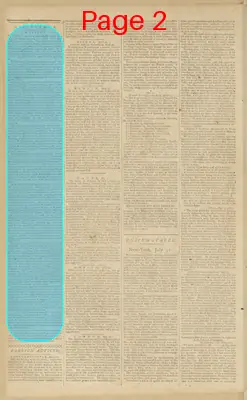
Editorial
July 31, 1787
The New York Packet
New York, New York County, New York
What is this article about?
Philosophical essay on the solemn duties of writers to uphold justice, oppose oppression and tyranny, promote morality and virtue through literature, and serve as advocates for the public good, referencing Fontenelle and Fenelon.
Clipping

OCR Quality
98%
Excellent
Full Text
MISCELLANEOUS WRITERS.
Every writer is particularly bound in a most solemn manner, and before every other obligation, to do justice. The infringement of justice is an injury done to human nature; for this reason, every author, worthy of the name, is sensibly affected with any wrong done to his equal: He is the avenger of the public cause; and the oppression that falls on his neighbour ought to become personally his; he cannot excuse himself from opposing it.
Whilst envy, wickedness, ignorance, attack writers, they despise their efforts, which must be vain, because nothing can counterbalance universal fame: The superiority of their minds point out to them the approbation of sensible men now existing and to be born; and the reward they expect for their labours is in the improvement of projects for the public good.
Can we, then, too much revere those superior men who enlarge our understandings, who establish the moral code of nations, and the civil virtues of individuals! A poem, a drama, a romance, which draws virtue in lively colours, models the reader insensibly on the virtuous characters he represents; they interest him, and the author inculcates the moral, without speaking of it; by a skilful hidden operation, he exhibits certain qualities of the mind covered with an imagery that makes us adopt them. He compels us to love those generous actions; and the man who spurns at reflection, whose mind is soured with dogmatical lessons, is charmed with the natural pencil which improves to the best advantage the sensibility of the human heart, to instruct it in what stern personal interest commonly repels.
We must carefully examine our mind, which is the sanctuary where reside our thoughts and ideas. Science is only useful to conduct us to morality, which is necessary for us; to morality which teaches us to be mild, patient, temperate, and which speaking of our equals, instructs us in our duty to them. A Philosopher, who meditates alone, who scrutinizes different objects; and examines them calmly with all their connections, is likely to be nearer the truth, than an assembly of men who discuss, deliberate, and argue.
A rich or happy man would not perhaps do well to commence writer, not only because he would risk his repose and peaceable enjoyments, but perhaps because he would not be sufficiently exasperated against the wicked, that is to say the disturbers of public order; he would be in a situation too apt to tolerate many abuses that would affect him but slightly, entrenched, as one may say, in the circle of his opulence; in a word, he would find himself too much disposed to pardon several, and varnish over by reasoning many political vices of our modern governments.
How could he find out a remedy to the evils with which we are burdened, when he would be at such a distance from the suffering class? A writer must have the misfortune to be discontented with every thing that is done wrong in his country, that he may write in a manly style to rouse attention; his style must be emphatic, as it is to strike the ears of the obdurate and haughty. Orator of the greater number, that is to say, the crowd of unfortunate beings; melancholy, the most her mother of pity, must preside over his gloomy pen to make it the more affecting.
Fontenelle has said of himself, that he never by any chance had thrown the least ridicule on the smallest virtue. That is truly respectable; but he had only fulfilled half the task of a man of letters. It is more and more obligatory to redouble our exertions against every thing that debases humanity; to brand all despotism; incessantly to attack tyranny under its various forms; to devote one's self for the common cause, to possess that sublime sentiment which so rapidly extends; to visit the meanest citizen; and, in fine, to become his advocate in the face of pride and power.
Who must ward the blows intended against the multitude, but the eloquent voice of the just and sensible man! Who will attack blind and insolent power with reproaches, cries, and sighs, if it is not the writer! He must borrow the keen and plaintive tone of the oppressed, he must make the distant and formidable thunder of posterity roll over the oppressor's head, and he should know, notwithstanding the audaciousness some politicians have affected, there are few public men who do not dread the judgment of the public.—This courage will be called enthusiasm; but is not enthusiasm to talents the same as colouring to a picture? Without it, there is no sacrifice offered to the truth; no inspiration, none of those permanent and victorious enticements that impel the writer to compose those works which are lasting monuments for future ages.
Happy then, the man who knows the enthusiasm of his art! who, while error has its heroes and martyrs, is inflamed for truth, and enjoys, in the contemplation of her chaste attractions, the sacrifices he has made to her! Truth has lovers who prefer her to all! Read Fenelon, when he talks of virtue: how he insinuates it into our souls! The author who abandons himself to the impulse of his soul, has an idiom which resounds, not to the ear, but the mind of the reader, and that is eloquence.
If a man was passionately fond of a conqueror, idolized him, and imagined it to be a glorious action to expire under his command, ah! let us forgive the generous mind greedy of useful knowledge; the transports it enjoys while it penetrates the sanctuary where truth is hidden, and lifts the veil that covers her.
* When a man devotes himself to the painful office of a writer, he must, first of all, sound the fortitude of his mind; he must be confident he is able to support all incidental attacks with resolution.
Every writer is particularly bound in a most solemn manner, and before every other obligation, to do justice. The infringement of justice is an injury done to human nature; for this reason, every author, worthy of the name, is sensibly affected with any wrong done to his equal: He is the avenger of the public cause; and the oppression that falls on his neighbour ought to become personally his; he cannot excuse himself from opposing it.
Whilst envy, wickedness, ignorance, attack writers, they despise their efforts, which must be vain, because nothing can counterbalance universal fame: The superiority of their minds point out to them the approbation of sensible men now existing and to be born; and the reward they expect for their labours is in the improvement of projects for the public good.
Can we, then, too much revere those superior men who enlarge our understandings, who establish the moral code of nations, and the civil virtues of individuals! A poem, a drama, a romance, which draws virtue in lively colours, models the reader insensibly on the virtuous characters he represents; they interest him, and the author inculcates the moral, without speaking of it; by a skilful hidden operation, he exhibits certain qualities of the mind covered with an imagery that makes us adopt them. He compels us to love those generous actions; and the man who spurns at reflection, whose mind is soured with dogmatical lessons, is charmed with the natural pencil which improves to the best advantage the sensibility of the human heart, to instruct it in what stern personal interest commonly repels.
We must carefully examine our mind, which is the sanctuary where reside our thoughts and ideas. Science is only useful to conduct us to morality, which is necessary for us; to morality which teaches us to be mild, patient, temperate, and which speaking of our equals, instructs us in our duty to them. A Philosopher, who meditates alone, who scrutinizes different objects; and examines them calmly with all their connections, is likely to be nearer the truth, than an assembly of men who discuss, deliberate, and argue.
A rich or happy man would not perhaps do well to commence writer, not only because he would risk his repose and peaceable enjoyments, but perhaps because he would not be sufficiently exasperated against the wicked, that is to say the disturbers of public order; he would be in a situation too apt to tolerate many abuses that would affect him but slightly, entrenched, as one may say, in the circle of his opulence; in a word, he would find himself too much disposed to pardon several, and varnish over by reasoning many political vices of our modern governments.
How could he find out a remedy to the evils with which we are burdened, when he would be at such a distance from the suffering class? A writer must have the misfortune to be discontented with every thing that is done wrong in his country, that he may write in a manly style to rouse attention; his style must be emphatic, as it is to strike the ears of the obdurate and haughty. Orator of the greater number, that is to say, the crowd of unfortunate beings; melancholy, the most her mother of pity, must preside over his gloomy pen to make it the more affecting.
Fontenelle has said of himself, that he never by any chance had thrown the least ridicule on the smallest virtue. That is truly respectable; but he had only fulfilled half the task of a man of letters. It is more and more obligatory to redouble our exertions against every thing that debases humanity; to brand all despotism; incessantly to attack tyranny under its various forms; to devote one's self for the common cause, to possess that sublime sentiment which so rapidly extends; to visit the meanest citizen; and, in fine, to become his advocate in the face of pride and power.
Who must ward the blows intended against the multitude, but the eloquent voice of the just and sensible man! Who will attack blind and insolent power with reproaches, cries, and sighs, if it is not the writer! He must borrow the keen and plaintive tone of the oppressed, he must make the distant and formidable thunder of posterity roll over the oppressor's head, and he should know, notwithstanding the audaciousness some politicians have affected, there are few public men who do not dread the judgment of the public.—This courage will be called enthusiasm; but is not enthusiasm to talents the same as colouring to a picture? Without it, there is no sacrifice offered to the truth; no inspiration, none of those permanent and victorious enticements that impel the writer to compose those works which are lasting monuments for future ages.
Happy then, the man who knows the enthusiasm of his art! who, while error has its heroes and martyrs, is inflamed for truth, and enjoys, in the contemplation of her chaste attractions, the sacrifices he has made to her! Truth has lovers who prefer her to all! Read Fenelon, when he talks of virtue: how he insinuates it into our souls! The author who abandons himself to the impulse of his soul, has an idiom which resounds, not to the ear, but the mind of the reader, and that is eloquence.
If a man was passionately fond of a conqueror, idolized him, and imagined it to be a glorious action to expire under his command, ah! let us forgive the generous mind greedy of useful knowledge; the transports it enjoys while it penetrates the sanctuary where truth is hidden, and lifts the veil that covers her.
* When a man devotes himself to the painful office of a writer, he must, first of all, sound the fortitude of his mind; he must be confident he is able to support all incidental attacks with resolution.
What sub-type of article is it?
Moral Or Religious
Social Reform
Press Freedom
What keywords are associated?
Writers Duties
Moral Obligation
Opposing Tyranny
Literature Virtue
Public Advocacy
Truth Enthusiasm
What entities or persons were involved?
Fontenelle
Fenelon
Editorial Details
Primary Topic
Duties Of Writers To Promote Justice, Morality, And Oppose Tyranny
Stance / Tone
Exhortative Praise For Virtuous Writers And Their Societal Role
Key Figures
Fontenelle
Fenelon
Key Arguments
Writers Are Bound To Do Justice And Avenge Public Wrongs
Literature Subtly Inculcates Virtue And Improves Morality
Writers Must Oppose Oppression And Tyranny With Emphatic Style
Enthusiasm And Truth Are Essential To Impactful Writing
Rich Men May Lack The Necessary Indignation To Be Effective Writers