Thank you for visiting SNEWPapers!
Sign up free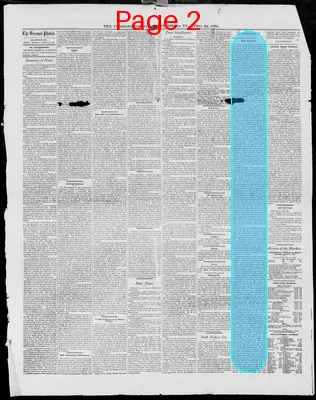
Letter to Editor
April 22, 1870
Vermont Phœnix
Brattleboro, Bellows Falls, Ludlow, Windham County, Windsor County, Vermont
What is this article about?
This article advocates for a proposed amendment to the Vermont Constitution granting women voting rights, rebutting a Vermont Journal piece claiming women lack desire for the ballot. It stresses equality in education and government principles, arguing suffrage extends liberty without compulsion.
Clipping

OCR Quality
98%
Excellent
Full Text
Communications
Written for the Vermont Phoenix.
THE BALLOT
"No desire for the ballot" is the heading of an article in the Vermont Journal of April 9th, in which the writer takes the broad ground that it is a conclusive reason for rejecting the proposed amendment of the Vermont Constitution giving women the right to vote, because "she has not asked or manifested any desire for the ballot." He says, "Let it not be said that the wishes of Vermont women on this question are not known. They are known just as satisfactorily as if a formal vote had been taken. In ninety-nine cases of the hundred homes where they dwell, they have already expressed their repugnance to being dragged before the public by these meddlesome reformers."
Who are "these meddlesome reformers" of which he speaks? We are discussing the propriety of adopting an amendment to our State constitution, proposed and recommended for the consideration of the people, by a Council of Censors chosen by the legal voters of the State, to recommend such alterations and amendments, as in their judgment the good of the State, and the present condition of the people require. Are these "the meddlesome reformers" that have "dragged" the women of Vermont before the public against their wish? portion, or even a majority do not desire the ballot; of course they won't vote unless they desire it, if free play is given to the exercise of their own judgment. We need have no fears of trouble by giving them the right to vote, if we know they do not desire to exercise that right. It is by no manner of means that we wish them "dragged" before the public against their wishes, that we advocate giving them the right of ballot, but simply to give them the right to act their own judgment in taking part in the political destinies of the State. Neither men or women are apt to complain of too many rights or privileges. The policy of a free government is to extend and protect the liberty of conscience and the free exercise of the judgment of its people. Whenever we restrict or abridge by an organic law, the full and free exercise of judgment in any of the legitimate citizens of the State, we so far depart from the primary principle on which our government is founded. And we cannot, we dare not believe the voters of Vermont will so far depart from the humane and patriot course they have hitherto pursued in extending the rights of citizens and the right of suffrage to all classes and all races, as to arbitrarily close the gates against the rights of one half our own citizens, who are every way their equals in patriotism and intelligence, to the free exercise of their own conscience as to the use of the ballot, by reason of sex.
A large majority of our public schools are taught by females, and it is universally conceded that they are better adapted than males, for the most important of all positions in a free government, teachers of common schools. Is not one great object of public schools to train the youth of our State to active duties of life, to fit and prepare them for the responsibilities they must soon assume of shaping and preserving the destinies of the commonwealth. One important object of a system of public education, is the universal dissemination of political science. The theory and practical working of a republican form of government should be instilled into the mind of every pupil in the State. Would not the opponents of the contemplated amendment consider it an absurd idea to teach boys in a common school the science and principles of government, and withhold it from girls in the same school? And would it not be still more absurd to instruct both alike, and when they become of lawful age to assume the duties and responsibilities of citizens, to give one civil and political rights, and deprive the other of the same rights by a provision of the State constitution? It is useless to educate any class of citizens unless we give them the right to avail themselves of the benefits of that education.
The Journal closes its article as follows: "Well may the men of Vermont be content not to force the ballot upon women who repel it with all the instincts of their nature, and all the convictions of their heart, in the light of education and religion." We will go with the Journal man in not forcing the ballot upon women who repel it with such horror as he describes, and generously ask him to go with us in providing a way whereby those who do not repel the ballot, but publicly and avowedly express a desire for its privileges, can be allowed the full and free exercise of their judgment in the matter.
The assertion, either directly or indirectly, that in "ninety-nine cases out of the hundred," Vermont women have expressed their "utter repugnance" to the constitutional right of suffrage, is a wild assumption and a gross perversion of facts. Have the women, many of them, made any public demonstration against it? Has there been any remonstrance started by them by petition or otherwise? Could the question of the amendment in relation to the right of suffrage be fairly put to the women of Vermont to-day, a large majority would unquestionably go for it. But if they are made to believe it is what the Journal represents it to be, forcing the ballot upon them against their wishes, it is not strange that they "repel it." Were there any logical basis for an argument, consistent with the theory of our government, the opponents of the amendment would have no occasion to misrepresent the real issue. They argue as though it was a compulsory edict, and if adopted the women would be compelled to vote. Nothing could be more unreasonable. To have the ballot forced upon women, and to allow the the right of suffrage with no other restrictions than the law imposes on men, are as widely different as force and freedom can be. Women love liberty as well as men, and if, as our friend of the Journal says, they are intelligent enough to have "just opinions on this subject," why need we fear that they will add to their "already heavy burdens," by mounting the platform and mixing in the strifes of male competitors for civil office?
These over sensitive, would-be lords, whose flow of crocodile tears for the fate of Vermont women who may be led astray by what our friend is pleased to call "this flattering movement of hair-brained philanthropy," entirely mistake the tendency of the age. Nothing is more certain than that women, at no distant day will be allowed to exercise the same civil and political privileges as men. And fastidious old fogies may allay their fears; the swelling tide of public opinion upon this subject is gaining resistless force, and the women who form an equally important half of civilized society with man, have declared, as they should under our form of government, that justice and the acknowledged principles embodied in the Declaration of Independence, demand that a constitutional right of franchise should be allowed them. They constitute fully an equal share of the moving power of the present age; they are alive to the duties of the hour, and their forensic powers are being more and more appreciated. The world moves; and the intelligence and "just opinions' of the women themselves will settle the matter of suffrage all right, only give them the privilege of acting in accordance with their own judgment.
Written for the Vermont Phoenix.
THE BALLOT
"No desire for the ballot" is the heading of an article in the Vermont Journal of April 9th, in which the writer takes the broad ground that it is a conclusive reason for rejecting the proposed amendment of the Vermont Constitution giving women the right to vote, because "she has not asked or manifested any desire for the ballot." He says, "Let it not be said that the wishes of Vermont women on this question are not known. They are known just as satisfactorily as if a formal vote had been taken. In ninety-nine cases of the hundred homes where they dwell, they have already expressed their repugnance to being dragged before the public by these meddlesome reformers."
Who are "these meddlesome reformers" of which he speaks? We are discussing the propriety of adopting an amendment to our State constitution, proposed and recommended for the consideration of the people, by a Council of Censors chosen by the legal voters of the State, to recommend such alterations and amendments, as in their judgment the good of the State, and the present condition of the people require. Are these "the meddlesome reformers" that have "dragged" the women of Vermont before the public against their wish? portion, or even a majority do not desire the ballot; of course they won't vote unless they desire it, if free play is given to the exercise of their own judgment. We need have no fears of trouble by giving them the right to vote, if we know they do not desire to exercise that right. It is by no manner of means that we wish them "dragged" before the public against their wishes, that we advocate giving them the right of ballot, but simply to give them the right to act their own judgment in taking part in the political destinies of the State. Neither men or women are apt to complain of too many rights or privileges. The policy of a free government is to extend and protect the liberty of conscience and the free exercise of the judgment of its people. Whenever we restrict or abridge by an organic law, the full and free exercise of judgment in any of the legitimate citizens of the State, we so far depart from the primary principle on which our government is founded. And we cannot, we dare not believe the voters of Vermont will so far depart from the humane and patriot course they have hitherto pursued in extending the rights of citizens and the right of suffrage to all classes and all races, as to arbitrarily close the gates against the rights of one half our own citizens, who are every way their equals in patriotism and intelligence, to the free exercise of their own conscience as to the use of the ballot, by reason of sex.
A large majority of our public schools are taught by females, and it is universally conceded that they are better adapted than males, for the most important of all positions in a free government, teachers of common schools. Is not one great object of public schools to train the youth of our State to active duties of life, to fit and prepare them for the responsibilities they must soon assume of shaping and preserving the destinies of the commonwealth. One important object of a system of public education, is the universal dissemination of political science. The theory and practical working of a republican form of government should be instilled into the mind of every pupil in the State. Would not the opponents of the contemplated amendment consider it an absurd idea to teach boys in a common school the science and principles of government, and withhold it from girls in the same school? And would it not be still more absurd to instruct both alike, and when they become of lawful age to assume the duties and responsibilities of citizens, to give one civil and political rights, and deprive the other of the same rights by a provision of the State constitution? It is useless to educate any class of citizens unless we give them the right to avail themselves of the benefits of that education.
The Journal closes its article as follows: "Well may the men of Vermont be content not to force the ballot upon women who repel it with all the instincts of their nature, and all the convictions of their heart, in the light of education and religion." We will go with the Journal man in not forcing the ballot upon women who repel it with such horror as he describes, and generously ask him to go with us in providing a way whereby those who do not repel the ballot, but publicly and avowedly express a desire for its privileges, can be allowed the full and free exercise of their judgment in the matter.
The assertion, either directly or indirectly, that in "ninety-nine cases out of the hundred," Vermont women have expressed their "utter repugnance" to the constitutional right of suffrage, is a wild assumption and a gross perversion of facts. Have the women, many of them, made any public demonstration against it? Has there been any remonstrance started by them by petition or otherwise? Could the question of the amendment in relation to the right of suffrage be fairly put to the women of Vermont to-day, a large majority would unquestionably go for it. But if they are made to believe it is what the Journal represents it to be, forcing the ballot upon them against their wishes, it is not strange that they "repel it." Were there any logical basis for an argument, consistent with the theory of our government, the opponents of the amendment would have no occasion to misrepresent the real issue. They argue as though it was a compulsory edict, and if adopted the women would be compelled to vote. Nothing could be more unreasonable. To have the ballot forced upon women, and to allow the the right of suffrage with no other restrictions than the law imposes on men, are as widely different as force and freedom can be. Women love liberty as well as men, and if, as our friend of the Journal says, they are intelligent enough to have "just opinions on this subject," why need we fear that they will add to their "already heavy burdens," by mounting the platform and mixing in the strifes of male competitors for civil office?
These over sensitive, would-be lords, whose flow of crocodile tears for the fate of Vermont women who may be led astray by what our friend is pleased to call "this flattering movement of hair-brained philanthropy," entirely mistake the tendency of the age. Nothing is more certain than that women, at no distant day will be allowed to exercise the same civil and political privileges as men. And fastidious old fogies may allay their fears; the swelling tide of public opinion upon this subject is gaining resistless force, and the women who form an equally important half of civilized society with man, have declared, as they should under our form of government, that justice and the acknowledged principles embodied in the Declaration of Independence, demand that a constitutional right of franchise should be allowed them. They constitute fully an equal share of the moving power of the present age; they are alive to the duties of the hour, and their forensic powers are being more and more appreciated. The world moves; and the intelligence and "just opinions' of the women themselves will settle the matter of suffrage all right, only give them the privilege of acting in accordance with their own judgment.
What sub-type of article is it?
Persuasive
Political
Social Critique
What themes does it cover?
Feminism
Constitutional Rights
Politics
What keywords are associated?
Women Suffrage
Vermont Constitution
Ballot Rights
Gender Equality
Political Liberty
Public Education
Letter to Editor Details
Main Argument
the proposed amendment to the vermont constitution should grant women the right to vote, as it extends liberty and equality without compulsion, countering claims that women universally oppose suffrage.
Notable Details
References Vermont Journal Article Of April 9th
Mentions Council Of Censors Proposing Amendment
Discusses Role Of Women In Public Education
Alludes To Declaration Of Independence Principles