Thank you for visiting SNEWPapers!
Sign up free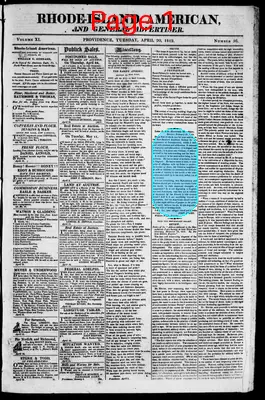
Editorial
April 20, 1819
The Rhode Island American, And General Advertiser
Providence, Providence County, Rhode Island
What is this article about?
John Adams praises William Willis's address to the New-Bedford Auxiliary Society for the Suppression of Intemperance, describes drunkards as selfish and devoid of virtues, and criticizes Americans for exceeding the world in this vice compared to other cultures.
Clipping
OCR Quality
98%
Excellent
Full Text
Letter from the Honourable Mr. Adams,
Quincy, February 21, 1819.
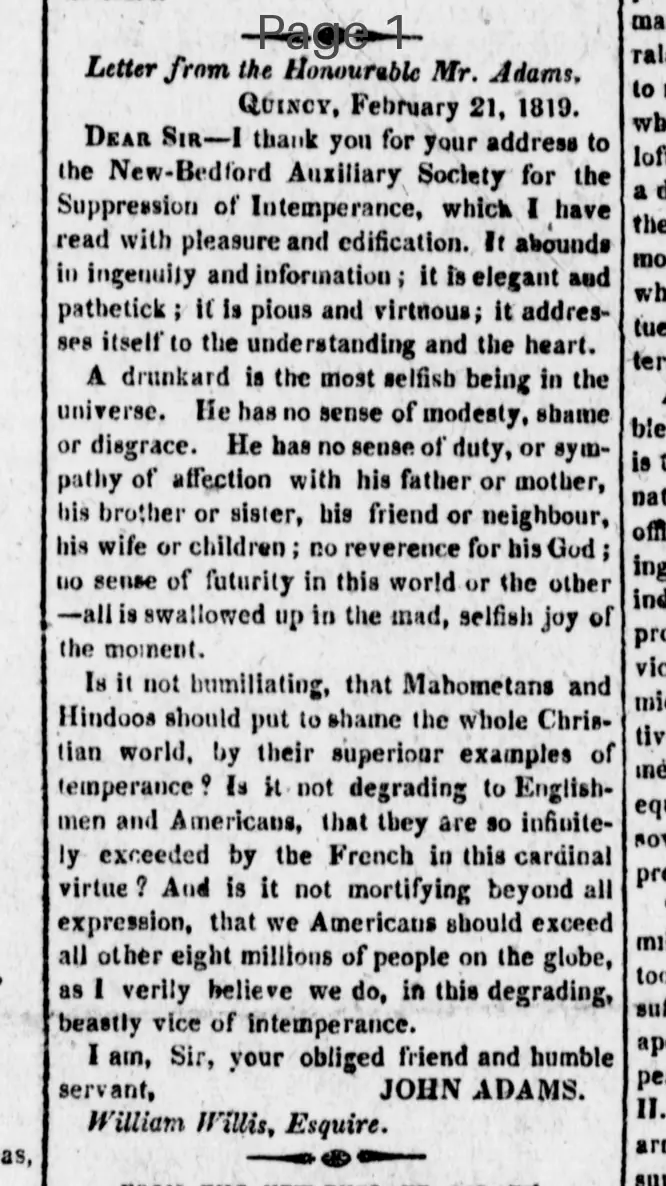
Dear Sir--I thank you for your address to the New-Bedford Auxiliary Society for the Suppression of Intemperance, which I have read with pleasure and edification. It abounds in ingenuity and information; it is elegant and pathetic; it is pious and virtuous; it addresses itself to the understanding and the heart.
A drunkard is the most selfish being in the universe. He has no sense of modesty, shame or disgrace. He has no sense of duty, or sympathy of affection with his father or mother, his brother or sister, his friend or neighbour, his wife or children; no reverence for his God; no sense of futurity in this world or the other--all is swallowed up in the mad, selfish joy of the moment.
Is it not humiliating, that Mahometans and Hindoos should put to shame the whole Christian world, by their superior examples of temperance? Is it not degrading to Englishmen and Americans, that they are so infinitely exceeded by the French in this cardinal virtue? And is it not mortifying beyond all expression, that we Americans should exceed all other eight millions of people on the globe, as I verily believe we do, in this degrading, beastly vice of intemperance.
I am, Sir, your obliged friend and humble servant,
JOHN ADAMS.
William Willis, Esquire.
Quincy, February 21, 1819.
Dear Sir--I thank you for your address to the New-Bedford Auxiliary Society for the Suppression of Intemperance, which I have read with pleasure and edification. It abounds in ingenuity and information; it is elegant and pathetic; it is pious and virtuous; it addresses itself to the understanding and the heart.
A drunkard is the most selfish being in the universe. He has no sense of modesty, shame or disgrace. He has no sense of duty, or sympathy of affection with his father or mother, his brother or sister, his friend or neighbour, his wife or children; no reverence for his God; no sense of futurity in this world or the other--all is swallowed up in the mad, selfish joy of the moment.
Is it not humiliating, that Mahometans and Hindoos should put to shame the whole Christian world, by their superior examples of temperance? Is it not degrading to Englishmen and Americans, that they are so infinitely exceeded by the French in this cardinal virtue? And is it not mortifying beyond all expression, that we Americans should exceed all other eight millions of people on the globe, as I verily believe we do, in this degrading, beastly vice of intemperance.
I am, Sir, your obliged friend and humble servant,
JOHN ADAMS.
William Willis, Esquire.
What sub-type of article is it?
Temperance
Moral Or Religious
What keywords are associated?
Temperance
Intemperance
Drunkenness
Moral Virtue
American Vice
Cultural Comparison
What entities or persons were involved?
John Adams
William Willis
New Bedford Auxiliary Society For The Suppression Of Intemperance
Mahometans
Hindoos
French
Englishmen
Americans
Editorial Details
Primary Topic
Praise For Address On Suppressing Intemperance And Critique Of American Drunkenness
Stance / Tone
Supportive Of Temperance Movement, Critical Of Intemperance
Key Figures
John Adams
William Willis
New Bedford Auxiliary Society For The Suppression Of Intemperance
Mahometans
Hindoos
French
Englishmen
Americans
Key Arguments
Drunkard Is The Most Selfish Being, Lacking Modesty, Duty, Sympathy, Reverence For God, And Sense Of Futurity
Mahometans And Hindoos Shame Christians With Superior Temperance
Englishmen And Americans Are Exceeded By French In Temperance
Americans Exceed All Other Eight Million People In Intemperance