Thank you for visiting SNEWPapers!
Sign up free
Literary
December 23, 1785
Fowle's New Hampshire Gazette And General Advertiser
Portsmouth, Rockingham County, New Hampshire
What is this article about?
A fable about two friends in a country town: the silent Mr. Bridgman, who enjoys peace by speaking little and only well of others, and the talkative Mr. Johnson, who has lost wealth and friends through his severe criticisms. Bridgman advises Johnson to follow his example for happiness.
Clipping
OCR Quality
98%
Excellent
Full Text
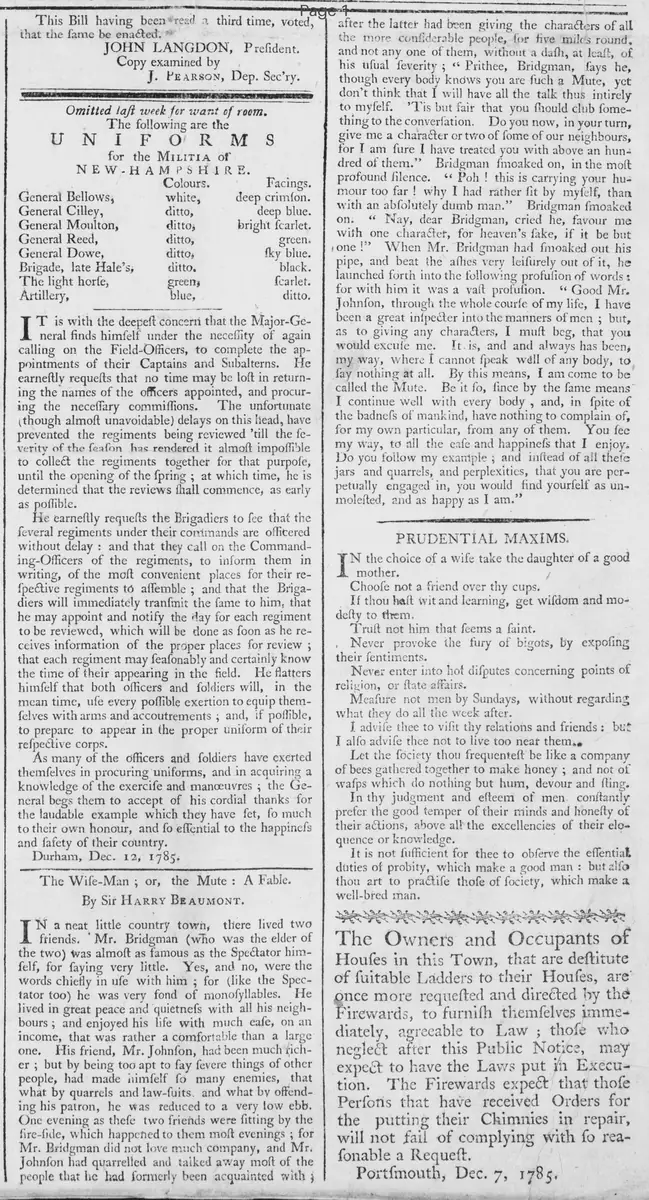
The Wise-Man; or, the Mute: A Fable.
By Sir Harry BeauMont.
IN a neat little country town, there lived two friends. Mr. Bridgman (who was the elder of the two) was almost as famous as the Spectator himself, for saying very little. Yes, and no, were the words chiefly in use with him; for (like the Spectator too) he was very fond of monoysllables. He lived in great peace and quietness with all his neighbours; and enjoyed his life with much ease, on an income, that was rather a comfortable than a large one. His friend, Mr. Johnson, had been much richer; but by being too apt to say severe things of other people, had made himself so many enemies, that what by quarrels and law-suits. and what by offending his patron, he was reduced to a very low ebb.
One evening as these two friends were sitting by the fire-side, which happened to them most evenings; for Mr. Bridgman did not love much company, and Mr. Johnson had quarrelled and talked away most of the people that he had formerly been acquainted with; after the latter had been giving the characters of all the more considerable people, for five miles round. and not any one of them, without a dash, at least, of his usual severity; "Prithee, Bridgman, says he, though every body knows you are such a Mute, yet don't think that I will have all the talk thus intirely to myself. 'Tis but fair that you should club something to the conversation. Do you now, in your turn, give me a character or two of some of our neighbours, for I am sure I have treated you with above an hundred of them." Bridgman smoaked on, in the most profound silence. "Poh! this is carrying your humour too far! why I had rather sit by myself, than with an absolutely dumb man." Bridgman smoaked on. "Nay, dear Bridgman, cried he, favour me with one character, for heaven's sake, if it be but one!" When Mr. Bridgman had smoaked out his pipe, and beat the ashes very leisurely out of it, he launched forth into the following profusion of words: for with him it was a vast profusion. "Good Mr. Johnson, through the whole course of my life, I have been a great inspector into the manners of men; but, as to giving any characters, I must beg, that you would excuse me. It.is, and always has been, my way, where I cannot speak well of any body, to say nothing at all. By this means, I am come to be called the Mute. Be it so, since by the same means I continue well with every body, and, in spite of the badness of mankind, have nothing to complain of, for my own particular, from any of them. You see my way, to all the ease and happiness that I enjoy. Do you follow my example; and instead of all these jars and quarrels, and perplexities, that you are perpetually engaged in, you would find yourself as unmolested, and as happy as I am."
By Sir Harry BeauMont.
IN a neat little country town, there lived two friends. Mr. Bridgman (who was the elder of the two) was almost as famous as the Spectator himself, for saying very little. Yes, and no, were the words chiefly in use with him; for (like the Spectator too) he was very fond of monoysllables. He lived in great peace and quietness with all his neighbours; and enjoyed his life with much ease, on an income, that was rather a comfortable than a large one. His friend, Mr. Johnson, had been much richer; but by being too apt to say severe things of other people, had made himself so many enemies, that what by quarrels and law-suits. and what by offending his patron, he was reduced to a very low ebb.
One evening as these two friends were sitting by the fire-side, which happened to them most evenings; for Mr. Bridgman did not love much company, and Mr. Johnson had quarrelled and talked away most of the people that he had formerly been acquainted with; after the latter had been giving the characters of all the more considerable people, for five miles round. and not any one of them, without a dash, at least, of his usual severity; "Prithee, Bridgman, says he, though every body knows you are such a Mute, yet don't think that I will have all the talk thus intirely to myself. 'Tis but fair that you should club something to the conversation. Do you now, in your turn, give me a character or two of some of our neighbours, for I am sure I have treated you with above an hundred of them." Bridgman smoaked on, in the most profound silence. "Poh! this is carrying your humour too far! why I had rather sit by myself, than with an absolutely dumb man." Bridgman smoaked on. "Nay, dear Bridgman, cried he, favour me with one character, for heaven's sake, if it be but one!" When Mr. Bridgman had smoaked out his pipe, and beat the ashes very leisurely out of it, he launched forth into the following profusion of words: for with him it was a vast profusion. "Good Mr. Johnson, through the whole course of my life, I have been a great inspector into the manners of men; but, as to giving any characters, I must beg, that you would excuse me. It.is, and always has been, my way, where I cannot speak well of any body, to say nothing at all. By this means, I am come to be called the Mute. Be it so, since by the same means I continue well with every body, and, in spite of the badness of mankind, have nothing to complain of, for my own particular, from any of them. You see my way, to all the ease and happiness that I enjoy. Do you follow my example; and instead of all these jars and quarrels, and perplexities, that you are perpetually engaged in, you would find yourself as unmolested, and as happy as I am."
What sub-type of article is it?
Fable
Prose Fiction
What themes does it cover?
Moral Virtue
Social Manners
Friendship
What keywords are associated?
Fable
Silence
Criticism
Friendship
Moral Lesson
Gossip
Peace
What entities or persons were involved?
By Sir Harry Beaumont.
Literary Details
Title
The Wise Man; Or, The Mute: A Fable.
Author
By Sir Harry Beaumont.
Key Lines
"Good Mr. Johnson, Through The Whole Course Of My Life, I Have Been A Great Inspector Into The Manners Of Men; But, As To Giving Any Characters, I Must Beg, That You Would Excuse Me."
"It.Is, And Always Has Been, My Way, Where I Cannot Speak Well Of Any Body, To Say Nothing At All."
"By This Means, I Am Come To Be Called The Mute. Be It So, Since By The Same Means I Continue Well With Every Body, And, In Spite Of The Badness Of Mankind, Have Nothing To Complain Of, For My Own Particular, From Any Of Them."
"You See My Way, To All The Ease And Happiness That I Enjoy. Do You Follow My Example; And Instead Of All These Jars And Quarrels, And Perplexities, That You Are Perpetually Engaged In, You Would Find Yourself As Unmolested, And As Happy As I Am."