Thank you for visiting SNEWPapers!
Sign up free
Story
October 5, 1843
Port Gibson Herald
Port Gibson, Claiborne County, Mississippi
What is this article about?
Actor Junius Brutus Booth, playing Richard III in Baltimore, is found acting in a hay loft before the show. Mid-performance, he learns his child has died, delivers a poignant scene, then rides madly to the graveyard in costume, kisses the corpse, and descends into insanity.
Clipping
OCR Quality
92%
Excellent
Full Text
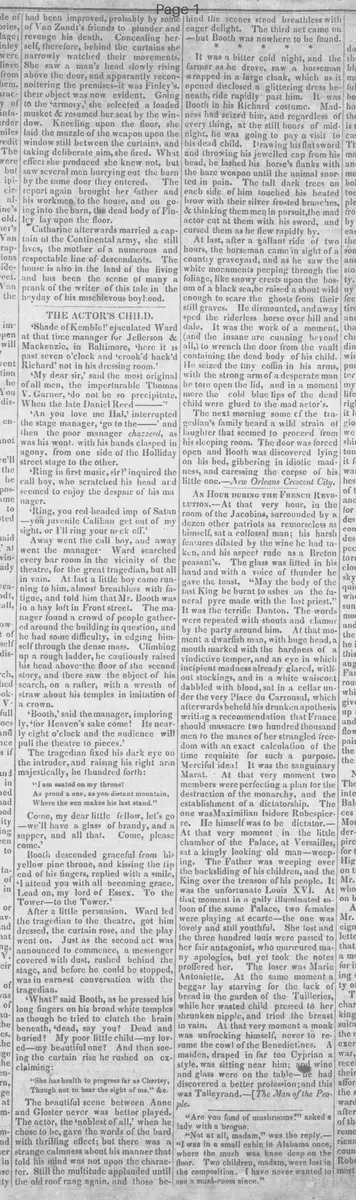
THE ACTOR'S CHILD.
Shade of Kemble!' ejaculated Ward
at that time manager for Jefferson &
Mackenzie, in Baltimore, 'here it is
past seven o'clock and 'crook'd back'd
Richard' not in his dressing room.
'My dear sir,' said the most original
of all men, the imperturbable Thomas
V. Garner, 'do not be so precipitate.
When the late Daniel Reed
'An you love me Hal,' interrupted
the stage manager, 'go to the
and
then the poor manager chafed, as
was his wont, with his hands clasped in
agony, from one side of the Holliday
street stage to the other.
'Ring in first music, sir?' inquired the
call boy, who scratched his head and
seemed to enjoy the despair of his ma-
nager.
'Ring, you red-headed imp of Satan
—you juvenile Caliban get out of my
sight, or I'll ring your neck off.'
Away went the call boy, and away
went the manager: Ward searched
every bar room in the vicinity of the
theatre, for the great tragedian, but all
in vain. At last a little boy came run-
ning to him, almost breathless with fa-
tigue, and told him that Mr. Booth was
in a hay loft in Front street. The ma-
nager found a crowd of people gather-
ed around the building in question, and
he had some difficulty, in edging him-
self through the dense mass. Climbing
up a rough ladder, he cautiously raised
his head above the floor of the second
story, and there saw the object of his
search, on a rafter, with a wreath of
straw about his temples in imitation of
a crown.
'Booth,' said the manager, imploring
ly, 'for Heaven's sake come! It's near-
ly eight o'clock and the audience will
pull the theatre to pieces.'
The tragedian fixed his dark eye on
the intruder, and raising his right arm
majestically, he thundered forth:
"I am seated on my throne!
As proud a one, as yon distant mountain,
Where the sun makes his last stand."
'Come, my dear little fellow, let's go
—we'll have a glass of brandy, and a
supper, and all that. Come, please
come.'
Booth descended graceful from his
yellow pine throne, and kissing the tip
end of his fingers, replied with a smile,
'I attend you with all becoming grace.
Lead on, my lord of Essex. To the
Tower—to the Tower.'
After a little persuasion, Ward led
the tragedian to the theatre, got him
dressed, the curtain rose, and the play
went on. Just as the second act was
announced to commence, a messenger
covered with dust, rushed behind the
stage, and before he could be stopped,
was in earnest conversation with the
tragedian.
'What?' said Booth, as he pressed his
long fingers on his broad white temples
as though he tried to clutch the brain
beneath, 'dead, say you? Dead and
buried? My poor little child—my lov-
ed—my beautiful one? And then see-
ing the curtain rise he rushed on ex-
claiming:
"She has health to progress far as Chertsey,
Though not to bear the sight of me." &c.
The beautiful scene between Anne
and Gloster never was better played.
The actor, the 'noblest of all,' when he
chose to be, gave the words of the bard
with thrilling effect; but there was a
strange calmness about his manner that
told his mind was not upon the charac-
ter. Still the multitude applauded until
the old roof rang again, and those be-
hind the scenes stood breathless with
eager delight. The third act came on
—but Booth was nowhere to be found.
It was a bitter cold night, and the
farmer as he drove, saw a horseman
wrapped in a large cloak, which as it
opened disclosed a glittering dress be-
neath, ride rapidly past him. It was
Booth in his Richard costume. Mad-
ness had seized him, and regardless of
every thing, at the still hours of mid-
night, he was going to pay a visit to
his dead child. Drawing his flat sword
and throwing his jewelled cap from his
head, he lashed his horse's flanks with
the bare weapon until the animal snor-
ted in pain. The tall dark trees on
each side of him touched his heated
brow with their silver frosted branches,
& thinking them men in pursuit, the mad
actor cut at them with his sword, and
cursed them as he flew rapidly by.
At last, after a gallant ride of two
hours, the horseman came in sight of a
country graveyard, and as he saw the
white monuments peeping through the
foliage, like snowy crests upon the bos-
om of a black sea, he raised a shout wild
enough to scare the ghosts from their
still graves. He dismounted, and away
sped the riderless horse over hill and
dale. It was the work of a moment,
(and the insane are cunning beyond
all,) to wrench the door from the vault
containing the dead body of his child.
He seized the tiny coffin in his arms,
with the strong arm of a desperate man
he tore open the lid, and in a moment
more the cold blue lips of the dead
child were glued to the mad actor's.
The next morning some of the tra-
gedian's family heard a wild strain of
laughter that seemed to proceed from
his sleeping room. The door was forced
open and Booth was discovered lying
on his bed, gibbering in idiotic mad-
ness, and caressing the corpse of his
little one. New Orleans Crescent City.
Shade of Kemble!' ejaculated Ward
at that time manager for Jefferson &
Mackenzie, in Baltimore, 'here it is
past seven o'clock and 'crook'd back'd
Richard' not in his dressing room.
'My dear sir,' said the most original
of all men, the imperturbable Thomas
V. Garner, 'do not be so precipitate.
When the late Daniel Reed
'An you love me Hal,' interrupted
the stage manager, 'go to the
and
then the poor manager chafed, as
was his wont, with his hands clasped in
agony, from one side of the Holliday
street stage to the other.
'Ring in first music, sir?' inquired the
call boy, who scratched his head and
seemed to enjoy the despair of his ma-
nager.
'Ring, you red-headed imp of Satan
—you juvenile Caliban get out of my
sight, or I'll ring your neck off.'
Away went the call boy, and away
went the manager: Ward searched
every bar room in the vicinity of the
theatre, for the great tragedian, but all
in vain. At last a little boy came run-
ning to him, almost breathless with fa-
tigue, and told him that Mr. Booth was
in a hay loft in Front street. The ma-
nager found a crowd of people gather-
ed around the building in question, and
he had some difficulty, in edging him-
self through the dense mass. Climbing
up a rough ladder, he cautiously raised
his head above the floor of the second
story, and there saw the object of his
search, on a rafter, with a wreath of
straw about his temples in imitation of
a crown.
'Booth,' said the manager, imploring
ly, 'for Heaven's sake come! It's near-
ly eight o'clock and the audience will
pull the theatre to pieces.'
The tragedian fixed his dark eye on
the intruder, and raising his right arm
majestically, he thundered forth:
"I am seated on my throne!
As proud a one, as yon distant mountain,
Where the sun makes his last stand."
'Come, my dear little fellow, let's go
—we'll have a glass of brandy, and a
supper, and all that. Come, please
come.'
Booth descended graceful from his
yellow pine throne, and kissing the tip
end of his fingers, replied with a smile,
'I attend you with all becoming grace.
Lead on, my lord of Essex. To the
Tower—to the Tower.'
After a little persuasion, Ward led
the tragedian to the theatre, got him
dressed, the curtain rose, and the play
went on. Just as the second act was
announced to commence, a messenger
covered with dust, rushed behind the
stage, and before he could be stopped,
was in earnest conversation with the
tragedian.
'What?' said Booth, as he pressed his
long fingers on his broad white temples
as though he tried to clutch the brain
beneath, 'dead, say you? Dead and
buried? My poor little child—my lov-
ed—my beautiful one? And then see-
ing the curtain rise he rushed on ex-
claiming:
"She has health to progress far as Chertsey,
Though not to bear the sight of me." &c.
The beautiful scene between Anne
and Gloster never was better played.
The actor, the 'noblest of all,' when he
chose to be, gave the words of the bard
with thrilling effect; but there was a
strange calmness about his manner that
told his mind was not upon the charac-
ter. Still the multitude applauded until
the old roof rang again, and those be-
hind the scenes stood breathless with
eager delight. The third act came on
—but Booth was nowhere to be found.
It was a bitter cold night, and the
farmer as he drove, saw a horseman
wrapped in a large cloak, which as it
opened disclosed a glittering dress be-
neath, ride rapidly past him. It was
Booth in his Richard costume. Mad-
ness had seized him, and regardless of
every thing, at the still hours of mid-
night, he was going to pay a visit to
his dead child. Drawing his flat sword
and throwing his jewelled cap from his
head, he lashed his horse's flanks with
the bare weapon until the animal snor-
ted in pain. The tall dark trees on
each side of him touched his heated
brow with their silver frosted branches,
& thinking them men in pursuit, the mad
actor cut at them with his sword, and
cursed them as he flew rapidly by.
At last, after a gallant ride of two
hours, the horseman came in sight of a
country graveyard, and as he saw the
white monuments peeping through the
foliage, like snowy crests upon the bos-
om of a black sea, he raised a shout wild
enough to scare the ghosts from their
still graves. He dismounted, and away
sped the riderless horse over hill and
dale. It was the work of a moment,
(and the insane are cunning beyond
all,) to wrench the door from the vault
containing the dead body of his child.
He seized the tiny coffin in his arms,
with the strong arm of a desperate man
he tore open the lid, and in a moment
more the cold blue lips of the dead
child were glued to the mad actor's.
The next morning some of the tra-
gedian's family heard a wild strain of
laughter that seemed to proceed from
his sleeping room. The door was forced
open and Booth was discovered lying
on his bed, gibbering in idiotic mad-
ness, and caressing the corpse of his
little one. New Orleans Crescent City.
What sub-type of article is it?
Biography
Tragedy
Extraordinary Event
What themes does it cover?
Tragedy
Madness
Misfortune
What keywords are associated?
Actor Booth
Child Death
Theatrical Madness
Richard Iii
Grave Desecration
Insanity
What entities or persons were involved?
Booth
Ward
Thomas V. Garner
Where did it happen?
Baltimore
Story Details
Key Persons
Booth
Ward
Thomas V. Garner
Location
Baltimore
Story Details
Theater manager Ward searches for actor Booth, who is found role-playing in a hay loft. During a performance of Richard III, Booth learns of his child's death, delivers a moving scene, then rides in costume to the graveyard, breaks into the tomb, kisses the corpse, and later is found insane caressing it.