Thank you for visiting SNEWPapers!
Sign up free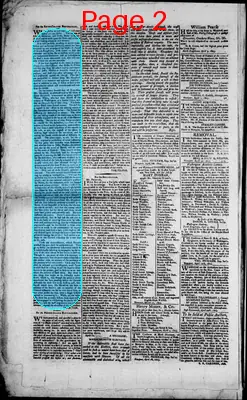
Editorial
April 11, 1805
Rhode Island Republican
Newport, Newport County, Rhode Island
What is this article about?
An anonymous editorial signed 'DETECTOR' defends Lieutenant-Governor Paul Mumford against slanders by Elisha K. Porter of South-Kingstown, aimed at preventing his re-election. It refutes claims that Mumford orchestrated prisoner Jeffery Watson's escape to prosecute Sheriff Walter White, detailing the 1803 court case and Porter's subsequent petition for a new trial.
Clipping

OCR Quality
88%
Good
Full Text
When discord, falsehood, and strife, seems to be unchained and let loose upon the State, and to roam abroad seeking whom he may devour.
It is indispensably necessary to notice a malicious and audacious falsehood, which has been conjured up and propagated by Elisha K. Porter of South-Kingstown, with intent to tarnish the character and defeat the re-election of the present Lieutenant-Governor, and to introduce in his stead a more convenient tool, who will readily answer his private purposes.
It has been suggested in this town, by a gentleman from Charlestown, that Elisha R. Porter told him that Paul Mumford had by contrivance induced Jeffery Watson to break his bounds as a prisoner, and had then taken advantage of it, by a prosecution against the Sheriff. This (as I am authorized to declare from Mr. Mumford himself) is an impudent and nefarious falsehood:
And in addition to this, I desire to state a few circumstances which will corroborate and confirm the denial.
On the twenty-seventh day of January 1803, Mr. Mumford, as administrator to the estate of Sarah Mumford, commenced an action against Walter White, who had been Sheriff of the county of Washington, at a special Court, holden on the 12th day of July 1803.
The declaration stated thence several counts. The first for a neglect in the officer in not making return of the execution according to law: The second for suffering the defendant to escape: The third for not taking bonds of the defendant, as he was specially required to do by an act of the General Assembly. On the day of trial, Potter appeared as counsel for the defendant. Two of the counts as stated in the declaration, were evidently true from a mere inspection of the records in the case, to wit, the neglect of the officer in making legal return of the execution, and in taking the bonds which the act of Assembly required. The other count, to wit, for the escape, required a production of other testimony.
To this point two witnesses were summoned, and who are sons to Jeffery Watson, the defendant, one by the name of David, and the other by the name of Ezekiel. They were both summoned by Mr. Mumford, and for the express purpose of proving the fact of a breach of bounds by the defendant, who had been confined to his house, instead of the Jail, by a special act of Assembly which had been obtained through the procurement of this same Potter, in order to afford him an undue advantage over other creditors. Only one of those witnesses attended at the trial. The other excused himself from coming by alleging indisposition. The one that attended was sworn in chief to disclose the whole truth; and he was tortured with cross questions by Potter, for the defendant, with the greatest and most ardent avidity. In the course of the examination of this witness, not a single syllable was slipped by him, or hinted from any quarter during the whole course of the trial (which was lengthy and warm) that the escape charged in this declaration had been owing to any promise, pretension, or allurement from Mr. Mumford;
and the jury instantly returned a verdict in his favor. It was supposed, to be sure, that the matter was at an end: and that the money which had been justly due for thirty odd years, would have been quietly and peaceably paid. But how different the reality. Potter's malevolence become inflated, that he had lost the case (for he is in the habit of carrying them more by influence and parliamenteering, than by evidence and argument)--and he sets himself or some other person at work in the procurement of ex parte depositions, and sends a man, (then high in official station) quite through the State to read them privately among the people: And prefers a petition to the General Assembly for a new trial in the case.
These are circumstances, which Potter's conduct has provoked the publication of. They go to falsify the slanderous insinuation which he is industriously laboring to propagate, to the injury of the man whom he has sworn to destroy.
Though in one point of view it is improper to enter more fully into the particulars of that case at the present time, on account of the pendency of the petition before mentioned: Yet it may hereafter be resumed and investigated, until Potter himself shall be willing to put his ex parte depositions in his pocket, and to send no more men about the country to read them. But there is one thing that ought to be distinctly understood, which is, that though the petition above mentioned has been pending before the General Assembly for these five or six Sessions past, during all which time, Mr. Mumford has been a member of the Senate; yet no member of the General Assembly can say he ever heard him, or any other person for him, utter a single syllable against or concerning it: While, on the other side, there has at every session, been more or less persons engaged in whispering the merits of that petition; and the most ungenerous and insidious calumnies against the character of the respondent.
DETECTOR.
It is indispensably necessary to notice a malicious and audacious falsehood, which has been conjured up and propagated by Elisha K. Porter of South-Kingstown, with intent to tarnish the character and defeat the re-election of the present Lieutenant-Governor, and to introduce in his stead a more convenient tool, who will readily answer his private purposes.
It has been suggested in this town, by a gentleman from Charlestown, that Elisha R. Porter told him that Paul Mumford had by contrivance induced Jeffery Watson to break his bounds as a prisoner, and had then taken advantage of it, by a prosecution against the Sheriff. This (as I am authorized to declare from Mr. Mumford himself) is an impudent and nefarious falsehood:
And in addition to this, I desire to state a few circumstances which will corroborate and confirm the denial.
On the twenty-seventh day of January 1803, Mr. Mumford, as administrator to the estate of Sarah Mumford, commenced an action against Walter White, who had been Sheriff of the county of Washington, at a special Court, holden on the 12th day of July 1803.
The declaration stated thence several counts. The first for a neglect in the officer in not making return of the execution according to law: The second for suffering the defendant to escape: The third for not taking bonds of the defendant, as he was specially required to do by an act of the General Assembly. On the day of trial, Potter appeared as counsel for the defendant. Two of the counts as stated in the declaration, were evidently true from a mere inspection of the records in the case, to wit, the neglect of the officer in making legal return of the execution, and in taking the bonds which the act of Assembly required. The other count, to wit, for the escape, required a production of other testimony.
To this point two witnesses were summoned, and who are sons to Jeffery Watson, the defendant, one by the name of David, and the other by the name of Ezekiel. They were both summoned by Mr. Mumford, and for the express purpose of proving the fact of a breach of bounds by the defendant, who had been confined to his house, instead of the Jail, by a special act of Assembly which had been obtained through the procurement of this same Potter, in order to afford him an undue advantage over other creditors. Only one of those witnesses attended at the trial. The other excused himself from coming by alleging indisposition. The one that attended was sworn in chief to disclose the whole truth; and he was tortured with cross questions by Potter, for the defendant, with the greatest and most ardent avidity. In the course of the examination of this witness, not a single syllable was slipped by him, or hinted from any quarter during the whole course of the trial (which was lengthy and warm) that the escape charged in this declaration had been owing to any promise, pretension, or allurement from Mr. Mumford;
and the jury instantly returned a verdict in his favor. It was supposed, to be sure, that the matter was at an end: and that the money which had been justly due for thirty odd years, would have been quietly and peaceably paid. But how different the reality. Potter's malevolence become inflated, that he had lost the case (for he is in the habit of carrying them more by influence and parliamenteering, than by evidence and argument)--and he sets himself or some other person at work in the procurement of ex parte depositions, and sends a man, (then high in official station) quite through the State to read them privately among the people: And prefers a petition to the General Assembly for a new trial in the case.
These are circumstances, which Potter's conduct has provoked the publication of. They go to falsify the slanderous insinuation which he is industriously laboring to propagate, to the injury of the man whom he has sworn to destroy.
Though in one point of view it is improper to enter more fully into the particulars of that case at the present time, on account of the pendency of the petition before mentioned: Yet it may hereafter be resumed and investigated, until Potter himself shall be willing to put his ex parte depositions in his pocket, and to send no more men about the country to read them. But there is one thing that ought to be distinctly understood, which is, that though the petition above mentioned has been pending before the General Assembly for these five or six Sessions past, during all which time, Mr. Mumford has been a member of the Senate; yet no member of the General Assembly can say he ever heard him, or any other person for him, utter a single syllable against or concerning it: While, on the other side, there has at every session, been more or less persons engaged in whispering the merits of that petition; and the most ungenerous and insidious calumnies against the character of the respondent.
DETECTOR.
What sub-type of article is it?
Partisan Politics
What keywords are associated?
Election Interference
Character Slander
Court Case
Prisoner Escape
Sheriff Prosecution
General Assembly Petition
Rhode Island Politics
What entities or persons were involved?
Elisha K. Porter
Paul Mumford
Jeffery Watson
Walter White
David Watson
Ezekiel Watson
Potter
General Assembly
Editorial Details
Primary Topic
Defense Against Election Slander By Elisha Porter
Stance / Tone
Strongly Defensive And Accusatory
Key Figures
Elisha K. Porter
Paul Mumford
Jeffery Watson
Walter White
David Watson
Ezekiel Watson
Potter
General Assembly
Key Arguments
Porter Propagated False Claim That Mumford Induced Watson's Escape To Prosecute The Sheriff
Mumford Commenced Action Against Sheriff White On January 27, 1803, Tried July 12, 1803
Counts Included Neglect Of Return, Escape, And Failure To Take Bonds
Witness Testimony Confirmed Breach Of Bounds Without Mumford's Involvement
Jury Verdict Favored Mumford; No Evidence Of Entrapment During Trial
Porter Sought New Trial Via Ex Parte Depositions And Petition To General Assembly
Mumford Has Not Opposed The Petition Despite Being A Senate Member