Thank you for visiting SNEWPapers!
Sign up free
Literary
May 28, 1817
The Alexandria Herald
Alexandria, Virginia
What is this article about?
Review in Bell's Weekly Messenger of a French memoir of Napoleon Bonaparte, written in his characteristic first-person style. It covers his early life, education, military insights, and key events like the siege of Toulon and Egyptian campaign, with striking excerpts on success, courage, and strategy.
Clipping
OCR Quality
95%
Excellent
Full Text
From Bell's Weekly Messenger.
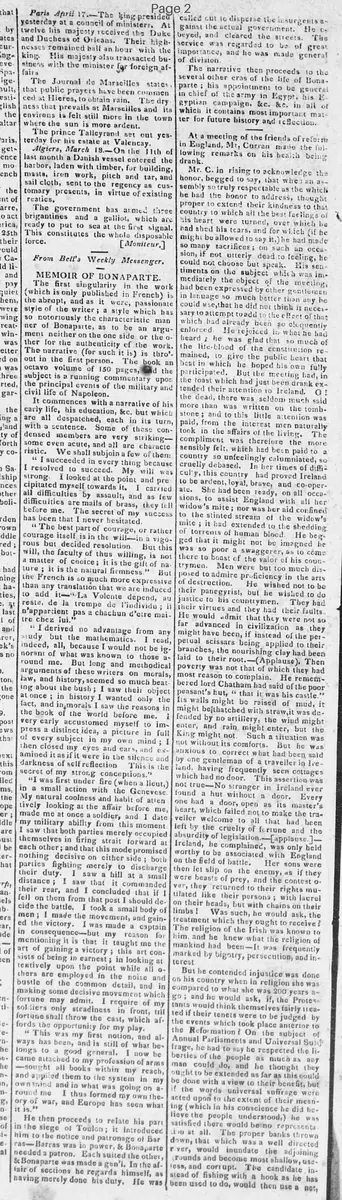
MEMOIR OF BONAPARTE.
The first singularity in the work (which is only published in French) is the abrupt, and as it were, passionate style of the writer; a style which has so notoriously the characteristic manner of Bonaparte, as to be an argument neither on the one side or the other for the authenticity of the work. The narrative (for such it is) is throughout in the first person. The book an octavo volume of 150 pages, and the subject is a running commentary upon the principal events of the military and civil life of Napoleon.
It commences with a narrative of his early life, his education, &c. but which are all dispatched, each in its turn, with a sentence. Some of these condensed members are very striking--some even acute, and all are characteristic. We shall subjoin a few of them
"I succeeded in every thing because I resolved to succeed. My will was strong I looked at the point and precipitated myself towards it. I carried all difficulties by assault, and as few difficulties are walls of brass, they fell before me. The secret of my success has been that I never hesitated."
"The best part of courage, or rather courage itself is in the will--in a vigorous but decided resolution. But this will, the faculty of thus willing, is not a matter of choice; it is the gift of nature; it is the natural firmness."
But the French is so much more expressive than any translation that we are induced to add it--"La Volonté depend, au reste, de la trempe de l'individu; il n'appartient pas à chacun d'etre maître chez lui."
"I derived no advantage from any study but the mathematics. I read, indeed, all, because I would not be ignorant of what was known to those around me. But long and methodical arguments of these writers on morals, law, and history, seemed so much beating about the bush; I saw their object at once; in history I wanted only the fact, and in morals I saw the reasons in the book of the world before me. I very early accustomed myself to impress a distinct idea, a picture in full of every subject in my own mind; I then closed my eyes and ears, and examined it as if it were in the silence and darkness of self-reflection This is the secret of my strong conceptions."
"I was first under fire (when a lieut.) in a small action with the Genevese. My natural coolness and habit of attentively looking at the affair before me, made me at once a soldier, and I date my military ability from this moment I saw that both parties merely occupied themselves in firing straight forward at each other; and that this mode promised nothing decisive on either side; both parties fighting merely to discharge their duty. I saw a hill at a small distance; I saw that it commanded their rear, and I concluded that if I fell on them from that post I should decide the battle. I took a small body of men; I made the movement, and gained the victory. I was made a captain in consequence--but my reason for mentioning it is that it taught me the art of gaining a victory; this art consists of being in earnest; in looking attentively upon the point while all others are employed in the noise and bustle of the common detail, and in making some decisive movement which fortune may admit. I require of my soldiers only steadiness in front, till fortune shall throw the cast, which affords the opportunity for my play."
"This was my first notion, and always has been, and is still of what belongs to a good general, I now became attached to my profession of arms --sought all books within my reach, and applied them to the system in my own mind and in what was going on around me I thus formed my own theory of war, and Europe has seen what it is."
He then proceeds to relate his part in the siege of Toulon; it introduced him to the notice and patronage of Barras--Barras was in power, & Bonaparte needed a patron. Each suited the other, & Bonaparte was made a gen'l. In the affair of sections he regards himself, as having merely done his duty, He was called out to disperse the insurgents against the actual government. He obeyed, and cleared the streets. The service was regarded to be of great importance, and he was made general of division.
The narrative then proceeds to the several other eras of the life of Bonaparte: his appointment to be general in chief of the army in Egypt, his Egyptian campaign. &c. &c. in all of which it contains most important matter for future history and reflection.
MEMOIR OF BONAPARTE.
The first singularity in the work (which is only published in French) is the abrupt, and as it were, passionate style of the writer; a style which has so notoriously the characteristic manner of Bonaparte, as to be an argument neither on the one side or the other for the authenticity of the work. The narrative (for such it is) is throughout in the first person. The book an octavo volume of 150 pages, and the subject is a running commentary upon the principal events of the military and civil life of Napoleon.
It commences with a narrative of his early life, his education, &c. but which are all dispatched, each in its turn, with a sentence. Some of these condensed members are very striking--some even acute, and all are characteristic. We shall subjoin a few of them
"I succeeded in every thing because I resolved to succeed. My will was strong I looked at the point and precipitated myself towards it. I carried all difficulties by assault, and as few difficulties are walls of brass, they fell before me. The secret of my success has been that I never hesitated."
"The best part of courage, or rather courage itself is in the will--in a vigorous but decided resolution. But this will, the faculty of thus willing, is not a matter of choice; it is the gift of nature; it is the natural firmness."
But the French is so much more expressive than any translation that we are induced to add it--"La Volonté depend, au reste, de la trempe de l'individu; il n'appartient pas à chacun d'etre maître chez lui."
"I derived no advantage from any study but the mathematics. I read, indeed, all, because I would not be ignorant of what was known to those around me. But long and methodical arguments of these writers on morals, law, and history, seemed so much beating about the bush; I saw their object at once; in history I wanted only the fact, and in morals I saw the reasons in the book of the world before me. I very early accustomed myself to impress a distinct idea, a picture in full of every subject in my own mind; I then closed my eyes and ears, and examined it as if it were in the silence and darkness of self-reflection This is the secret of my strong conceptions."
"I was first under fire (when a lieut.) in a small action with the Genevese. My natural coolness and habit of attentively looking at the affair before me, made me at once a soldier, and I date my military ability from this moment I saw that both parties merely occupied themselves in firing straight forward at each other; and that this mode promised nothing decisive on either side; both parties fighting merely to discharge their duty. I saw a hill at a small distance; I saw that it commanded their rear, and I concluded that if I fell on them from that post I should decide the battle. I took a small body of men; I made the movement, and gained the victory. I was made a captain in consequence--but my reason for mentioning it is that it taught me the art of gaining a victory; this art consists of being in earnest; in looking attentively upon the point while all others are employed in the noise and bustle of the common detail, and in making some decisive movement which fortune may admit. I require of my soldiers only steadiness in front, till fortune shall throw the cast, which affords the opportunity for my play."
"This was my first notion, and always has been, and is still of what belongs to a good general, I now became attached to my profession of arms --sought all books within my reach, and applied them to the system in my own mind and in what was going on around me I thus formed my own theory of war, and Europe has seen what it is."
He then proceeds to relate his part in the siege of Toulon; it introduced him to the notice and patronage of Barras--Barras was in power, & Bonaparte needed a patron. Each suited the other, & Bonaparte was made a gen'l. In the affair of sections he regards himself, as having merely done his duty, He was called out to disperse the insurgents against the actual government. He obeyed, and cleared the streets. The service was regarded to be of great importance, and he was made general of division.
The narrative then proceeds to the several other eras of the life of Bonaparte: his appointment to be general in chief of the army in Egypt, his Egyptian campaign. &c. &c. in all of which it contains most important matter for future history and reflection.
What sub-type of article is it?
Essay
Prose Fiction
What themes does it cover?
Political
War Peace
Moral Virtue
What keywords are associated?
Napoleon Bonaparte
Memoir
Military Life
Success Will
Courage Resolution
Theory Of War
Siege Toulon
Egyptian Campaign
Literary Details
Title
Memoir Of Bonaparte
Subject
Principal Events Of The Military And Civil Life Of Napoleon
Form / Style
First Person Narrative Commentary
Key Lines
I Succeeded In Every Thing Because I Resolved To Succeed. My Will Was Strong I Looked At The Point And Precipitated Myself Towards It. I Carried All Difficulties By Assault, And As Few Difficulties Are Walls Of Brass, They Fell Before Me. The Secret Of My Success Has Been That I Never Hesitated.
The Best Part Of Courage, Or Rather Courage Itself Is In The Will In A Vigorous But Decided Resolution. But This Will, The Faculty Of Thus Willing, Is Not A Matter Of Choice; It Is The Gift Of Nature; It Is The Natural Firmness.
I Derived No Advantage From Any Study But The Mathematics. I Read, Indeed, All, Because I Would Not Be Ignorant Of What Was Known To Those Around Me. But Long And Methodical Arguments Of These Writers On Morals, Law, And History, Seemed So Much Beating About The Bush; I Saw Their Object At Once; In History I Wanted Only The Fact, And In Morals I Saw The Reasons In The Book Of The World Before Me.
I Was First Under Fire (When A Lieut.) In A Small Action With The Genevese. My Natural Coolness And Habit Of Attentively Looking At The Affair Before Me, Made Me At Once A Soldier, And I Date My Military Ability From This Moment
This Was My First Notion, And Always Has Been, And Is Still Of What Belongs To A Good General, I Now Became Attached To My Profession Of Arms Sought All Books Within My Reach, And Applied Them To The System In My Own Mind And In What Was Going On Around Me I Thus Formed My Own Theory Of War, And Europe Has Seen What It Is.