Thank you for visiting SNEWPapers!
Sign up free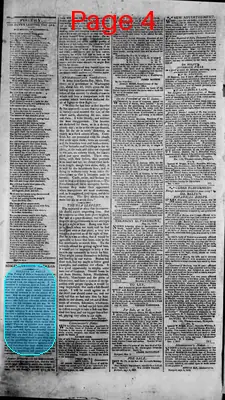
Editorial
September 29, 1819
The Rhode Island Republican
Newport, Newport County, Rhode Island
What is this article about?
Editorial argues against the superstitious custom of tolling bells at funerals, noting its origins and harmful impact on the sick, calling for its abolition while preserving funeral solemnity. From Boston Centinel.
Clipping
OCR Quality
98%
Excellent
Full Text
MISCELLANEOUS ARTICLES
TOLLING OF BELLS
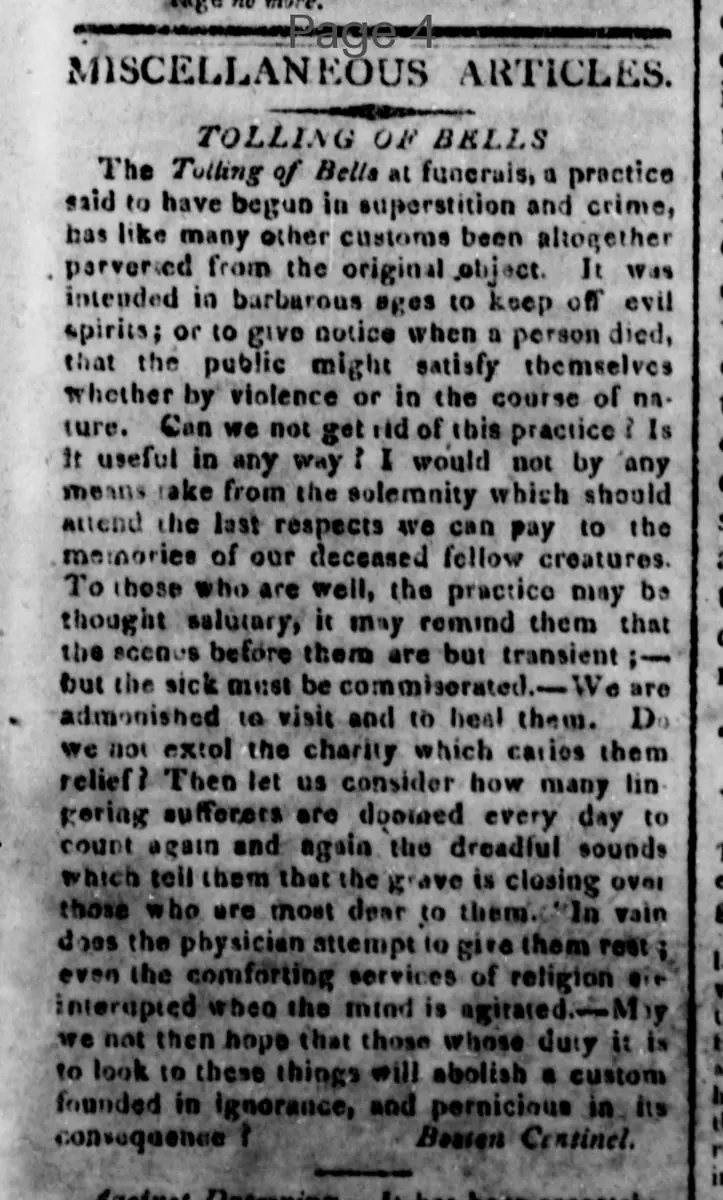
The Tolling of Bells at funerals, a practice said to have begun in superstition and crime, has like many other customs been altogether perverted from the original object. It was intended in barbarous ages to keep off evil spirits; or to give notice when a person died, that the public might satisfy themselves whether by violence or in the course of nature. Can we not get rid of this practice? Is it useful in any way? I would not by any means take from the solemnity which should attend the last respects we can pay to the memories of our deceased fellow creatures. To those who are well, the practice may be thought salutary, it may remind them that the scenes before them are but transient; but the sick must be commiserated. We are admonished to visit and to heal them. Do we not extol the charity which carries them relief? Then let us consider how many lingering sufferers are doomed every day to count again and again the dreadful sounds which tell them that the grave is closing over those who are most dear to them. In vain does the physician attempt to give them rest; even the comforting services of religion are interrupted when the mind is agitated. May we not then hope that those whose duty it is to look to these things will abolish a custom founded in ignorance, and pernicious in its consequences.
Boston Centinel.
TOLLING OF BELLS
The Tolling of Bells at funerals, a practice said to have begun in superstition and crime, has like many other customs been altogether perverted from the original object. It was intended in barbarous ages to keep off evil spirits; or to give notice when a person died, that the public might satisfy themselves whether by violence or in the course of nature. Can we not get rid of this practice? Is it useful in any way? I would not by any means take from the solemnity which should attend the last respects we can pay to the memories of our deceased fellow creatures. To those who are well, the practice may be thought salutary, it may remind them that the scenes before them are but transient; but the sick must be commiserated. We are admonished to visit and to heal them. Do we not extol the charity which carries them relief? Then let us consider how many lingering sufferers are doomed every day to count again and again the dreadful sounds which tell them that the grave is closing over those who are most dear to them. In vain does the physician attempt to give them rest; even the comforting services of religion are interrupted when the mind is agitated. May we not then hope that those whose duty it is to look to these things will abolish a custom founded in ignorance, and pernicious in its consequences.
Boston Centinel.
What sub-type of article is it?
Moral Or Religious
Social Reform
What keywords are associated?
Tolling Bells
Funeral Customs
Superstition
Sick Sufferers
Social Custom Abolition
What entities or persons were involved?
Boston Centinel
Editorial Details
Primary Topic
Critique Of Tolling Bells At Funerals
Stance / Tone
Advocating Abolition Of The Custom
Key Figures
Boston Centinel
Key Arguments
Tolling Of Bells Originated In Superstition And Crime To Ward Off Evil Spirits Or Notify Of Death
Custom Has Been Perverted From Its Original Object
Practice Is Not Useful And Should Be Abolished
Maintains Solemnity Of Funerals Without The Tolling
Reminds The Well Of Life's Transience But Distresses The Sick
Interrupts Medical Care And Religious Comfort For The Ill
Founded In Ignorance And Pernicious In Consequences