Thank you for visiting SNEWPapers!
Sign up free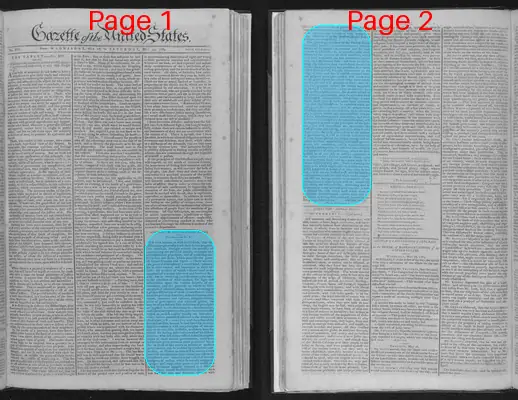
Literary
May 30, 1789
Gazette Of The United States
New York, New York County, New York
What is this article about?
An essay reflecting on the political state of early America, urging adherence to moral principles, strong national union, and energetic administration of the federal government to ensure future happiness and international respect. Signed by Americanus.
Merged-components note: Seamless continuation of the essay 'A SKETCH OF THE POLITICAL STATE OF AMERICA' across pages 1 and 2, indicated by matching text flow and sequential reading order.
Clippings
1 of 2
OCR Quality
98%
Excellent
Full Text
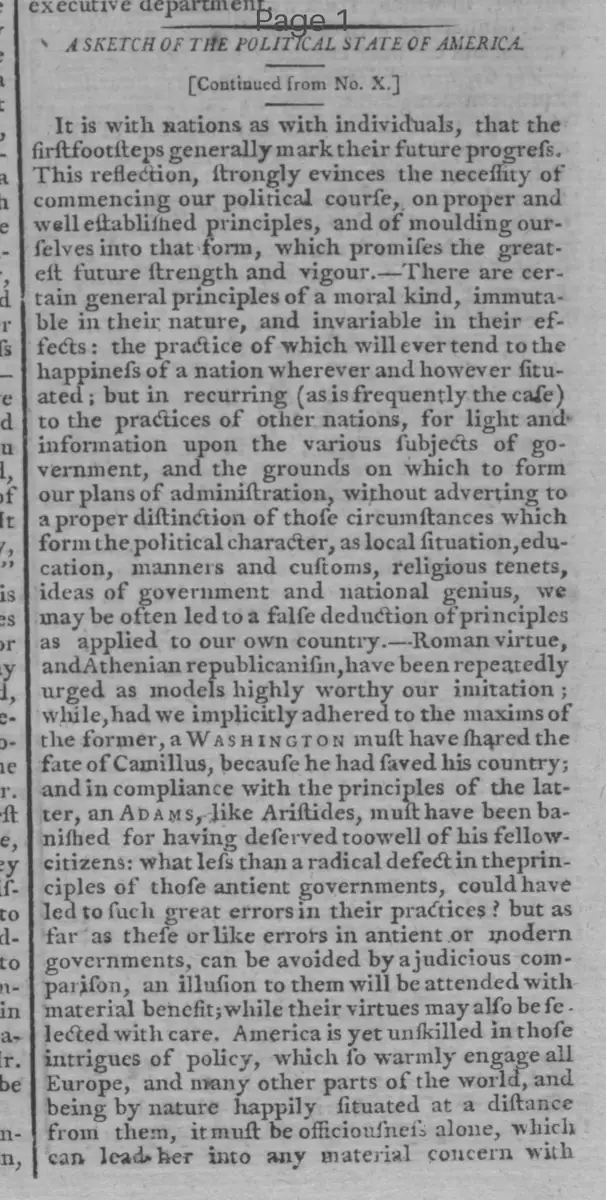
A SKETCH OF THE POLITICAL STATE OF AMERICA
[Continued from No. X.]
It is with nations as with individuals, that the first footsteps generally mark their future progress. This reflection, strongly evinces the necessity of commencing our political course, on proper and well established principles, and of moulding ourselves into that form, which promises the greatest future strength and vigour.—There are certain general principles of a moral kind, immutable in their nature, and invariable in their effects: the practice of which will ever tend to the happiness of a nation wherever and however situated; but in recurring (as is frequently the case) to the practices of other nations, for light and information upon the various subjects of government, and the grounds on which to form our plans of administration, without adverting to a proper distinction of those circumstances which form the political character, as local situation, education, manners and customs, religious tenets, ideas of government and national genius, we may be often led to a false deduction of principles as applied to our own country.—Roman virtue, and Athenian republicanism, have been repeatedly urged as models highly worthy our imitation; while, had we implicitly adhered to the maxims of the former, a WASHINGTON must have shared the fate of Camillus, because he had saved his country; and in compliance with the principles of the latter, an ADAMS, like Aristides, must have been banished for having deserved too well of his fellow citizens: what less than a radical defect in the principles of those ancient governments, could have led to such great errors in their practices? but as far as these or like errors in ancient or modern governments, can be avoided by a judicious comparison, an allusion to them will be attended with material benefit; while their virtues may also be selected with care. America is yet unskilled in those intrigues of policy, which so warmly engage all Europe, and many other parts of the world, and being by nature happily situated at a distance from them, it must be officiousness alone, which can lead her into any material concern with
their politics—her own at present demand a monopoly of her attention and ingenuity; but as far as she can make her commerce with foreign nations subservient to her interest, sound policy prompts the connection.
The present government of the United States, deservedly possesses an extensive share of the confidence of the people—it remains now for those who are to administer it, to complete that confidence, by the pursuit of those measures, which shall tend to establish the best interests of the nation, on a permanent basis: and here let me indulge the wish, that they would divest themselves of those local prejudices, and partial or state views, which have already brought this country to the verge of ruin; and fondly cherish national ideas, and national principles—which will alone lead to the great objects for which they were constituted.—No one will pretend to deny, that on a firm and complete union, the future happiness of America is suspended: a fear to exercise, in a full constitutional latitude, the powers vested in the general government, may be attended with unfavorable consequences; and perhaps it were better those powers had never been deputed, than that they should not be exercised when necessary—as the community will be proportionally disappointed, in not realizing those advantages, to obtain which they have expressly delegated the beforementioned authorities, and those defects which result from the administration, will be supposed to exist in the principles of the system.—The first impressions are commonly the most pervasive and lasting, and if timidity should characterize the early proceedings of the national government, it will be difficult to determine, at what future period the proper energy and necessary decision, appertaining to all good governments, will commence, and it would evidently bespeak a diffidence in our rulers of the rectitude and propriety of that institution, which we have looked to as our ark of safety; tenacious of the opportunity; faction would be likely again to rear its hydra head, and once more hope for a riotous display of its power. These are among the many evils which might arise to destroy our promised happiness at home—but here they do not end.—Will not our boasted hope of respectability and importance, with the rest of the world, vanish? and will not foreign nations be yet fearful of entering into any negotiations with us; necessarily distrusting our respectability, while they find us incompetent to our internal government? A wish to disclose the evils which must result from an inefficient administration—rather than the expectation of seeing them realized, has led to the foregoing observations.
AMERICANUS.
(To be continued.)
[Continued from No. X.]
It is with nations as with individuals, that the first footsteps generally mark their future progress. This reflection, strongly evinces the necessity of commencing our political course, on proper and well established principles, and of moulding ourselves into that form, which promises the greatest future strength and vigour.—There are certain general principles of a moral kind, immutable in their nature, and invariable in their effects: the practice of which will ever tend to the happiness of a nation wherever and however situated; but in recurring (as is frequently the case) to the practices of other nations, for light and information upon the various subjects of government, and the grounds on which to form our plans of administration, without adverting to a proper distinction of those circumstances which form the political character, as local situation, education, manners and customs, religious tenets, ideas of government and national genius, we may be often led to a false deduction of principles as applied to our own country.—Roman virtue, and Athenian republicanism, have been repeatedly urged as models highly worthy our imitation; while, had we implicitly adhered to the maxims of the former, a WASHINGTON must have shared the fate of Camillus, because he had saved his country; and in compliance with the principles of the latter, an ADAMS, like Aristides, must have been banished for having deserved too well of his fellow citizens: what less than a radical defect in the principles of those ancient governments, could have led to such great errors in their practices? but as far as these or like errors in ancient or modern governments, can be avoided by a judicious comparison, an allusion to them will be attended with material benefit; while their virtues may also be selected with care. America is yet unskilled in those intrigues of policy, which so warmly engage all Europe, and many other parts of the world, and being by nature happily situated at a distance from them, it must be officiousness alone, which can lead her into any material concern with
their politics—her own at present demand a monopoly of her attention and ingenuity; but as far as she can make her commerce with foreign nations subservient to her interest, sound policy prompts the connection.
The present government of the United States, deservedly possesses an extensive share of the confidence of the people—it remains now for those who are to administer it, to complete that confidence, by the pursuit of those measures, which shall tend to establish the best interests of the nation, on a permanent basis: and here let me indulge the wish, that they would divest themselves of those local prejudices, and partial or state views, which have already brought this country to the verge of ruin; and fondly cherish national ideas, and national principles—which will alone lead to the great objects for which they were constituted.—No one will pretend to deny, that on a firm and complete union, the future happiness of America is suspended: a fear to exercise, in a full constitutional latitude, the powers vested in the general government, may be attended with unfavorable consequences; and perhaps it were better those powers had never been deputed, than that they should not be exercised when necessary—as the community will be proportionally disappointed, in not realizing those advantages, to obtain which they have expressly delegated the beforementioned authorities, and those defects which result from the administration, will be supposed to exist in the principles of the system.—The first impressions are commonly the most pervasive and lasting, and if timidity should characterize the early proceedings of the national government, it will be difficult to determine, at what future period the proper energy and necessary decision, appertaining to all good governments, will commence, and it would evidently bespeak a diffidence in our rulers of the rectitude and propriety of that institution, which we have looked to as our ark of safety; tenacious of the opportunity; faction would be likely again to rear its hydra head, and once more hope for a riotous display of its power. These are among the many evils which might arise to destroy our promised happiness at home—but here they do not end.—Will not our boasted hope of respectability and importance, with the rest of the world, vanish? and will not foreign nations be yet fearful of entering into any negotiations with us; necessarily distrusting our respectability, while they find us incompetent to our internal government? A wish to disclose the evils which must result from an inefficient administration—rather than the expectation of seeing them realized, has led to the foregoing observations.
AMERICANUS.
(To be continued.)
What sub-type of article is it?
Essay
What themes does it cover?
Political
Liberty Freedom
Patriotism
What keywords are associated?
American Government
National Union
Political Principles
Federal Administration
Ancient Models
Washington
Adams
What entities or persons were involved?
Americanus
Literary Details
Title
A Sketch Of The Political State Of America
Author
Americanus
Key Lines
It Is With Nations As With Individuals, That The First Footsteps Generally Mark Their Future Progress.
Roman Virtue, And Athenian Republicanism, Have Been Repeatedly Urged As Models Highly Worthy Our Imitation; While, Had We Implicitly Adhered To The Maxims Of The Former, A Washington Must Have Shared The Fate Of Camillus, Because He Had Saved His Country; And In Compliance With The Principles Of The Latter, An Adams, Like Aristides, Must Have Been Banished For Having Deserved Too Well Of His Fellow Citizens:
No One Will Pretend To Deny, That On A Firm And Complete Union, The Future Happiness Of America Is Suspended:
If Timidity Should Characterize The Early Proceedings Of The National Government, It Will Be Difficult To Determine, At What Future Period The Proper Energy And Necessary Decision, Appertaining To All Good Governments, Will Commence,