Thank you for visiting SNEWPapers!
Sign up free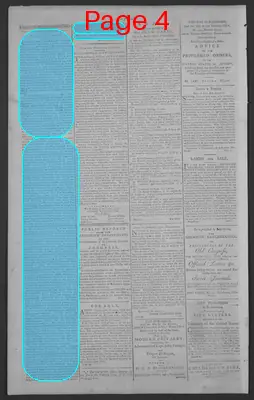
Editorial
September 12, 1792
National Gazette
Philadelphia, Philadelphia County, Pennsylvania
What is this article about?
This satirical editorial, addressed to 'Uncle Jonathan,' defends revolutionary leaders Samuel Adams, Thomas Jefferson, and George Clinton against attacks from anti-revolutionists and federalist critics. It lambasts government corruption, the funding system, and the Bank for favoring speculators over the people, upholding republican principles.
Clipping
OCR Quality
95%
Excellent
Full Text
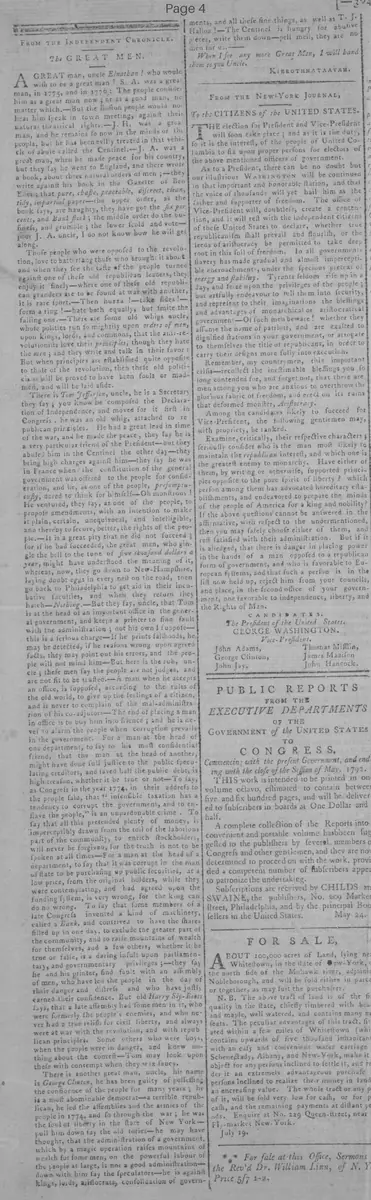
FROM THE INDEPENDENT CHRONICLE.
THE GREAT MEN.
Great man, uncle Jonathan! who would have thought it? S. A. was a great man, in 1775, and in 1776: The people confided in him as a great man: S. A. was a great man, and he remains so now in the minds of the people, but they say he went to England, and there wrote a book, about three natural orders of men;—they write against his book in the Gazette of Ben Edes; that pure, chaste, peaceable, discreet, clean, upper order, as the book lays, are haughty, they have got the six per cents, and Bank stock; the middle order do the business, and grumble; the lower cold and vote—
Those people who were opposed to the revolution, love to bait rang those who brought it about and when they see the taste of the people turned against one of these old republican leaders, they enjoy it finely—where one of these old republicans grandees are to be found at war with another, it is rare sport.—Then huzza!—take sides!— form a ring!—hate both equally, but smite the falling one.—There are some old whigs uncle, whose politics run so mightily upon orders of men, upon kings, lords, and commons, that the anti-revolutionists love their principles, though they hate the men; and they write and talk in their favor: But when principles are established quite opposite to those of the revolution, then these old politicians will be proved to have been fools or mad-men, and will be laid aside.
There is Tom Jefferson, uncle, he is a Secretary of State, they say; you know he composed the Declaration of Independence, and moved for it first in Congress. he was an old whig, attached to republican principles. He had a great lead in time of the war, and he made the peace, they say he is a very particular friend of the President—but they abused him in the Centinel the other day—they bring high charges against him—they say he was in France when the constitution of the general government was offered to the people for consideration, and he, as one of the people, presumptuously, dared to think for himself—Oh monstrous!
He ventured, they say, as one of the people, to believe it plain, certain, unequivocal, and intelligible, propose amendments, with an intention to make it better, and thereby to secure, better, the rights of the people.—It is a great pity that he did not succeed: for if he had succeeded, the great men, who jingle the bell to the tune of five thousand dollars a year, might have understood the meaning of it, whereas, now, they go down to New-Hampshire, laying doubt eggs in every nest on the road, then go back to Philadelphia to get aid in their incubative faculties, and when they return they hatch—Nothing.—But they say, uncle, that Tom is at the head of an important office in the general government, and keeps a printer to find fault with the administration; not his own I suppose— this is a serious charge—If he prints falsehoods, he may be detected, if he reasons wrong upon agreed facts, they may point out his errors, and the people will not mind him—But here is the rub, uncle; these men say the people are not judges, and are not fit to be trusted.—A man when he accepts an office, is supposed, according to the rules of the old world, to give up the feelings of a citizen, and is never to complain of the mal-administration of his co-adjutors—The end of placing a man in office is to buy him into silence; and he is never to alarm the people when corruption prevails in the government. For a man at the head of one department, to say to his most confidential friend, that the man at the head of another, might have done full justice to the public speculating creditors, and saved half the public debt, is high treason, whether it be true or not—To say, as Congress in the year 1774, in their address to the people said, that "insensible taxation has a tendency to corrupt the government, and to enslave the people," is an unpardonable crime. To say that all this pretended plenty of money, is imperceptibly drawn from the toil of the laborious part of the community, to enrich stockholders, will never be forgiven, for the truth is not to be spoken at all times—For a man at the head of a department, to say that it was corrupt in the man in the war office to be purchasing up public securities, at a low price, from the original holders, while they were contemplating, and had agreed upon the funding system, is very wrong, for the king can do no wrong. To say that some members of a late Congress invented a kind of machinery, called a Bank, and contrived to have the shares filled up in one day, to exclude the greater part of the community, and to raise mountains of wealth for themselves, and a few others, whether it be true or false, is a daring insult upon parliamentary, and governmentary privileges; they say he and his printer, find fault with an assembly of men, who have led the people in the day of their danger and distress and who have justly earned their confidence. But old Harry Sly-Boots says, that a late assembly had some men in it, who were formerly the people's enemies, and who never had a true relish for civil liberty, and always were at war with the revolution, and with republican principles. Some others who were boys, when the people were in danger, and knew nothing about the contest—Tom may look upon these with contempt when they wax saucy.
There is another great man, uncle, his name is George Clinton, he has been guilty of possessing the confidence of the people for many years; he is a most abominable democrat—a terrible republican, he led the assemblies and the armies of the people in 1774, and so through the war; he was the soul of liberty in the state of New York— pull him down say the old tories—he may have thought, that the administration of a government, which by a magic operation raises mountains of wealth for some men, on the powerful labour of the people at large, is not a good administration— down with him say the speculators—he is against kings, lords, aristocracies, consolidation of governments, and all these fine things, as well as T. J.
Halloa!—The Centinel is hungry for abusive pieces, write them down—pell mell, they are no men for us.
When I see any more Great Men, I will hand them to you Uncle.
THE GREAT MEN.
Great man, uncle Jonathan! who would have thought it? S. A. was a great man, in 1775, and in 1776: The people confided in him as a great man: S. A. was a great man, and he remains so now in the minds of the people, but they say he went to England, and there wrote a book, about three natural orders of men;—they write against his book in the Gazette of Ben Edes; that pure, chaste, peaceable, discreet, clean, upper order, as the book lays, are haughty, they have got the six per cents, and Bank stock; the middle order do the business, and grumble; the lower cold and vote—
Those people who were opposed to the revolution, love to bait rang those who brought it about and when they see the taste of the people turned against one of these old republican leaders, they enjoy it finely—where one of these old republicans grandees are to be found at war with another, it is rare sport.—Then huzza!—take sides!— form a ring!—hate both equally, but smite the falling one.—There are some old whigs uncle, whose politics run so mightily upon orders of men, upon kings, lords, and commons, that the anti-revolutionists love their principles, though they hate the men; and they write and talk in their favor: But when principles are established quite opposite to those of the revolution, then these old politicians will be proved to have been fools or mad-men, and will be laid aside.
There is Tom Jefferson, uncle, he is a Secretary of State, they say; you know he composed the Declaration of Independence, and moved for it first in Congress. he was an old whig, attached to republican principles. He had a great lead in time of the war, and he made the peace, they say he is a very particular friend of the President—but they abused him in the Centinel the other day—they bring high charges against him—they say he was in France when the constitution of the general government was offered to the people for consideration, and he, as one of the people, presumptuously, dared to think for himself—Oh monstrous!
He ventured, they say, as one of the people, to believe it plain, certain, unequivocal, and intelligible, propose amendments, with an intention to make it better, and thereby to secure, better, the rights of the people.—It is a great pity that he did not succeed: for if he had succeeded, the great men, who jingle the bell to the tune of five thousand dollars a year, might have understood the meaning of it, whereas, now, they go down to New-Hampshire, laying doubt eggs in every nest on the road, then go back to Philadelphia to get aid in their incubative faculties, and when they return they hatch—Nothing.—But they say, uncle, that Tom is at the head of an important office in the general government, and keeps a printer to find fault with the administration; not his own I suppose— this is a serious charge—If he prints falsehoods, he may be detected, if he reasons wrong upon agreed facts, they may point out his errors, and the people will not mind him—But here is the rub, uncle; these men say the people are not judges, and are not fit to be trusted.—A man when he accepts an office, is supposed, according to the rules of the old world, to give up the feelings of a citizen, and is never to complain of the mal-administration of his co-adjutors—The end of placing a man in office is to buy him into silence; and he is never to alarm the people when corruption prevails in the government. For a man at the head of one department, to say to his most confidential friend, that the man at the head of another, might have done full justice to the public speculating creditors, and saved half the public debt, is high treason, whether it be true or not—To say, as Congress in the year 1774, in their address to the people said, that "insensible taxation has a tendency to corrupt the government, and to enslave the people," is an unpardonable crime. To say that all this pretended plenty of money, is imperceptibly drawn from the toil of the laborious part of the community, to enrich stockholders, will never be forgiven, for the truth is not to be spoken at all times—For a man at the head of a department, to say that it was corrupt in the man in the war office to be purchasing up public securities, at a low price, from the original holders, while they were contemplating, and had agreed upon the funding system, is very wrong, for the king can do no wrong. To say that some members of a late Congress invented a kind of machinery, called a Bank, and contrived to have the shares filled up in one day, to exclude the greater part of the community, and to raise mountains of wealth for themselves, and a few others, whether it be true or false, is a daring insult upon parliamentary, and governmentary privileges; they say he and his printer, find fault with an assembly of men, who have led the people in the day of their danger and distress and who have justly earned their confidence. But old Harry Sly-Boots says, that a late assembly had some men in it, who were formerly the people's enemies, and who never had a true relish for civil liberty, and always were at war with the revolution, and with republican principles. Some others who were boys, when the people were in danger, and knew nothing about the contest—Tom may look upon these with contempt when they wax saucy.
There is another great man, uncle, his name is George Clinton, he has been guilty of possessing the confidence of the people for many years; he is a most abominable democrat—a terrible republican, he led the assemblies and the armies of the people in 1774, and so through the war; he was the soul of liberty in the state of New York— pull him down say the old tories—he may have thought, that the administration of a government, which by a magic operation raises mountains of wealth for some men, on the powerful labour of the people at large, is not a good administration— down with him say the speculators—he is against kings, lords, aristocracies, consolidation of governments, and all these fine things, as well as T. J.
Halloa!—The Centinel is hungry for abusive pieces, write them down—pell mell, they are no men for us.
When I see any more Great Men, I will hand them to you Uncle.
What sub-type of article is it?
Partisan Politics
Economic Policy
Constitutional
What keywords are associated?
Republican Leaders
Federalist Criticism
Political Corruption
Funding System
Bank Monopoly
Constitutional Amendments
Speculators
Revolutionary Principles
What entities or persons were involved?
S. A.
Tom Jefferson
George Clinton
Uncle Jonathan
President
Centinel
Ben Edes
Harry Sly Boots
Old Whigs
Anti Revolutionists
Speculators
Editorial Details
Primary Topic
Defense Of Republican Leaders Against Federalist And Speculator Attacks
Stance / Tone
Satirical Defense Of Republicans, Critical Of Federal Corruption
Key Figures
S. A.
Tom Jefferson
George Clinton
Uncle Jonathan
President
Centinel
Ben Edes
Harry Sly Boots
Old Whigs
Anti Revolutionists
Speculators
Key Arguments
Revolutionary Leaders Like S.A., Jefferson, And Clinton Remain Great In The People's Eyes Despite Critics.
Critics From Anti Revolutionists Enjoy Attacking Old Republicans.
Jefferson's Proposals For Constitutional Amendments Were To Secure People's Rights.
Government Offices Should Not Silence Criticism Of Mal Administration.
Funding System And Bank Enrich Speculators At The Expense Of The People.
Truth About Corruption, Like Insensible Taxation And Public Securities Purchases, Must Be Spoken.
Current Congress Includes Former Enemies Of The Revolution.
Clinton Opposes Aristocracies And Government Consolidation.