Thank you for visiting SNEWPapers!
Sign up free
Trainman News
Indianapolis, Marion County, Indiana
What is this article about?
Uncertain labor relations in Canada with reduced strike time in first half of year, but ongoing negotiations in gold mines, coal, steel, and other sectors amid rising consumer prices and tough management attitudes.
Clipping
OCR Quality
Full Text
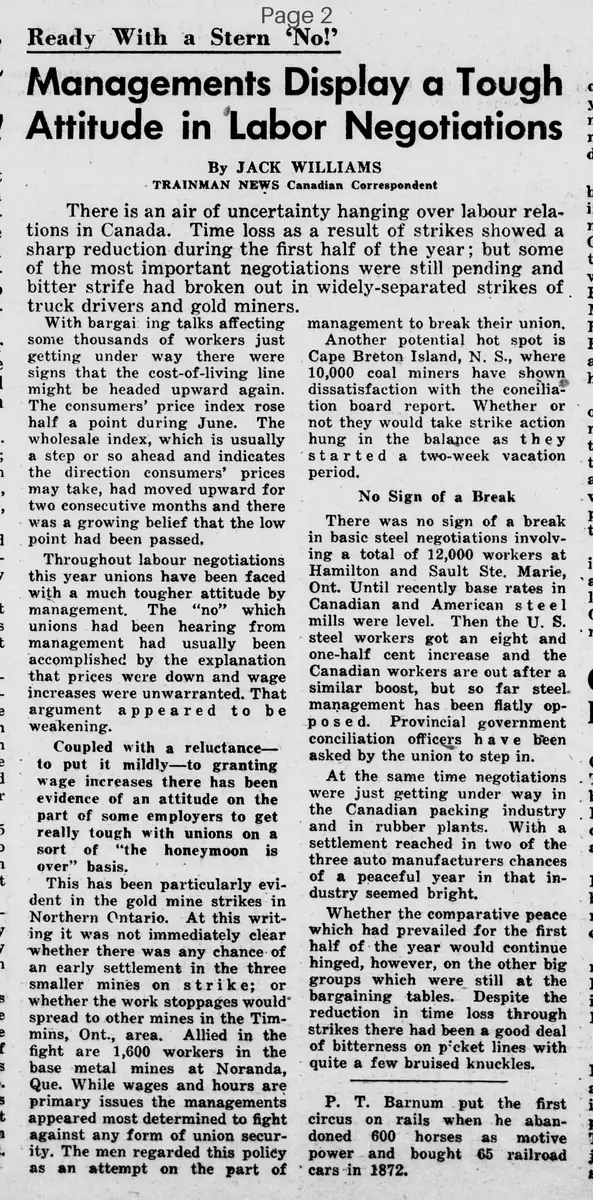
Attitude in Labor Negotiations
By JACK WILLIAMS
TRAINMAN NEWS Canadian Correspondent
There is an air of uncertainty hanging over labour relations in Canada. Time loss as a result of strikes showed a sharp reduction during the first half of the year; but some of the most important negotiations were still pending and bitter strife had broken out in widely-separated strikes of truck drivers and gold miners.
With bargaining talks affecting some thousands of workers just getting under way there were signs that the cost-of-living line might be headed upward again.
The consumers' price index rose half a point during June.
The wholesale index, which is usually a step or so ahead and indicates the direction consumers' prices may take, had moved upward for two consecutive months and there was a growing belief that the low point had been passed.
Throughout labour negotiations this year unions have been faced with a much tougher attitude by management.
The "no" which unions had been hearing from management had usually been accomplished by the explanation that prices were down and wage increases were unwarranted. That argument appeared to be weakening.
Coupled with a reluctance—to put it mildly—to granting wage increases there has been evidence of an attitude on the part of some employers to get really tough with unions on a sort of "the honeymoon is over" basis.
This has been particularly evident in the gold mine strikes in Northern Ontario. At this writing it was not immediately clear whether there was any chance of an early settlement in the three smaller mines on strike; or whether the work stoppages would spread to other mines in the Timmins, Ont., area.
Allied in the fight are 1,600 workers in the base metal mines at Noranda, Que. While wages and hours are primary issues the managements appeared most determined to fight against any form of union security. The men regarded this policy as an attempt on the part of management to break their union.
Another potential hot spot is Cape Breton Island, N. S., where 10,000 coal miners have shown dissatisfaction with the conciliation board report. Whether or not they would take strike action hung in the balance as they started a two-week vacation period.
No Sign of a Break
There was no sign of a break in basic steel negotiations involving a total of 12,000 workers at Hamilton and Sault Ste. Marie, Ont. Until recently base rates in Canadian and American steel mills were level. Then the U. S. steel workers got an eight and one-half cent increase and the Canadian workers are out after a similar boost, but so far steel management has been flatly opposed. Provincial government conciliation officers have been asked by the union to step in.
At the same time negotiations were just getting under way in the Canadian packing industry and in rubber plants. With a settlement reached in two of the three auto manufacturers chances of a peaceful year in that industry seemed bright.
Whether the comparative peace which had prevailed for the first half of the year would continue hinged, however, on the other big groups which were still at the bargaining tables. Despite the reduction in time loss through strikes there had been a good deal of bitterness on picket lines with quite a few bruised knuckles.
P. T. Barnum put the first circus on rails when he abandoned 600 horses as motive power and bought 65 railroad cars—in 1872.
What sub-type of article is it?
What keywords are associated?
Where did it happen?
Foreign News Details
Primary Location
Canada
Event Date
First Half Of The Year, June
Outcome
reduced time loss from strikes but ongoing bitterness; no immediate settlements in gold mines, steel, coal; rising consumer prices
Event Details
Uncertainty in Canadian labor relations with sharp reduction in strike time loss in first half of year, but pending major negotiations and strikes among truck drivers, gold miners in Northern Ontario and Noranda Que., coal miners in Cape Breton Island N.S., steel workers in Hamilton and Sault Ste. Marie Ont., packing and rubber industries; tougher management attitudes against wage increases and union security amid rising consumers' price index in June and upward wholesale index.