Thank you for visiting SNEWPapers!
Sign up free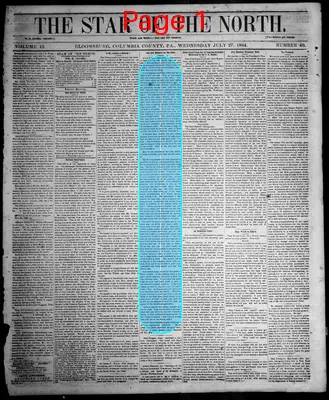
Story
July 27, 1864
The Star Of The North
Bloomsburg, Columbia County, Pennsylvania
What is this article about?
An article explaining legal rights and etiquette for sharing roads, especially in winter, covering duties for drivers, pedestrians, heavy loads, overtaking, and special considerations for ladies, emphasizing good nature and accommodation.
Clipping

OCR Quality
98%
Excellent
Full Text
Law and Manners on the Road.
All of us have ideas more or less correct, in regard to the law which regulates our use of the highways; and, at any rate, good sense and good nature are usually very safe guides. A few words on the subject, however, may not be amiss.
It is commonly said that every one has a right to half the road. This is practically true, and comes about in this wise: You and I meet upon the road—our legal rights are exactly equal, and both have a right to our own several ways without obstruction, so, popularly, we say I own half and you half. The law steps in to facilitate matters, and directs each to turn towards his right hand. The road should be "worked" wide enough for two teams abreast, then each man has a clear title to a passage on his right hand side of the way; and no one has a right to obstruct another while on his own proper track. This is true whatever the load or the team; for if one can drive such a team that another can pass him but with difficulty or not at all, then their rights are no longer equal. This point becomes very important in winter, for it is no joke to turn your horse and all into the deep snow while your neighbor goes smoothly along in the beaten path. No one has a right so to load his team as not to be able to give up half the track to whoever demands it.
A footman may choose the part which pleases him or any portion of his right hand half the way and the team must yield it to him. This is clearly so in winter, and no man is obliged to step into the snow for one or two horses. This is the law, and the Court awards it.
Now for the manners of the road, which, in some instances, vary from the law thereof.
The first requirement of road manners is good nature and an accommodating spirit. Do to others as you would have them do to you. Always be willing to yield more than half the space, then you will be pretty sure to be equally well treated. They who exact inches will have inches exacted of them. If your neighbor has a heavy load, consult his convenience as far as possible; you may sometime be loaded. It has become a practical rule of courtesy to turn out for wood and logs, and for other heavy teams in winter for they say, "we often cannot turn out and never safely, so, if you want wood, accommodate us;" which we are very willing to do. But remember it was a favor not your right, and you have a reciprocal duty to perform, one which, I am sorry to observe is not always borne in mind. When you have unloaded and are returning empty, just recollect that you had the whole road in the morning, and it is no more than fair that you should be particularly obliging to those whom you meet now and give them their full share of the path.
One word in relation to teams going the same way; in which case many seem to think there is neither law nor manners.—When a team comes up behind you, which desires to proceed faster than you do, the team has a right to a reasonable space and opportunity to pass in—in fact to half the road for that purpose—and your obstructing him in his lawful desire is both bad manners and bad law. If your load is heavy, do the best you can. In most cases the very least that can be asked is that you stop your team. This is particularly so in winter, when it is a heavy tax on a team to force it into a trot in deep snow—made necessary by your continuing at a walk. My remark above in relation to the emptied wood sled applies here, and if one wishes to pass you, remember that while loaded you had the whole road.
One remark more, to and for the ladies.—First, to them. If out walking keep in the path—never step into the mud or snow for any ordinary team. If you meet the team, step into your right hand track or part of the road and all goes on easily. If the team comes up behind, step into your left hand track; then, as sleighs are built, the horse is in the other track, as before. Whereas, if you continue in your right-hand track the horse or the team must travel wholly in the deep snow in order to pass you, and the driver will be tempted to scold his wife as proxy for the female sex generally.
I have to say for the ladies—always turn out for them. They are entitled to the right hand half, and will you run over them because, in their confusion at meeting one of the "Lords of creation," they happen to take their half out of the wrong side?
I close this somewhat lengthy dissertation with an appropriate aphorism: Wheel grease is a great lubricator, but good manners are a vastly greater one.—Claremont (N. H.) Eagle.
All of us have ideas more or less correct, in regard to the law which regulates our use of the highways; and, at any rate, good sense and good nature are usually very safe guides. A few words on the subject, however, may not be amiss.
It is commonly said that every one has a right to half the road. This is practically true, and comes about in this wise: You and I meet upon the road—our legal rights are exactly equal, and both have a right to our own several ways without obstruction, so, popularly, we say I own half and you half. The law steps in to facilitate matters, and directs each to turn towards his right hand. The road should be "worked" wide enough for two teams abreast, then each man has a clear title to a passage on his right hand side of the way; and no one has a right to obstruct another while on his own proper track. This is true whatever the load or the team; for if one can drive such a team that another can pass him but with difficulty or not at all, then their rights are no longer equal. This point becomes very important in winter, for it is no joke to turn your horse and all into the deep snow while your neighbor goes smoothly along in the beaten path. No one has a right so to load his team as not to be able to give up half the track to whoever demands it.
A footman may choose the part which pleases him or any portion of his right hand half the way and the team must yield it to him. This is clearly so in winter, and no man is obliged to step into the snow for one or two horses. This is the law, and the Court awards it.
Now for the manners of the road, which, in some instances, vary from the law thereof.
The first requirement of road manners is good nature and an accommodating spirit. Do to others as you would have them do to you. Always be willing to yield more than half the space, then you will be pretty sure to be equally well treated. They who exact inches will have inches exacted of them. If your neighbor has a heavy load, consult his convenience as far as possible; you may sometime be loaded. It has become a practical rule of courtesy to turn out for wood and logs, and for other heavy teams in winter for they say, "we often cannot turn out and never safely, so, if you want wood, accommodate us;" which we are very willing to do. But remember it was a favor not your right, and you have a reciprocal duty to perform, one which, I am sorry to observe is not always borne in mind. When you have unloaded and are returning empty, just recollect that you had the whole road in the morning, and it is no more than fair that you should be particularly obliging to those whom you meet now and give them their full share of the path.
One word in relation to teams going the same way; in which case many seem to think there is neither law nor manners.—When a team comes up behind you, which desires to proceed faster than you do, the team has a right to a reasonable space and opportunity to pass in—in fact to half the road for that purpose—and your obstructing him in his lawful desire is both bad manners and bad law. If your load is heavy, do the best you can. In most cases the very least that can be asked is that you stop your team. This is particularly so in winter, when it is a heavy tax on a team to force it into a trot in deep snow—made necessary by your continuing at a walk. My remark above in relation to the emptied wood sled applies here, and if one wishes to pass you, remember that while loaded you had the whole road.
One remark more, to and for the ladies.—First, to them. If out walking keep in the path—never step into the mud or snow for any ordinary team. If you meet the team, step into your right hand track or part of the road and all goes on easily. If the team comes up behind, step into your left hand track; then, as sleighs are built, the horse is in the other track, as before. Whereas, if you continue in your right-hand track the horse or the team must travel wholly in the deep snow in order to pass you, and the driver will be tempted to scold his wife as proxy for the female sex generally.
I have to say for the ladies—always turn out for them. They are entitled to the right hand half, and will you run over them because, in their confusion at meeting one of the "Lords of creation," they happen to take their half out of the wrong side?
I close this somewhat lengthy dissertation with an appropriate aphorism: Wheel grease is a great lubricator, but good manners are a vastly greater one.—Claremont (N. H.) Eagle.
What sub-type of article is it?
Etiquette Guide
Legal Advice
What themes does it cover?
Social Manners
Moral Virtue
What keywords are associated?
Road Law
Road Manners
Winter Etiquette
Team Driving
Pedestrian Rights
Overtaking
Ladies On Road
Where did it happen?
Highways And Roads
Story Details
Location
Highways And Roads
Story Details
Explains equal rights to half the road, turning right, yielding to pedestrians and heavy loads, overtaking rules, and special etiquette for ladies, stressing accommodation and good nature especially in winter.