Thank you for visiting SNEWPapers!
Sign up free
Literary
July 27, 1812
Alexandria Daily Gazette, Commercial & Political
Alexandria, Virginia
What is this article about?
Narrator on New York's battery overhears allegorical figures Mr. Party and Mr. Patriotism debating U.S. cabinet's war declaration and French alliance. Patriotism criticizes as destructive; Party defends. Narrator, implying Columbus, plans to report more for public good.
Clipping
OCR Quality
90%
Excellent
Full Text
From the New-York Columbian.
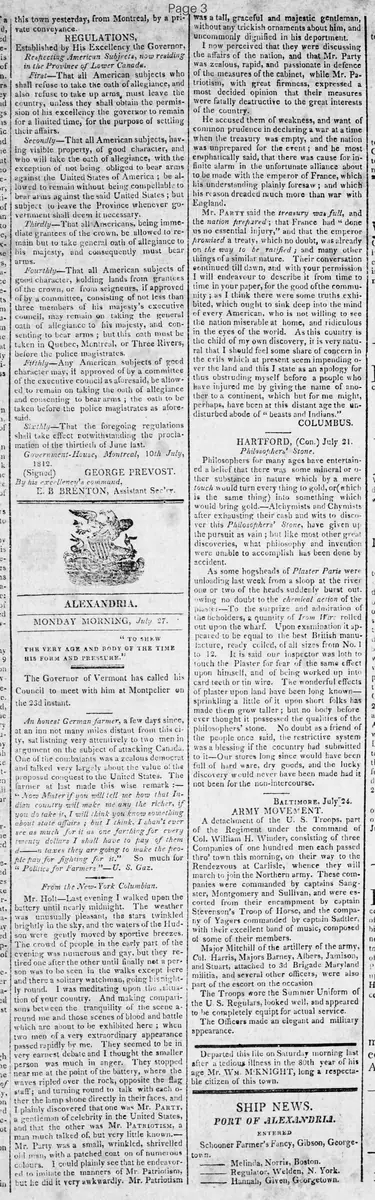
Mr. Holt—Last evening I walked upon the battery until nearly midnight. The weather was unusually pleasant, the stars twinkled brightly in the sky, and the waters of the Hudson were gently moved by sportive breezes. The crowd of people in the early part of the evening was numerous and gay, but they retired one after the other until finally not a person was to be seen in the walks except here and there a solitary watchman, going his nightly round. I was meditating upon the situation of your country. And making comparisons between the tranquility of the scene around me and those scenes of blood and battle which are about to be exhibited here; when two men of a very extraordinary appearance passed rapidly by me. They seemed to be in very earnest debate and I thought the smaller person was much in anger. They stopped near me at the point of the battery, where the waves rippled over the rock, opposite the flag staff; and turning round to talk with each other the lamp shone directly in their faces, and I plainly discovered that one was Mr. Party, a gentleman of celebrity in the United States, and that the other was Mr. Patriotism, a man much talked of, but very little known.— Mr. Party was a small, wrinkled, shrivelled old man, with a patched coat on of numerous colours. I could plainly see that he endeavored to imitate the manners of Mr. Patriotism, but he did it very awkwardly. Mr. Patriotism was a tall, graceful and majestic gentleman, without any trickish ornaments about him, and uncommonly dignified in his deportment.
I now perceived that they were discussing the affairs of the nation, and that Mr. Party was zealous, rapid, and passionate in defence of the measures of the cabinet, while Mr. Patriotism, with great firmness, expressed a most decided opinion that their measures were fatally destructive to the great interests of the country.
He accused them of weakness, and want of common prudence in declaring a war at a time when the treasury was empty, and the nation was unprepared for the event; and he most emphatically said, that there was cause for infinite alarm in the unfortunate alliance about to be made with the emperor of France, which his understanding plainly foresaw; and which his reason dreaded much more than war with England.
Mr. Party said the treasury was full, and the nation prepared; that France had "done us no essential injury," and that the emperor promised a treaty, which no doubt, was already on the way to be ratified; and many other things of a similar nature. Their conversation continued till dawn, and with your permission I will endeavour to describe it from time to time in your paper, for the good of the community; as I think there were some truths exhibited, which ought to sink deep into the mind of every American, who is not willing to see the nation miserable at home, and ridiculous in the eyes of the world. As this country is the child of my own discovery, it is very natural that I should feel some share of concern in the evils which at present seem impending over the land and this I state as an apology for thus obtruding myself before a people who have injured me by giving the name of another to a continent, which but for me might, perhaps, have been at this distant age the undisturbed abode of "beasts and Indians."
Mr. Holt—Last evening I walked upon the battery until nearly midnight. The weather was unusually pleasant, the stars twinkled brightly in the sky, and the waters of the Hudson were gently moved by sportive breezes. The crowd of people in the early part of the evening was numerous and gay, but they retired one after the other until finally not a person was to be seen in the walks except here and there a solitary watchman, going his nightly round. I was meditating upon the situation of your country. And making comparisons between the tranquility of the scene around me and those scenes of blood and battle which are about to be exhibited here; when two men of a very extraordinary appearance passed rapidly by me. They seemed to be in very earnest debate and I thought the smaller person was much in anger. They stopped near me at the point of the battery, where the waves rippled over the rock, opposite the flag staff; and turning round to talk with each other the lamp shone directly in their faces, and I plainly discovered that one was Mr. Party, a gentleman of celebrity in the United States, and that the other was Mr. Patriotism, a man much talked of, but very little known.— Mr. Party was a small, wrinkled, shrivelled old man, with a patched coat on of numerous colours. I could plainly see that he endeavored to imitate the manners of Mr. Patriotism, but he did it very awkwardly. Mr. Patriotism was a tall, graceful and majestic gentleman, without any trickish ornaments about him, and uncommonly dignified in his deportment.
I now perceived that they were discussing the affairs of the nation, and that Mr. Party was zealous, rapid, and passionate in defence of the measures of the cabinet, while Mr. Patriotism, with great firmness, expressed a most decided opinion that their measures were fatally destructive to the great interests of the country.
He accused them of weakness, and want of common prudence in declaring a war at a time when the treasury was empty, and the nation was unprepared for the event; and he most emphatically said, that there was cause for infinite alarm in the unfortunate alliance about to be made with the emperor of France, which his understanding plainly foresaw; and which his reason dreaded much more than war with England.
Mr. Party said the treasury was full, and the nation prepared; that France had "done us no essential injury," and that the emperor promised a treaty, which no doubt, was already on the way to be ratified; and many other things of a similar nature. Their conversation continued till dawn, and with your permission I will endeavour to describe it from time to time in your paper, for the good of the community; as I think there were some truths exhibited, which ought to sink deep into the mind of every American, who is not willing to see the nation miserable at home, and ridiculous in the eyes of the world. As this country is the child of my own discovery, it is very natural that I should feel some share of concern in the evils which at present seem impending over the land and this I state as an apology for thus obtruding myself before a people who have injured me by giving the name of another to a continent, which but for me might, perhaps, have been at this distant age the undisturbed abode of "beasts and Indians."
What sub-type of article is it?
Allegory
Satire
Dialogue
What themes does it cover?
Political
Liberty Freedom
War Peace
What keywords are associated?
Allegory
Patriotism
Party Politics
War Declaration
French Alliance
National Affairs
Columbus Narrator
Literary Details
Subject
Debate On U.S. War Measures And French Alliance
Form / Style
Allegorical Prose Dialogue
Key Lines
Mr. Party Was A Small, Wrinkled, Shrivelled Old Man, With A Patched Coat On Of Numerous Colours.
Mr. Patriotism Was A Tall, Graceful And Majestic Gentleman, Without Any Trickish Ornaments About Him, And Uncommonly Dignified In His Deportment.
He Accused Them Of Weakness, And Want Of Common Prudence In Declaring A War At A Time When The Treasury Was Empty, And The Nation Was Unprepared For The Event;
There Was Cause For Infinite Alarm In The Unfortunate Alliance About To Be Made With The Emperor Of France, Which His Understanding Plainly Foresaw; And Which His Reason Dreaded Much More Than War With England.
As This Country Is The Child Of My Own Discovery, It Is Very Natural That I Should Feel Some Share Of Concern In The Evils Which At Present Seem Impending Over The Land