Thank you for visiting SNEWPapers!
Sign up free
Literary
March 6, 1858
Vermont Phœnix
Brattleboro, Bellows Falls, Ludlow, Windham County, Windsor County, Vermont
What is this article about?
A satirical essay protesting the decline of the basque in women's fashion, arguing it honors the body's vital center distinct from skirts, and vowing not to admire women who discard it. From the Springfield Republican.
Clipping
OCR Quality
95%
Excellent
Full Text
THE BASQUE.
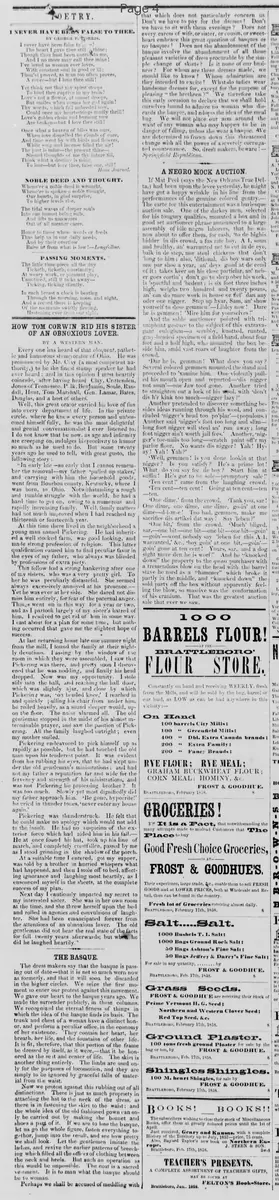
The dress makers say that the basque is passing out of date—that it is not so much worn now as formerly, and that it will soon be discarded in the higher circles. We seize the first moment to enter our protest against this movement. We gave our heart to the basque years ago. We made the surrender publicly, in these columns. We recognized the eternal fitness of things in which the idea of the basque finds its basis. The trunk and chest of a woman have a distinct honor, and perform a peculiar office, in the economy of her existence. They contain her heart, her breath, her life, and the fountains of other life. It is fit, therefore, that this portion of the frame be dressed by itself, as it were,—that it be honored as the seat and center of life. The skirt is another thing entirely. The limbs are used only for the purposes of locomotion, and they are simply to be ignored by graceful falls of material from the waist.
Now we protest against this rubbing out of all distinctions. There is just as much propriety in attaching the hat to the neck of the dress, as there is in fastening the skirt to the waist: and the whole idea of the old fashioned gown can only be carried out by making the bonnet and shoes a part of it. If we are to lose the basque, let us go the whole figure, fasten everything together, jump into the result, and see how pretty we shall look. Let the gentlemen imitate the ladies, and revive the earlier patterns of breeches which filled all the offices of clothing between the neck and heels. But such an operation as this would be impossible. The coat is a sacred vestment. It is to man what the basque should be to woman.
Perhaps we shall be accused of meddling with that which does not particularly concern us. Don't we have to pay for the dresses? Don't we have to sit with them evenings? Does not every caress of wife, or sister, or cousin, or sweetheart embrace this great question of basques or no basques? Does not the abandonment of the basque involve the abandonment of all those pleasant varieties of dress procurable by the simple change of skirts? Is it none of our business? For whom are these dresses made, we should like to know! Whose admiration are they intended to excite? What do ladies wear handsome dresses for, except for the purpose of pleasing "the brethren?" We therefore take this early occasion to declare that we shall hold ourselves bound to admire no woman who discards the basque, and adopts the idea of the meal bag. We will not place our arm around the waist of any woman who may happen to be in danger of falling, unless she wear a basque. We are determined to frown down this threatened change with all the power of a severely corrugated countenance. So, dress makers, beware!—Springfield Republican.
The dress makers say that the basque is passing out of date—that it is not so much worn now as formerly, and that it will soon be discarded in the higher circles. We seize the first moment to enter our protest against this movement. We gave our heart to the basque years ago. We made the surrender publicly, in these columns. We recognized the eternal fitness of things in which the idea of the basque finds its basis. The trunk and chest of a woman have a distinct honor, and perform a peculiar office, in the economy of her existence. They contain her heart, her breath, her life, and the fountains of other life. It is fit, therefore, that this portion of the frame be dressed by itself, as it were,—that it be honored as the seat and center of life. The skirt is another thing entirely. The limbs are used only for the purposes of locomotion, and they are simply to be ignored by graceful falls of material from the waist.
Now we protest against this rubbing out of all distinctions. There is just as much propriety in attaching the hat to the neck of the dress, as there is in fastening the skirt to the waist: and the whole idea of the old fashioned gown can only be carried out by making the bonnet and shoes a part of it. If we are to lose the basque, let us go the whole figure, fasten everything together, jump into the result, and see how pretty we shall look. Let the gentlemen imitate the ladies, and revive the earlier patterns of breeches which filled all the offices of clothing between the neck and heels. But such an operation as this would be impossible. The coat is a sacred vestment. It is to man what the basque should be to woman.
Perhaps we shall be accused of meddling with that which does not particularly concern us. Don't we have to pay for the dresses? Don't we have to sit with them evenings? Does not every caress of wife, or sister, or cousin, or sweetheart embrace this great question of basques or no basques? Does not the abandonment of the basque involve the abandonment of all those pleasant varieties of dress procurable by the simple change of skirts? Is it none of our business? For whom are these dresses made, we should like to know! Whose admiration are they intended to excite? What do ladies wear handsome dresses for, except for the purpose of pleasing "the brethren?" We therefore take this early occasion to declare that we shall hold ourselves bound to admire no woman who discards the basque, and adopts the idea of the meal bag. We will not place our arm around the waist of any woman who may happen to be in danger of falling, unless she wear a basque. We are determined to frown down this threatened change with all the power of a severely corrugated countenance. So, dress makers, beware!—Springfield Republican.
What sub-type of article is it?
Satire
Essay
What themes does it cover?
Social Manners
What keywords are associated?
Basque
Women's Fashion
Dress Protest
Satirical Essay
Social Customs
What entities or persons were involved?
Springfield Republican
Literary Details
Title
The Basque.
Author
Springfield Republican
Subject
Protest Against The Decline Of The Basque In Women's Fashion
Form / Style
Satirical Prose Essay
Key Lines
We Gave Our Heart To The Basque Years Ago.
The Trunk And Chest Of A Woman Have A Distinct Honor, And Perform A Peculiar Office, In The Economy Of Her Existence.
We Shall Hold Ourselves Bound To Admire No Woman Who Discards The Basque, And Adopts The Idea Of The Meal Bag.
So, Dress Makers, Beware!—Springfield Republican.