Thank you for visiting SNEWPapers!
Sign up free
Editorial
April 19, 1764
The New Hampshire Gazette And Historical Chronicle
Portsmouth, Greenland, Rockingham County, New Hampshire
What is this article about?
An 18th-century editorial personifies slander as a noxious plant introduced by the British ('Sons of Albion') to America, intoxicating idle minds and eroding virtue across social classes. It condemns the vice's destructive effects on society and praises escaping its clamor as true happiness. Dated April 16, 1764.
Clipping
OCR Quality
95%
Excellent
Full Text
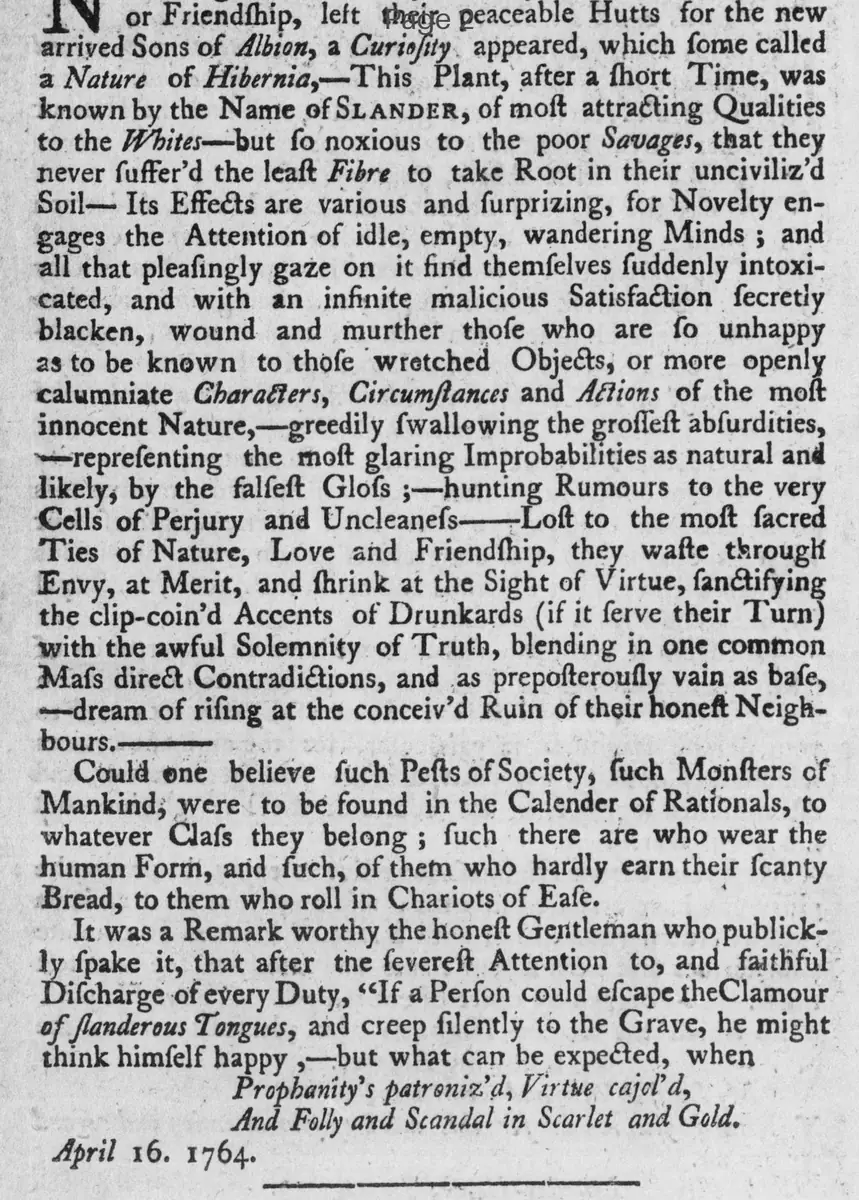
Arrived Sons of Albion, a Curiosity appeared, which some called a Native of Hibernia. This Plant, after a short Time, was known by the Name of SLANDER, of most attracting Qualities to the Whites—but so noxious to the poor Savages, that they never suffered the least Fibre to take Root in their uncivilized Soil. Its Effects are various and surprising, for Novelty engages the Attention of idle, empty, wandering Minds; and all that pleasingly gaze on it find themselves suddenly intoxicated, and with an infinite malicious Satisfaction secretly blacken, wound and murder those who are so unhappy as to be known to those wretched Objects, or more openly calumniate Characters, Circumstances and Actions of the most innocent Nature,—greedily wallowing the grossest absurdities, representing the most glaring Improbabilities as natural and likely, by the falsest Gloss;—hunting Rumours to the very Cells of Perjury and Uncleanness—Lost to the most sacred Ties of Nature, Love and Friendship, they waste through Envy, at Merit, and shrink at the Sight of Virtue, sanctifying the clip-coined Accents of Drunkards (if it serve their Turn) with the awful Solemnity of Truth, blending in one common Mass direct Contradictions, and as preposterously vain as base, —dream of rising at the conceived Ruin of their honest Neighbours.
Could one believe such Pests of Society, such Monsters of Mankind: were to be found in the Calendar of Rationals, to whatever Class they belong: such there are who wear the human Form, and such, of them who hardly earn their scanty Bread, to them who roll in Chariots of Ease.
It was a Remark worthy the honest Gentleman who publicly spoke it, that after the greatest Attention to, and faithful Discharge of every Duty, "If a Person could escape the Clamour of slanderous Tongues, and creep silently to the Grave, he might think himself happy,—but what can be expected, when Prophanity's patronized, Virtue cajoled,
And Folly and Scandal in Scarlet and Gold.
April 16. 1764.
Could one believe such Pests of Society, such Monsters of Mankind: were to be found in the Calendar of Rationals, to whatever Class they belong: such there are who wear the human Form, and such, of them who hardly earn their scanty Bread, to them who roll in Chariots of Ease.
It was a Remark worthy the honest Gentleman who publicly spoke it, that after the greatest Attention to, and faithful Discharge of every Duty, "If a Person could escape the Clamour of slanderous Tongues, and creep silently to the Grave, he might think himself happy,—but what can be expected, when Prophanity's patronized, Virtue cajoled,
And Folly and Scandal in Scarlet and Gold.
April 16. 1764.
What sub-type of article is it?
Moral Or Religious
Social Reform
What keywords are associated?
Slander
Vice
Morality
Society
Envy
Virtue
Rumor
Calumny
Editorial Details
Primary Topic
Condemnation Of Slander As A Societal Vice
Stance / Tone
Strongly Condemnatory Moral Exhortation
Key Arguments
Slander Introduced By British As A Noxious Plant Attractive To Whites But Harmful To Savages
It Intoxicates Idle Minds Leading To Malicious Blackening Of Innocent Characters
Slanderers Wallow In Absurdities And Improbabilities, Hunting Rumors To Perjury
Lost To Natural Ties, They Envy Merit And Virtue
They Sanctify Drunkards' Lies As Truth And Blend Contradictions
Such Pests Exist Across All Social Classes
Escaping Slander's Clamor Is True Happiness Amid Patronized Profanity And Folly