Thank you for visiting SNEWPapers!
Sign up free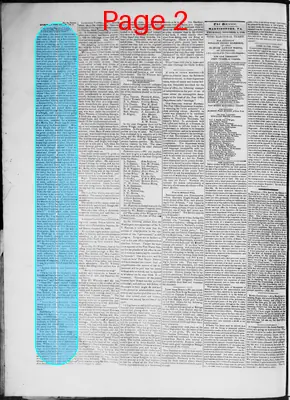
Editorial
November 3, 1836
Martinsburg Gazette
Martinsburg, Berkeley County, West Virginia
What is this article about?
An editorial critiques the ruling administration party for supporting Martin Van Buren as presidential candidate despite his evasive and non-committal policies, exemplified by his ambiguous stance on congressional power to emancipate slaves in the District of Columbia, portraying the party as degraded and unfit for freemen.
Clipping

OCR Quality
95%
Excellent
Full Text
SPIRIT OF THE TIMES-NO. 4
"The fountains finger point of scorn,"
At price and folly, fools and knaves.
It must be done or we be slaves."
To those who are not irreclaimably embarked in the cause of the Faction that rules the land, let a few calm suggestions be offered. Can we have erred in portraying, as we have heretofore done, the features of the administration party—in ascribing to them, as their prominent characteristics, a virulent hostility to their opponents, an unflinching adherence to their own men, and an unhesitating and zealous support of all plans and propositions, determined upon and prepared by interested and ambitious men, for the approbation of their deluded followers? Can we have erred, in denying that they have been governed by a holy regard for the great principles of Truth and Right—by pure, disinterested zeal for the welfare of their country and the preservation of its liberties? Can we have erred, in deeming that there exists in this land a Political Union, (and that such a Union is theirs,) resembling that, where "Men meet together in multitudes, agree upon secret schemes and put them in operation secretly; where all Individual Liberty and all Individual Responsibility, without which no man can be good or wise, or strong or happy, is merged and melted down and mingled up (if through fear, bad enough, if willingly, still worse) into the great mass of ordered and digested opinion?"
As one evidence of the correctness of this view, consider, for a moment, that Martin Van Buren may be chosen President of the United States! What do the People know of him? Has he taken a definite, decided course upon the great questions that have agitated the country? If his policy has not been non-committal, if he has not worshipped himself but his country, and if he possesses high powers of mind, why is not his whole political career marked by noble intellectual efforts? Can we point to any such, upon the many contested and debated points of Government and Laws? It may be, he has a high order of intellect—yet, where, we ask, is the proof? And admit, for a moment, that he possesses great mental ability, and that there have been triumphant exhibitions of it, do the mass who support him know the fact? If his policy has been non-committal, are the qualities of the heart that could dictate such a course—for it implies that which is the root of much that is base in man, selfishness—such as should adorn a President of the United States? That such has been his policy, is attested by almost every act of his life. Take the last instance of his duplicity. In answer to an enquiry, whether or not it was his opinion that Congress possessed the power of emancipating the Slaves in the District of Columbia, he says, "With the lights now before me, I should not feel myself safe in denying that Congress does possess this power." Is this plain, open, manly, straight-forward? In recurring to this letter of Mr. Van Buren's, and his many other evasive replies to questions that have been propounded to him, we have often been forcibly reminded of a scene in the Novel of 'Old Mortality,' which we beg leave, for the sake of illustration, here to transcribe. Cuddie Headrigg is brought before the Privy Council, charged with having borne arms against the Government—and the following is his examination:
"Were you in the battle of Bothwell Brigg?" was the first question which was thundered in his ears. Cuddie meditated a denial, but had sense enough upon reflection, to discover that the truth would be too strong for him; so he replied, with true Caledonian indirectness of response, "I'll no say, but it may be possible that I might hae been there."
"Answer directly, you knave—yes or no?"
"It's no for me to contradict your Lordships Grace's honor," said Cuddie.
"Once more, sir, were you there—yes or no?" said the Duke impatiently.
"Dear Sir," again replied Cuddie, "how can ane mind preceesely where they hae been a' the days o' their life?"
"Speak out, you scoundrel," said Gen. Dalzell, "do you think we can stand here all day, turning and dodging with you, like grey-hounds after a hare?"
"Aweel then," said Cuddie, "since naething else will please you, write down, that I cannot deny but that I was there."
Such being Mr. Van Buren's position before the American People, we find him, nevertheless, warmly approved and zealously supported! This is the evidence, to which we referred, of the degraded, the abandoned condition of the party in power. Such men are unfit associates for Freemen.
You may have hitherto supposed that the party, for whose interests you have been contending, were struggling to establish wise principles of Government and wise policies of Administration. When, now, it is manifest, (whatever its duped and deluded retainers may, in their blindness and ignorance, imagine,) that such cannot, possibly, be the result of their efforts—will you, as men, proud of your country and jealous of her honor, longer aid in this suicidal attempt upon the peace and happiness of a people, great, growing, and free?
"The fountains finger point of scorn,"
At price and folly, fools and knaves.
It must be done or we be slaves."
To those who are not irreclaimably embarked in the cause of the Faction that rules the land, let a few calm suggestions be offered. Can we have erred in portraying, as we have heretofore done, the features of the administration party—in ascribing to them, as their prominent characteristics, a virulent hostility to their opponents, an unflinching adherence to their own men, and an unhesitating and zealous support of all plans and propositions, determined upon and prepared by interested and ambitious men, for the approbation of their deluded followers? Can we have erred, in denying that they have been governed by a holy regard for the great principles of Truth and Right—by pure, disinterested zeal for the welfare of their country and the preservation of its liberties? Can we have erred, in deeming that there exists in this land a Political Union, (and that such a Union is theirs,) resembling that, where "Men meet together in multitudes, agree upon secret schemes and put them in operation secretly; where all Individual Liberty and all Individual Responsibility, without which no man can be good or wise, or strong or happy, is merged and melted down and mingled up (if through fear, bad enough, if willingly, still worse) into the great mass of ordered and digested opinion?"
As one evidence of the correctness of this view, consider, for a moment, that Martin Van Buren may be chosen President of the United States! What do the People know of him? Has he taken a definite, decided course upon the great questions that have agitated the country? If his policy has not been non-committal, if he has not worshipped himself but his country, and if he possesses high powers of mind, why is not his whole political career marked by noble intellectual efforts? Can we point to any such, upon the many contested and debated points of Government and Laws? It may be, he has a high order of intellect—yet, where, we ask, is the proof? And admit, for a moment, that he possesses great mental ability, and that there have been triumphant exhibitions of it, do the mass who support him know the fact? If his policy has been non-committal, are the qualities of the heart that could dictate such a course—for it implies that which is the root of much that is base in man, selfishness—such as should adorn a President of the United States? That such has been his policy, is attested by almost every act of his life. Take the last instance of his duplicity. In answer to an enquiry, whether or not it was his opinion that Congress possessed the power of emancipating the Slaves in the District of Columbia, he says, "With the lights now before me, I should not feel myself safe in denying that Congress does possess this power." Is this plain, open, manly, straight-forward? In recurring to this letter of Mr. Van Buren's, and his many other evasive replies to questions that have been propounded to him, we have often been forcibly reminded of a scene in the Novel of 'Old Mortality,' which we beg leave, for the sake of illustration, here to transcribe. Cuddie Headrigg is brought before the Privy Council, charged with having borne arms against the Government—and the following is his examination:
"Were you in the battle of Bothwell Brigg?" was the first question which was thundered in his ears. Cuddie meditated a denial, but had sense enough upon reflection, to discover that the truth would be too strong for him; so he replied, with true Caledonian indirectness of response, "I'll no say, but it may be possible that I might hae been there."
"Answer directly, you knave—yes or no?"
"It's no for me to contradict your Lordships Grace's honor," said Cuddie.
"Once more, sir, were you there—yes or no?" said the Duke impatiently.
"Dear Sir," again replied Cuddie, "how can ane mind preceesely where they hae been a' the days o' their life?"
"Speak out, you scoundrel," said Gen. Dalzell, "do you think we can stand here all day, turning and dodging with you, like grey-hounds after a hare?"
"Aweel then," said Cuddie, "since naething else will please you, write down, that I cannot deny but that I was there."
Such being Mr. Van Buren's position before the American People, we find him, nevertheless, warmly approved and zealously supported! This is the evidence, to which we referred, of the degraded, the abandoned condition of the party in power. Such men are unfit associates for Freemen.
You may have hitherto supposed that the party, for whose interests you have been contending, were struggling to establish wise principles of Government and wise policies of Administration. When, now, it is manifest, (whatever its duped and deluded retainers may, in their blindness and ignorance, imagine,) that such cannot, possibly, be the result of their efforts—will you, as men, proud of your country and jealous of her honor, longer aid in this suicidal attempt upon the peace and happiness of a people, great, growing, and free?
What sub-type of article is it?
Partisan Politics
Slavery Abolition
What keywords are associated?
Partisan Politics
Martin Van Buren
Administration Party
Non Committal Policy
Slavery Emancipation
Duplicity
Political Union
What entities or persons were involved?
Martin Van Buren
Administration Party
Faction That Rules The Land
Editorial Details
Primary Topic
Critique Of Martin Van Buren And The Administration Party
Stance / Tone
Strongly Anti Administration And Anti Van Buren
Key Figures
Martin Van Buren
Administration Party
Faction That Rules The Land
Key Arguments
Administration Party Shows Virulent Hostility To Opponents And Blind Support For Their Leaders
Party Lacks Regard For Truth, Right, And Country's Welfare
Van Buren Has Non Committal Policy Driven By Selfishness
Van Buren's Evasive Response On Congress's Power To Emancipate Slaves In Dc Demonstrates Duplicity
Party's Support For Such A Candidate Indicates Its Degraded Condition
Supporters Should Abandon The Party To Preserve National Peace And Liberty