Thank you for visiting SNEWPapers!
Sign up free
Literary
May 12, 1842
Watchman Of The South
Richmond, Virginia
What is this article about?
Theological essay arguing that rejecting Christ's righteousness in favor of self-justification manifests contempt for God, insulting divine attributes and the plan of redemption. It contrasts hollow self-righteousness with true obedience through faith, warning of aggravated sin and inevitable doom.
Merged-components note: Continuation of theological essay 'CONTEMPT OF GOD MANIFESTED BY A REJECTION OF CHRIST' across pages, as indicated by text flow.
Clippings
1 of 2
OCR Quality
95%
Excellent
Full Text
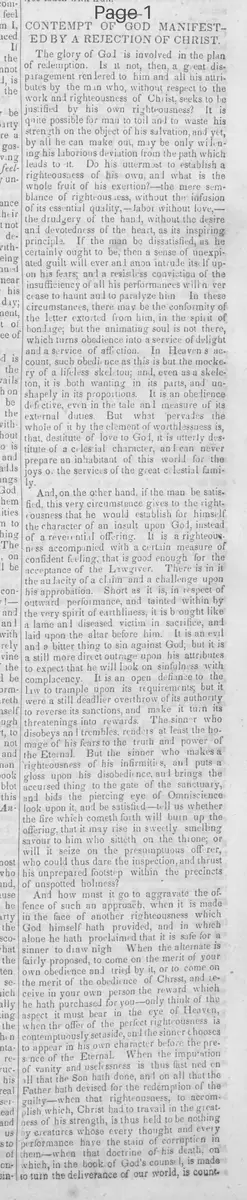
CONTEMPT OF GOD MANIFESTED BY A REJECTION OF CHRIST.
The glory of God is involved in the plan of redemption. Is it not, then, a great disparagement rendered to him and all his attributes by the man who, without respect to the work and righteousness of Christ, seeks to be justified by his own righteousness? It is quite possible for man to toil and to waste his strength on the object of his salvation, and yet, by all he can make out, may be only willing his laborious deviation from the path which leads to it. Do his uttermost to establish a righteousness of his own, and what is the whole fruit of his exertion?—the mere semblance of righteousness, without the infusion of its essential quality,—labor without love,—the drudgery of the hand, without the desire and devotedness of the heart, as its inspiring principle. If the man be dissatisfied, as he certainly ought to be, then a sense of unexpiated guilt will ever and anon intrude itself upon his fears; and a resistless conviction of the insufficiency of all his performances will never cease to haunt and to paralyze him. In these circumstances, there may be the conformity of the letter extorted from him, in the spirit of bondage; but the animating soul is not there, which turns obedience into a service of delight and a service of affection. In Heaven's account, such obedience as this is but the mockery of a lifeless skeleton; and, even as a skeleton, it is both wanting in its parts, and unshapely in its proportions. It is an obedience defective, even in the tale and measure of its external duties. But what pervades the whole of it by the element of worthlessness is, that, destitute of love to God, it is utterly destitute of a celestial character, and can never prepare an inhabitant of this world for the joys of the services of the great celestial family.
And, on the other hand, if the man be satisfied, this very circumstance gives to the righteousness that he would establish for himself the character of an insult upon God, instead of a reverential offering. It is a righteousness accompanied with a certain measure of confident feeling, that is good enough for the acceptance of the Lawgiver. There is in it the audacity of a claim and a challenge upon his approbation. Short as it is, in respect of outward performance, and tainted within by the very spirit of earthliness, it is brought like a lame and diseased victim in sacrifice, and laid upon the altar before him. It is an evil and a bitter thing to sin against God; but it is a still more direct outrage upon his attributes to expect that he will look on sinfulness with complacency. It is an open defiance to the law to trample upon its requirements; but it were a still deadlier overthrow of its authority to reverse its sanctions, and make it turn its threatenings into rewards. The sinner who disobeys and trembles, renders at least the homage of his fears to the truth and power of the Eternal. But the sinner who makes a righteousness of his infirmities, and puts a gloss upon his disobedience, and brings the accursed thing to the gate of the sanctuary, and bids the piercing eye of Omniscience look upon it, and be satisfied—tell us whether the fire which cometh forth will burn up the offering, that it may rise in sweetly smelling savour to him who sitteth on the throne; or will it seize on the presumptuous offerer, who could thus dare the inspection, and thrust his unprepared footstep within the precincts of unspotted holiness?
And how must it go to aggravate the offence of such an approach, when it is made in the face of another righteousness which God himself hath provided, and in which alone he hath proclaimed that it is safe for a sinner to draw nigh? When the alternate is fairly proposed, to come on the merit of your own obedience and tried by it, or to come on the merit of the obedience of Christ, and receive in your own person the reward which he hath purchased for you—only think of the aspect it must bear in the eye of Heaven, when the offer of the perfect righteousness is contemptuously set aside, and the sinner chooses his own instead of the Eternal. When the imputation of vanity and uselessness is thus fastened on all that the Son hath done, and on all that the Father hath devised for the redemption of the guilty—when that righteousness, to accomplish which, Christ had to travail in the greatness of his strength, is thus held to be nothing by creatures whose every thought and every performance have the stain of corruption in them—when that doctrine of his death, on which, in the book of God's counsel, is made to turn the deliverance of our world, is counted as foolishness—when the sinner thus persists in obtruding his own virtue on the notice of the Lawgiver, and refuses to put on, as a covering of defence, the virtue of his Saviour,—we have only to contrast the lean, shrivelled paltry dimensions of the one, with the faultless and sustained, and Godlike perfection of the other, to perceive how desperate is the folly, and how unescapable is the doom of him who hath neglected the great salvation. It is thus that the refusal of Christ, as our righteousness, stamps a deeper and a more atrocious character of rebellion on the guilty than before,—and it is thus that the word of his mouth, like a two-edged sword, performs one function on him who accepts, and an opposite function on him who despises it. If the gospel be not the savor of life unto life, it will be the savor of death unto death. If it be not a rock of confidence, it will be a rock of offence, and it will fall upon him who resists it, and grind him into powder. If we kiss not the Son, in the day of our peace, the day of his wrath is coming, and who shall be able to stand when his anger is kindled but a little? We have already offended God by the sinfulness of our practice,—we may yet offend him still more by the haughtiness of our pretensions. The evil of our best works constitutes them an abomination in his sight; but nothing remains to avert the hostility of his truth and his holiness against us, if by those works we seek to be justified. It will indeed be the sealing up of our iniquity, if our obedience, impregnated as it is with the very spirit of that iniquity, shall be set up in rivalship to the obedience of his only and well beloved Son,—if, by viewing the defect of our righteousness, as a thing of indifference, and the fulness of his, as a thing of no value, we shall heap insult upon transgression, and if, after the provocation of a broken law, we shall maintain the boastful attitude of him who hath won the merit and the reward of victory, and in this attitude add the farther provocation of a slighted and rejected gospel.
The glory of God is involved in the plan of redemption. Is it not, then, a great disparagement rendered to him and all his attributes by the man who, without respect to the work and righteousness of Christ, seeks to be justified by his own righteousness? It is quite possible for man to toil and to waste his strength on the object of his salvation, and yet, by all he can make out, may be only willing his laborious deviation from the path which leads to it. Do his uttermost to establish a righteousness of his own, and what is the whole fruit of his exertion?—the mere semblance of righteousness, without the infusion of its essential quality,—labor without love,—the drudgery of the hand, without the desire and devotedness of the heart, as its inspiring principle. If the man be dissatisfied, as he certainly ought to be, then a sense of unexpiated guilt will ever and anon intrude itself upon his fears; and a resistless conviction of the insufficiency of all his performances will never cease to haunt and to paralyze him. In these circumstances, there may be the conformity of the letter extorted from him, in the spirit of bondage; but the animating soul is not there, which turns obedience into a service of delight and a service of affection. In Heaven's account, such obedience as this is but the mockery of a lifeless skeleton; and, even as a skeleton, it is both wanting in its parts, and unshapely in its proportions. It is an obedience defective, even in the tale and measure of its external duties. But what pervades the whole of it by the element of worthlessness is, that, destitute of love to God, it is utterly destitute of a celestial character, and can never prepare an inhabitant of this world for the joys of the services of the great celestial family.
And, on the other hand, if the man be satisfied, this very circumstance gives to the righteousness that he would establish for himself the character of an insult upon God, instead of a reverential offering. It is a righteousness accompanied with a certain measure of confident feeling, that is good enough for the acceptance of the Lawgiver. There is in it the audacity of a claim and a challenge upon his approbation. Short as it is, in respect of outward performance, and tainted within by the very spirit of earthliness, it is brought like a lame and diseased victim in sacrifice, and laid upon the altar before him. It is an evil and a bitter thing to sin against God; but it is a still more direct outrage upon his attributes to expect that he will look on sinfulness with complacency. It is an open defiance to the law to trample upon its requirements; but it were a still deadlier overthrow of its authority to reverse its sanctions, and make it turn its threatenings into rewards. The sinner who disobeys and trembles, renders at least the homage of his fears to the truth and power of the Eternal. But the sinner who makes a righteousness of his infirmities, and puts a gloss upon his disobedience, and brings the accursed thing to the gate of the sanctuary, and bids the piercing eye of Omniscience look upon it, and be satisfied—tell us whether the fire which cometh forth will burn up the offering, that it may rise in sweetly smelling savour to him who sitteth on the throne; or will it seize on the presumptuous offerer, who could thus dare the inspection, and thrust his unprepared footstep within the precincts of unspotted holiness?
And how must it go to aggravate the offence of such an approach, when it is made in the face of another righteousness which God himself hath provided, and in which alone he hath proclaimed that it is safe for a sinner to draw nigh? When the alternate is fairly proposed, to come on the merit of your own obedience and tried by it, or to come on the merit of the obedience of Christ, and receive in your own person the reward which he hath purchased for you—only think of the aspect it must bear in the eye of Heaven, when the offer of the perfect righteousness is contemptuously set aside, and the sinner chooses his own instead of the Eternal. When the imputation of vanity and uselessness is thus fastened on all that the Son hath done, and on all that the Father hath devised for the redemption of the guilty—when that righteousness, to accomplish which, Christ had to travail in the greatness of his strength, is thus held to be nothing by creatures whose every thought and every performance have the stain of corruption in them—when that doctrine of his death, on which, in the book of God's counsel, is made to turn the deliverance of our world, is counted as foolishness—when the sinner thus persists in obtruding his own virtue on the notice of the Lawgiver, and refuses to put on, as a covering of defence, the virtue of his Saviour,—we have only to contrast the lean, shrivelled paltry dimensions of the one, with the faultless and sustained, and Godlike perfection of the other, to perceive how desperate is the folly, and how unescapable is the doom of him who hath neglected the great salvation. It is thus that the refusal of Christ, as our righteousness, stamps a deeper and a more atrocious character of rebellion on the guilty than before,—and it is thus that the word of his mouth, like a two-edged sword, performs one function on him who accepts, and an opposite function on him who despises it. If the gospel be not the savor of life unto life, it will be the savor of death unto death. If it be not a rock of confidence, it will be a rock of offence, and it will fall upon him who resists it, and grind him into powder. If we kiss not the Son, in the day of our peace, the day of his wrath is coming, and who shall be able to stand when his anger is kindled but a little? We have already offended God by the sinfulness of our practice,—we may yet offend him still more by the haughtiness of our pretensions. The evil of our best works constitutes them an abomination in his sight; but nothing remains to avert the hostility of his truth and his holiness against us, if by those works we seek to be justified. It will indeed be the sealing up of our iniquity, if our obedience, impregnated as it is with the very spirit of that iniquity, shall be set up in rivalship to the obedience of his only and well beloved Son,—if, by viewing the defect of our righteousness, as a thing of indifference, and the fulness of his, as a thing of no value, we shall heap insult upon transgression, and if, after the provocation of a broken law, we shall maintain the boastful attitude of him who hath won the merit and the reward of victory, and in this attitude add the farther provocation of a slighted and rejected gospel.
What sub-type of article is it?
Essay
What themes does it cover?
Religious
Moral Virtue
What keywords are associated?
Righteousness
Salvation
Christ
Gospel
Sin
Justification
Redemption
Obedience
Literary Details
Title
Contempt Of God Manifested By A Rejection Of Christ.
Key Lines
It Is An Evil And A Bitter Thing To Sin Against God; But It Is A Still More Direct Outrage Upon His Attributes To Expect That He Will Look On Sinfulness With Complacency.
If The Gospel Be Not The Savor Of Life Unto Life, It Will Be The Savor Of Death Unto Death.
It Is Thus That The Refusal Of Christ, As Our Righteousness, Stamps A Deeper And A More Atrocious Character Of Rebellion On The Guilty Than Before,