Thank you for visiting SNEWPapers!
Sign up free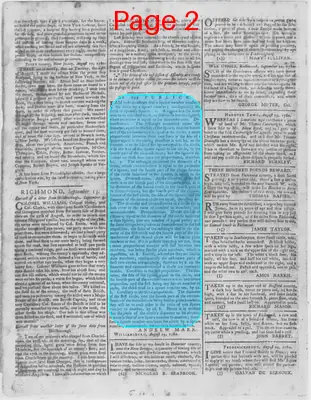
Letter to Editor
September 13, 1780
The Virginia Gazette
Richmond, Williamsburg, Richmond County, Virginia
What is this article about?
Andrew Marr presents a mathematical demonstration to the public claiming to prove that a square number measures the circle by another square number, thus the circle is 'squarely square,' using Euclidean propositions on proportions and commensurability.
Clipping
OCR Quality
95%
Excellent
Full Text
To
THE
PUBLIC.
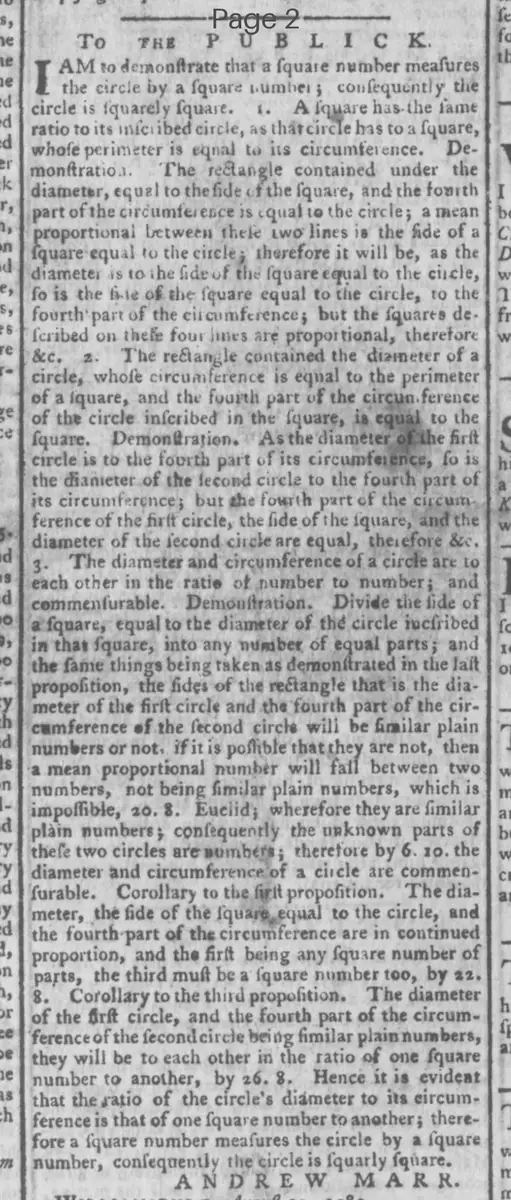
I AM to demonstrate that a square number measures
the circle by a square number; consequently the
circle is squarely square. I. A square has the same
ratio to its inscribed circle, as that circle has to a square,
whose perimeter is equal to its circumference. Demonstration. The rectangle contained under the
diameter, equal to the side of the square, and the fourth
part of the circumference is equal to the circle; a mean
proportional between these two lines is the side of a
square equal to the circle; therefore it will be, as the
diameter is to the side of the square equal to the circle,
so is the side of the square equal to the circle, to the
fourth part of the circumference; but the squares described on these four lines are proportional, therefore &c. 2. The rectangle contained the diameter of a
circle, whose circumference is equal to the perimeter
of a square, and the fourth part of the circumference
of the circle inscribed in the square, is equal to the
square. Demonstration. As the diameter of the first
circle is to the fourth part of its circumference, so is
the diameter of the second circle to the fourth part of
its circumference; but the fourth part of the circumference of the first circle, the side of the square, and the
diameter of the second circle are equal, therefore &c.
3. The diameter and circumference of a circle are to
each other in the ratio of number to number; and
commensurable. Demonstration. Divide the side of
a square, equal to the diameter of the circle inscribed
in that square, into any number of equal parts; and
the same things being taken as demonstrated in the last
proposition, the sides of the rectangle that is the diameter of the first circle and the fourth part of the circumference of the second circle will be similar plain
numbers or not, if it is possible that they are not, then
a mean proportional number will fall between two
numbers, not being similar plain numbers, which is
impossible, so. 8. Euclid; wherefore they are similar
plain numbers; consequently the unknown parts of
these two circles are numbers; therefore by 6. 10. the
diameter and circumference of a circle are commensurable. Corollary to the first proposition. The diameter, the side of the square equal to the circle, and
the fourth part of the circumference are in continued
proportion, and the first being any square number of
parts, the third must be a square number too, by 22.
8. Corollary to the third proposition. The diameter
of the first circle, and the fourth part of the circumference of the second circle being similar plain numbers,
they will be to each other in the ratio of one square
number to another, by 26. 8. Hence it is evident
that the ratio of the circle's diameter to its circumference is that of one square number to another; therefore a square number measures the circle by a square
number, consequently the circle is squarely square.
ANDREW MARR.
THE
PUBLIC.
I AM to demonstrate that a square number measures
the circle by a square number; consequently the
circle is squarely square. I. A square has the same
ratio to its inscribed circle, as that circle has to a square,
whose perimeter is equal to its circumference. Demonstration. The rectangle contained under the
diameter, equal to the side of the square, and the fourth
part of the circumference is equal to the circle; a mean
proportional between these two lines is the side of a
square equal to the circle; therefore it will be, as the
diameter is to the side of the square equal to the circle,
so is the side of the square equal to the circle, to the
fourth part of the circumference; but the squares described on these four lines are proportional, therefore &c. 2. The rectangle contained the diameter of a
circle, whose circumference is equal to the perimeter
of a square, and the fourth part of the circumference
of the circle inscribed in the square, is equal to the
square. Demonstration. As the diameter of the first
circle is to the fourth part of its circumference, so is
the diameter of the second circle to the fourth part of
its circumference; but the fourth part of the circumference of the first circle, the side of the square, and the
diameter of the second circle are equal, therefore &c.
3. The diameter and circumference of a circle are to
each other in the ratio of number to number; and
commensurable. Demonstration. Divide the side of
a square, equal to the diameter of the circle inscribed
in that square, into any number of equal parts; and
the same things being taken as demonstrated in the last
proposition, the sides of the rectangle that is the diameter of the first circle and the fourth part of the circumference of the second circle will be similar plain
numbers or not, if it is possible that they are not, then
a mean proportional number will fall between two
numbers, not being similar plain numbers, which is
impossible, so. 8. Euclid; wherefore they are similar
plain numbers; consequently the unknown parts of
these two circles are numbers; therefore by 6. 10. the
diameter and circumference of a circle are commensurable. Corollary to the first proposition. The diameter, the side of the square equal to the circle, and
the fourth part of the circumference are in continued
proportion, and the first being any square number of
parts, the third must be a square number too, by 22.
8. Corollary to the third proposition. The diameter
of the first circle, and the fourth part of the circumference of the second circle being similar plain numbers,
they will be to each other in the ratio of one square
number to another, by 26. 8. Hence it is evident
that the ratio of the circle's diameter to its circumference is that of one square number to another; therefore a square number measures the circle by a square
number, consequently the circle is squarely square.
ANDREW MARR.
What sub-type of article is it?
Informative
Philosophical
What themes does it cover?
Science Nature
What keywords are associated?
Squaring The Circle
Euclidean Geometry
Circle Measurement
Square Numbers
Commensurable Lines
What entities or persons were involved?
Andrew Marr
The Public
Letter to Editor Details
Author
Andrew Marr
Recipient
The Public
Main Argument
a square number measures the circle by a square number; consequently the circle is squarely square.
Notable Details
References Euclid's Elements (Propositions 8, 10, 22, 26)
Uses Geometric Proportions And Mean Proportionals To Argue Commensurability Of Diameter And Circumference