Thank you for visiting SNEWPapers!
Sign up free
Letter to Editor
January 24, 1833
Morning Star
Limerick, York County, Maine
What is this article about?
This letter argues that parents must diligently provide religious instruction to children from an early age to shape their moral character and ensure eternal happiness, warning that neglect leads to irreligion and moral depravity. It counters objections and stresses the lasting impact of such education.
Clipping
OCR Quality
98%
Excellent
Full Text
For the Morning Star.
SABBATH SCHOOLS.
The proper instruction of youth is one of the most important duties of parents. Education exercises an influence over their future character that is seldom counteracted through life. It was said by the wise man, "Train up a child in the way he should go; and when he is old, he will not depart from it." However else some may consider this remark of the sacred writer, a careful attention to facts shows that it will admit of general application. It no oftener proves untrue in practice than the best of general rules, that are calculated to point out the effect which the actions of one moral agent have upon the conduct of another.
It very frequently happens that the families of those parents who have been diligent in training them up for the Lord, manifest the character of Christians from early life to advanced age, or till the close of their existence on earth. In other instances the hopes of pious parents seem, for a while, to be blasted, by the irreligious character of their offspring. To all human appearance the labor bestowed in giving them a pious education is lost. One child is profane, another immoral, a third is undutiful to his parents, and a fourth visits the haunts of dissipation. But when all hope of their being reclaimed is exhausted, one is met by the mercy of God and yields to the influence of his grace—soon another follows his example, then a third, and so on, till the whole family of hopeless children become the happy partakers of heavenly joy. Thus the humble efforts and prayers of godly parents, though at first ineffectual, are in the end crowned with success. It may occasionally happen, that those who have been the subjects of the best parental care, prove finally impenitent. Yet this is by no means frequent.
Not so on the other hand. Such persons as have the misfortune to be neglected in childhood—to be educated without religious instruction constantly and carefully extended to them, are most likely to continue irreligious through life. The habits of inattention to Divine things, of indulgence in sensual gratifications, become so deeply rivetted to their very nature, that they seem in a manner incapable of having their moral faculties so aroused, and their habits of exercise so changed, as to become the subjects of renovating grace. Have they had religious parents that neglected their duty? so much the worse for the child. None appear more impenetrably stupid than the families of pious parents who neglect giving them a religious education. It would be as easy, seemingly, to impress a block, or a stone, with the importance of gospel truth, as to make one of these feel the necessity of conversion from sin to holiness. Those who have never heard a lisp of the gospel are less deeply buried in sin, and much more easily become the happy recipients of grace. Or if any, living within the reach of gospel privileges, who have not had a religious education, do, for a while, yield obedience to the commands of God, and reform from sin, they more usually fall away, and turn again to their accustomed ungodliness. Others there are, who, so far from having any privileges of religious instruction from their parents, are studiously taught the practices of vice and sin—are instructed, with much pains to swear, to lie, and to practice the vile acts of dissipation and debauchery. By the time such arrive at manhood, their habits of vice become so powerful, and so strongly fortified by every species of ungodliness, that the gospel exhibited to them with all its sanctions has little effect upon their consciences. They seem bound to irretrievable ruin. And, indeed, no human beings could, apparently, be sunk into a more deplorable state of moral depravity, than many of those who are professedly educated for vice. These, however, can scarcely surpass such as, having pious parents, come forth into the world without having received a religious education.
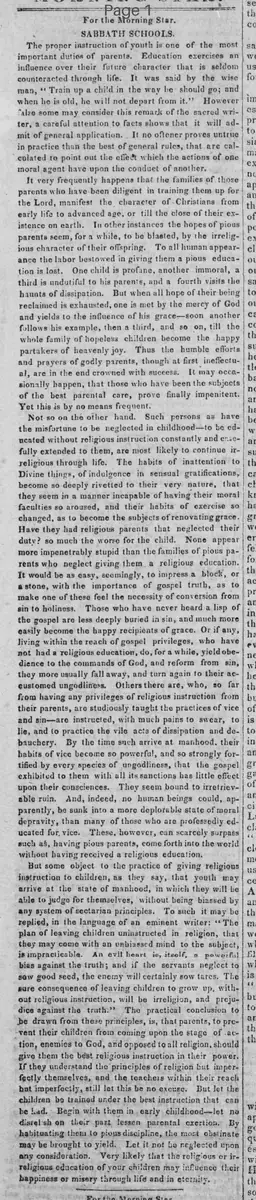
But some object to the practice of giving religious instruction to children, as they say, that youth may arrive at the state of manhood, in which they will be able to judge for themselves, without being biassed by any system of sectarian principles. To such it may be replied, in the language of an eminent writer: "The plan of leaving children uninstructed in religion, that they may come with an unbiassed mind to the subject, is impracticable. An evil heart is, itself, a powerful bias against the truth; and if the servants neglect to sow good seed, the enemy will certainly sow tares. The sure consequence of leaving children to grow up without religious instruction, will be irreligion, and prejudice against the truth." The practical conclusion to be drawn from these principles, is, that parents, to prevent their children from coming upon the stage of action, enemies to God, and opposed to all religion, should give them the best religious instruction in their power. If they understand the principles of religion but imperfectly themselves, and the teachers within their reach but imperfectly, still let this be no excuse. But let the children be trained under the best instruction that can be had. Begin with them in early childhood—let no disrelish on their part lessen parental exertion. By habituating them to pious discipline, the most obstinate may be brought to yield. Let it not be neglected upon any consideration. Very likely that the religious or irreligious education of your children may influence their happiness or misery through life and in eternity.
SABBATH SCHOOLS.
The proper instruction of youth is one of the most important duties of parents. Education exercises an influence over their future character that is seldom counteracted through life. It was said by the wise man, "Train up a child in the way he should go; and when he is old, he will not depart from it." However else some may consider this remark of the sacred writer, a careful attention to facts shows that it will admit of general application. It no oftener proves untrue in practice than the best of general rules, that are calculated to point out the effect which the actions of one moral agent have upon the conduct of another.
It very frequently happens that the families of those parents who have been diligent in training them up for the Lord, manifest the character of Christians from early life to advanced age, or till the close of their existence on earth. In other instances the hopes of pious parents seem, for a while, to be blasted, by the irreligious character of their offspring. To all human appearance the labor bestowed in giving them a pious education is lost. One child is profane, another immoral, a third is undutiful to his parents, and a fourth visits the haunts of dissipation. But when all hope of their being reclaimed is exhausted, one is met by the mercy of God and yields to the influence of his grace—soon another follows his example, then a third, and so on, till the whole family of hopeless children become the happy partakers of heavenly joy. Thus the humble efforts and prayers of godly parents, though at first ineffectual, are in the end crowned with success. It may occasionally happen, that those who have been the subjects of the best parental care, prove finally impenitent. Yet this is by no means frequent.
Not so on the other hand. Such persons as have the misfortune to be neglected in childhood—to be educated without religious instruction constantly and carefully extended to them, are most likely to continue irreligious through life. The habits of inattention to Divine things, of indulgence in sensual gratifications, become so deeply rivetted to their very nature, that they seem in a manner incapable of having their moral faculties so aroused, and their habits of exercise so changed, as to become the subjects of renovating grace. Have they had religious parents that neglected their duty? so much the worse for the child. None appear more impenetrably stupid than the families of pious parents who neglect giving them a religious education. It would be as easy, seemingly, to impress a block, or a stone, with the importance of gospel truth, as to make one of these feel the necessity of conversion from sin to holiness. Those who have never heard a lisp of the gospel are less deeply buried in sin, and much more easily become the happy recipients of grace. Or if any, living within the reach of gospel privileges, who have not had a religious education, do, for a while, yield obedience to the commands of God, and reform from sin, they more usually fall away, and turn again to their accustomed ungodliness. Others there are, who, so far from having any privileges of religious instruction from their parents, are studiously taught the practices of vice and sin—are instructed, with much pains to swear, to lie, and to practice the vile acts of dissipation and debauchery. By the time such arrive at manhood, their habits of vice become so powerful, and so strongly fortified by every species of ungodliness, that the gospel exhibited to them with all its sanctions has little effect upon their consciences. They seem bound to irretrievable ruin. And, indeed, no human beings could, apparently, be sunk into a more deplorable state of moral depravity, than many of those who are professedly educated for vice. These, however, can scarcely surpass such as, having pious parents, come forth into the world without having received a religious education.
But some object to the practice of giving religious instruction to children, as they say, that youth may arrive at the state of manhood, in which they will be able to judge for themselves, without being biassed by any system of sectarian principles. To such it may be replied, in the language of an eminent writer: "The plan of leaving children uninstructed in religion, that they may come with an unbiassed mind to the subject, is impracticable. An evil heart is, itself, a powerful bias against the truth; and if the servants neglect to sow good seed, the enemy will certainly sow tares. The sure consequence of leaving children to grow up without religious instruction, will be irreligion, and prejudice against the truth." The practical conclusion to be drawn from these principles, is, that parents, to prevent their children from coming upon the stage of action, enemies to God, and opposed to all religion, should give them the best religious instruction in their power. If they understand the principles of religion but imperfectly themselves, and the teachers within their reach but imperfectly, still let this be no excuse. But let the children be trained under the best instruction that can be had. Begin with them in early childhood—let no disrelish on their part lessen parental exertion. By habituating them to pious discipline, the most obstinate may be brought to yield. Let it not be neglected upon any consideration. Very likely that the religious or irreligious education of your children may influence their happiness or misery through life and in eternity.
What sub-type of article is it?
Ethical Moral
Persuasive
Religious
What themes does it cover?
Religion
Education
Morality
What keywords are associated?
Sabbath Schools
Religious Education
Parental Duty
Youth Instruction
Moral Character
Irreligion
Pious Parents
What entities or persons were involved?
For The Morning Star
Letter to Editor Details
Recipient
For The Morning Star
Main Argument
parents have a crucial duty to provide consistent religious instruction to their children from early childhood to foster lifelong piety and prevent irreligion, as neglect often leads to entrenched moral depravity and eternal misery.
Notable Details
Quotes Proverbs: 'Train Up A Child In The Way He Should Go; And When He Is Old, He Will Not Depart From It.'
Quotes An Eminent Writer On The Impracticability Of Leaving Children Uninstructed In Religion.