Thank you for visiting SNEWPapers!
Sign up free
Story
October 14, 1824
The Rhode Island Republican
Newport, Newport County, Rhode Island
What is this article about?
Account of Gen. Barton's prolonged lawsuit over a Vermont land grant near Lake Memphremagog. As benefactor to settlers, he defended titles against land jobbers, enduring court delays, arbitrations, and reversals from 1792 to 1816, ending in his imprisonment and financial ruin despite a favorable 1809 decree.
Clipping
OCR Quality
95%
Excellent
Full Text
From the Vermont Journal.
Statement of Gen. Barton's Law-suit.
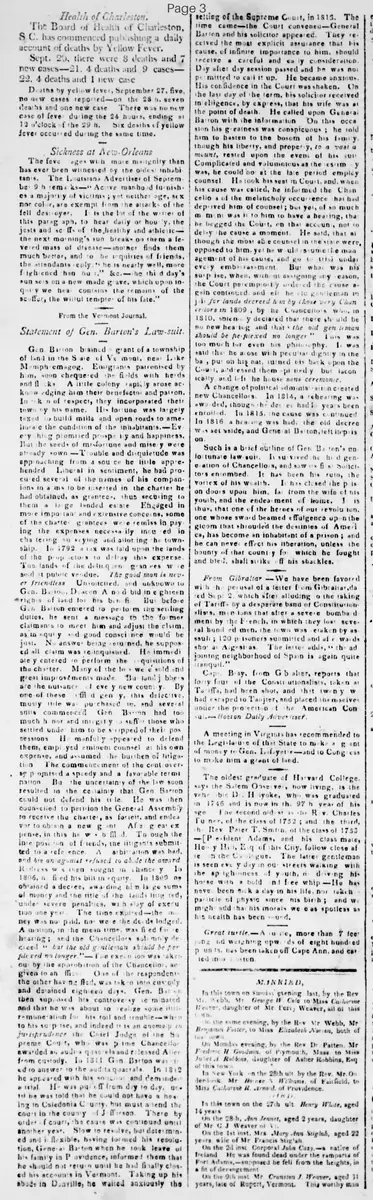
Gen. Barton obtained a grant of a township of land in the state of Vermont, near Lake Memphremagog. Emigrants patronised by him, soon checked the fields with herds and flocks. A little colony rapidly arose acknowledging him their benefactor and patron. In token of respect, they incorporated their town by his name. His fortune was largely taxed to build mills and open roads to ameliorate the condition of the inhabitants.--Every thing promised prosperity and happiness. But the seeds of misfortune and misery were already sown. Trouble and disquietude was approaching from a source he little apprehended. Liberal in sentiment, he had procured several of the names of his companions in arms to be inserted in the charter he had obtained, as grantees, thus securing to them a large landed estate. Engaged in more important and extensive concerns, some of the charter grantees were remiss in paying the expenses necessarily incurred in chartering, surveying and allotting the township. In 1792 a tax was laid upon the lands of the proprietors to defray this expense. The lands of the delinquent grantees were sold at public vendue. The good man is never friendless. Unsolicited and unknown to Gen. Barton, Deacon Alwood bid in eighteen rights of land for his benefit. But before Gen. Barton entered to perform the settling duties, he sent a message to the former claimants to meet him and adjust the claim, as in equity and good conscience would be just. No answer being returned, he supposed all claim was relinquished. He immediately entered to perform the acquisitions of the charter. Many of the lots were sold and great improvements made. But land jobbers are the nuisance to every new country. By one of these idle gentry, this delinquent, musty title was purchased, and several suits commenced. Gen. Barton had too much honor and integrity to suffer those who settled under him to be stripped of their possessions. He manfully appeared to defend them, employed eminent counsel at his own expense, and assumed the burthen of litigation. The commencement of the controversy promised a speedy and a favorable termination. But the uncertainty of the law soon resulted in the certainty that Gen. Barton could not defend his title. It was then counselled to petition the General Assembly to receive the charter, as forfeited, and endeavor to obtain a new grant. After great expense, in this he was baffled. Through the interposition of friends, the litigants submitted to a reference. An arbitration was had, and three antagonists refused to abide the award. redress was then sought in chancery. In 1806, he filed his bill in equity. In 1809 he obtained a decree, awarding him large sums of money and entire title of the lands litigated, under severe penalties, with stay of execution one year. The time expired--the money was not paid, nor were the deeds lodged. A motion, in the mean time, was filed for a hearing; and the Chancellors solemnly decided "that the old gentleman should be perplexed no longer."--The execution was taken out by the approbation of the Chancellor, and given to an officer. One of the respondents the other having fled, was taken into custody and detained eighteen days. Gen. Barton then supposed his controversy terminated and that he was about to realize some little remuneration for his toil and trouble--when to his surprise, and indeed "tis an anomaly in jurisprudence" the Chief Judge of the Supreme Court, who were at time Chancellors--awarded an audita querela and released after from custody. In 1811 Gen. Barton was cited to answer to the audita querela. In 1812 he appeared with his solicitor and demanded a trial. He was put from day to day, until he was told that he could not have a hearing in Caledonia County, but must attend the court in the county of Jefferson. There by order of court, the cause was continued until another year. Slow to resolve, but determined and inflexible, having formed his resolution, time and Barton when he took leave of his family in Providence, informed them that he should not return until he had finally closed his accounts in Vermont. Taking up his abode in Danville, he waited anxiously the setting of the Supreme Court. in 1813. The time came--the Court convened--General Barton and his solicitor appeared. They received the most explicit assurance that his cause, of infinite importance to him, should receive a careful and early consideration. Day after day session passed and he was not permitted to call it up. He became anxious. His confidence in the Court was shaken. On the last day of the term, his solicitor received intelligence, by express, that his wife was at the point of death. He called upon General Barron with the information. On this occasion his greatness was conspicuous; he told him to hasten to the bosom of his family, though his liberty, and property, to vast a mount, rested upon the event of his suit. Complicated and voluminous as the case was, he could not at the late period employ counsel. He took his seat in Court, and, when his cause was called, he informed the Chancellors of the melancholy occurrence that had deprived him of counsel; but yet, of so much importance was it to him to have a hearing, that he begged the Court, on that account, not to delay the cause a moment. He said, that although the ablest counsel in the state were opposed to him, yet he would assume the management of his cause, and go to trial under every embarrassment. But what was his surprise, when, with as little as signing only reason, the Court peremptorily ordered the cause again continued, and left the old gentleman in jail for lands decreed him by those very Chancellors in 1809, by the Chancellors who, in 1810, solemnly declared that there should be no new hearing and that "the old gentleman should be perplexed no longer." This was too much for even his philosophy. It was said that he arose with peculiar dignity in the bar, put on his hat, turned his back upon the Court, addressed them briefly but laconically and left the house sans ceremonie. A change of political administration created new Chancellors. In 1814, a rehearing was awarded, though a decree had four years been enrolled. In 1815, the cause was continued. In 1816, a hearing was had, the old decree was set aside, and General Barton left imprisoned. Such is a brief outline of Gen. Barton's unfortunate law-suit. It survived ten generations of Chancellors, and saw his first Solicitor's entombed. It has been his ruin, the vortex of his wealth. It has closed the prison doors upon him, far from the wife of his youth, and the endearment of home. It is thus, that one of the heroes of our revolution, one whose sword beamed effulgence upon the gloom that shrouded the destinies of America, has become an inhabitant of a prison; and he can never effect his liberation, unless the bounty of that country for which he fought and bled, shall strike off his shackles.
Statement of Gen. Barton's Law-suit.
Gen. Barton obtained a grant of a township of land in the state of Vermont, near Lake Memphremagog. Emigrants patronised by him, soon checked the fields with herds and flocks. A little colony rapidly arose acknowledging him their benefactor and patron. In token of respect, they incorporated their town by his name. His fortune was largely taxed to build mills and open roads to ameliorate the condition of the inhabitants.--Every thing promised prosperity and happiness. But the seeds of misfortune and misery were already sown. Trouble and disquietude was approaching from a source he little apprehended. Liberal in sentiment, he had procured several of the names of his companions in arms to be inserted in the charter he had obtained, as grantees, thus securing to them a large landed estate. Engaged in more important and extensive concerns, some of the charter grantees were remiss in paying the expenses necessarily incurred in chartering, surveying and allotting the township. In 1792 a tax was laid upon the lands of the proprietors to defray this expense. The lands of the delinquent grantees were sold at public vendue. The good man is never friendless. Unsolicited and unknown to Gen. Barton, Deacon Alwood bid in eighteen rights of land for his benefit. But before Gen. Barton entered to perform the settling duties, he sent a message to the former claimants to meet him and adjust the claim, as in equity and good conscience would be just. No answer being returned, he supposed all claim was relinquished. He immediately entered to perform the acquisitions of the charter. Many of the lots were sold and great improvements made. But land jobbers are the nuisance to every new country. By one of these idle gentry, this delinquent, musty title was purchased, and several suits commenced. Gen. Barton had too much honor and integrity to suffer those who settled under him to be stripped of their possessions. He manfully appeared to defend them, employed eminent counsel at his own expense, and assumed the burthen of litigation. The commencement of the controversy promised a speedy and a favorable termination. But the uncertainty of the law soon resulted in the certainty that Gen. Barton could not defend his title. It was then counselled to petition the General Assembly to receive the charter, as forfeited, and endeavor to obtain a new grant. After great expense, in this he was baffled. Through the interposition of friends, the litigants submitted to a reference. An arbitration was had, and three antagonists refused to abide the award. redress was then sought in chancery. In 1806, he filed his bill in equity. In 1809 he obtained a decree, awarding him large sums of money and entire title of the lands litigated, under severe penalties, with stay of execution one year. The time expired--the money was not paid, nor were the deeds lodged. A motion, in the mean time, was filed for a hearing; and the Chancellors solemnly decided "that the old gentleman should be perplexed no longer."--The execution was taken out by the approbation of the Chancellor, and given to an officer. One of the respondents the other having fled, was taken into custody and detained eighteen days. Gen. Barton then supposed his controversy terminated and that he was about to realize some little remuneration for his toil and trouble--when to his surprise, and indeed "tis an anomaly in jurisprudence" the Chief Judge of the Supreme Court, who were at time Chancellors--awarded an audita querela and released after from custody. In 1811 Gen. Barton was cited to answer to the audita querela. In 1812 he appeared with his solicitor and demanded a trial. He was put from day to day, until he was told that he could not have a hearing in Caledonia County, but must attend the court in the county of Jefferson. There by order of court, the cause was continued until another year. Slow to resolve, but determined and inflexible, having formed his resolution, time and Barton when he took leave of his family in Providence, informed them that he should not return until he had finally closed his accounts in Vermont. Taking up his abode in Danville, he waited anxiously the setting of the Supreme Court. in 1813. The time came--the Court convened--General Barton and his solicitor appeared. They received the most explicit assurance that his cause, of infinite importance to him, should receive a careful and early consideration. Day after day session passed and he was not permitted to call it up. He became anxious. His confidence in the Court was shaken. On the last day of the term, his solicitor received intelligence, by express, that his wife was at the point of death. He called upon General Barron with the information. On this occasion his greatness was conspicuous; he told him to hasten to the bosom of his family, though his liberty, and property, to vast a mount, rested upon the event of his suit. Complicated and voluminous as the case was, he could not at the late period employ counsel. He took his seat in Court, and, when his cause was called, he informed the Chancellors of the melancholy occurrence that had deprived him of counsel; but yet, of so much importance was it to him to have a hearing, that he begged the Court, on that account, not to delay the cause a moment. He said, that although the ablest counsel in the state were opposed to him, yet he would assume the management of his cause, and go to trial under every embarrassment. But what was his surprise, when, with as little as signing only reason, the Court peremptorily ordered the cause again continued, and left the old gentleman in jail for lands decreed him by those very Chancellors in 1809, by the Chancellors who, in 1810, solemnly declared that there should be no new hearing and that "the old gentleman should be perplexed no longer." This was too much for even his philosophy. It was said that he arose with peculiar dignity in the bar, put on his hat, turned his back upon the Court, addressed them briefly but laconically and left the house sans ceremonie. A change of political administration created new Chancellors. In 1814, a rehearing was awarded, though a decree had four years been enrolled. In 1815, the cause was continued. In 1816, a hearing was had, the old decree was set aside, and General Barton left imprisoned. Such is a brief outline of Gen. Barton's unfortunate law-suit. It survived ten generations of Chancellors, and saw his first Solicitor's entombed. It has been his ruin, the vortex of his wealth. It has closed the prison doors upon him, far from the wife of his youth, and the endearment of home. It is thus, that one of the heroes of our revolution, one whose sword beamed effulgence upon the gloom that shrouded the destinies of America, has become an inhabitant of a prison; and he can never effect his liberation, unless the bounty of that country for which he fought and bled, shall strike off his shackles.
What sub-type of article is it?
Biography
Historical Event
Tragedy
What themes does it cover?
Misfortune
Justice
Tragedy
What keywords are associated?
Law Suit
Land Grant
Vermont Settlement
Imprisonment
Revolutionary Hero
What entities or persons were involved?
Gen. Barton
Deacon Alwood
Where did it happen?
Vermont, Near Lake Memphremagog
Story Details
Key Persons
Gen. Barton
Deacon Alwood
Location
Vermont, Near Lake Memphremagog
Event Date
1792 To 1816
Story Details
Gen. Barton granted land in Vermont, settled colony named after him, but faced lawsuits over delinquent grantees' rights. After years of litigation, arbitration, and court delays, he was imprisoned despite a 1809 decree in his favor, ruining him.