Thank you for visiting SNEWPapers!
Sign up free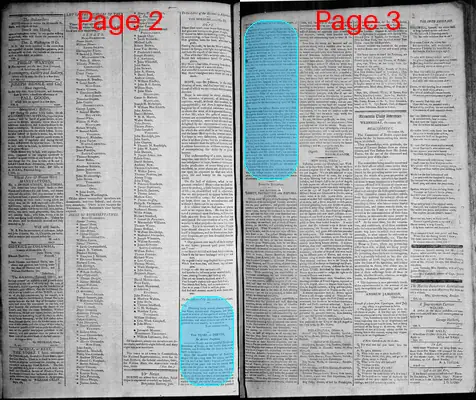
Literary
October 12, 1803
Alexandria Daily Advertiser
Alexandria, Virginia
What is this article about?
An ancient literary fragment submitted by 'J.' to the Alexandria Advertiser, recounting the tragic romance of Derwin, a bold youth, and Mora, his beloved, who dies of sickness. Overcome by grief, Derwin joins her in death, their grave a lesson in constancy for villagers.
Merged-components note: Merged continuation of the literary fragment 'The Tears of Derwin' across pages based on text flow and sequential reading order.
Clippings
1 of 2
OCR Quality
95%
Excellent
Full Text
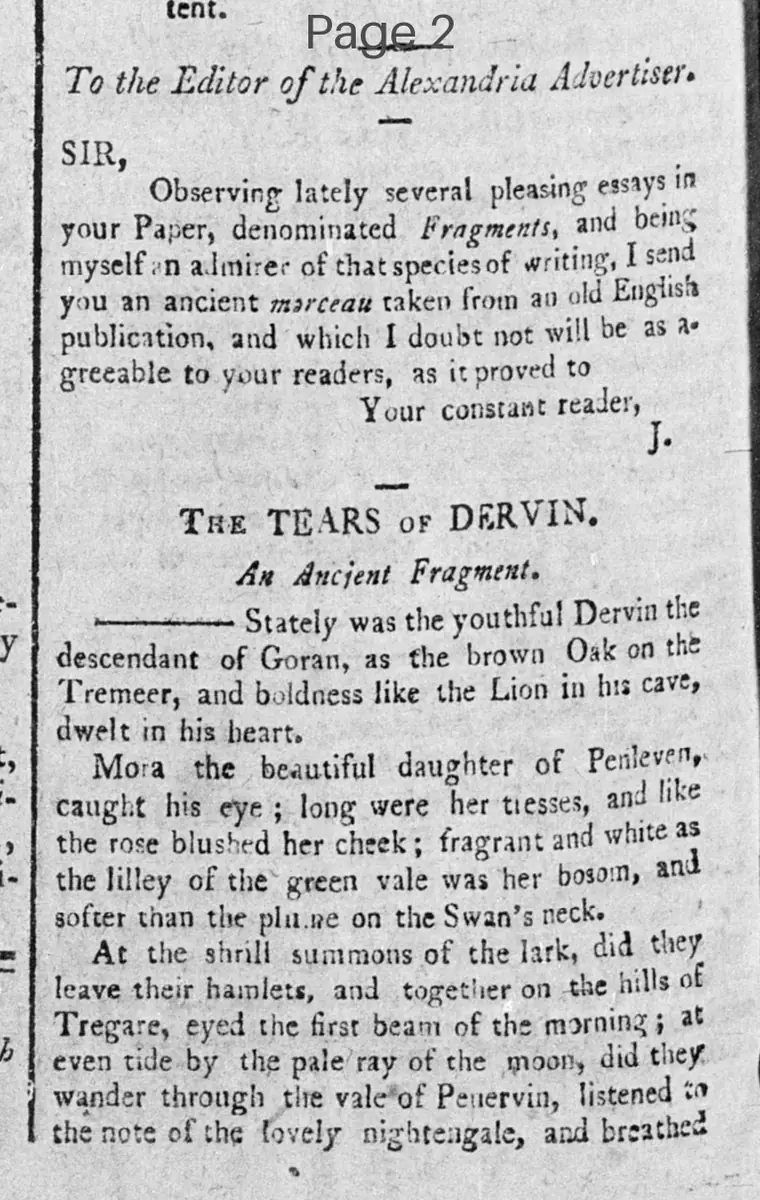
To the Editor of the Alexandria Advertiser.
SIR,
Observing lately several pleasing essays in your Paper, denominated Fragments, and being myself an admirer of that species of writing, I send you an ancient morceau taken from an old English publication, and which I doubt not will be as agreeable to your readers, as it proved to
Your constant reader
J.
The Tears of Derwin.
An Ancient Fragment.
Stately was the youthful Derwin the descendant of Goran, as the brown Oak on the Tremeer, and boldness like the Lion in his cave, dwelt in his heart.
Mora the beautiful daughter of Penleven, caught his eye; long were her tresses, and like the rose blushed her cheek; fragrant and white as the lily of the green vale was her bosom, and softer than the plume on the Swan's neck.
At the shrill summons of the lark, did they leave their hamlets, and together on the hills of Tregare, eyed the first beam of the morning; at even tide by the pale ray of the moon, did they wander through the vale of Penervin, listened to the note of the lovely nightingale, and breathed
The sweet love taste in the twilight groves of Rosmer.
Wilt thou be mine, and suffer happiness to beam on my soul? When I gaze on thy beauties, quick leaps my alarmed heart. Ah! soon wilt thou make me blest?
The sweet blush of innocence glowed on the cheek of the daughter of Penletren, and consenting silence dwelt on her lips—but never ah! never, were they to join! Sickness clouded the eye of the virgin, and the crimson of the new blown rose fainted on her cheek; she hung her head low, like the ripe ear of corn before the sickle of the reaper, or like the flower in the rain, and sunk on the pillow.
Her hand gently clasped the hand of her beloved Derwin, her bosom heaved like the swelling wave, and while vision performed its office, she cast her eye on the delight of her soul.
She raised her languid head, to kiss the wet cheek of her lover, when death struck her to the heart; she fell back—her glassy eye closed—and her last breath sighed the name of Derwin.
Pillar of my existence! exclaimed the frantic Derwin, with his lips on the pale hand of the dead—I will follow thee! stay awhile thy gentle spirit for the accompanying spirit of Derwin.
He wept—the valiant Derwin wept as a child, though brave as a lion that roams through the desert. Though he feared not the reddening glare of the wolf's eye—though his arm slew the giant Bali'l, and left him to rot like a dead dog in the mountain; the tears coursed his cheek, like a torrent on the hill's brow—dim shone his large rolling eye, as the hazy moon in a storm; and his heart dissolved like the snow in the sun beam.
Nor was the gallant youth ashamed to weep; for compassion is the sister of magnanimity; and pity is akin to love.
Mora lies in her tomb; the bleak winds whistle over her; and the worm riots on her beauty. Her cold ear listens not to the sighs of Derwin, who laments over her green turf; nor perceives her dim eye the wild emotion of the youth who lived but for her.
He falls prostrate on her grave; he complains of the duration of life; he calls on the shade of his departed Mora—he dies.
Derwin sleeps by the side of his beloved Mora, while the village swains and damsels annually strew flowers on their grave, and learn the lesson of constancy from their pure example.
SIR,
Observing lately several pleasing essays in your Paper, denominated Fragments, and being myself an admirer of that species of writing, I send you an ancient morceau taken from an old English publication, and which I doubt not will be as agreeable to your readers, as it proved to
Your constant reader
J.
The Tears of Derwin.
An Ancient Fragment.
Stately was the youthful Derwin the descendant of Goran, as the brown Oak on the Tremeer, and boldness like the Lion in his cave, dwelt in his heart.
Mora the beautiful daughter of Penleven, caught his eye; long were her tresses, and like the rose blushed her cheek; fragrant and white as the lily of the green vale was her bosom, and softer than the plume on the Swan's neck.
At the shrill summons of the lark, did they leave their hamlets, and together on the hills of Tregare, eyed the first beam of the morning; at even tide by the pale ray of the moon, did they wander through the vale of Penervin, listened to the note of the lovely nightingale, and breathed
The sweet love taste in the twilight groves of Rosmer.
Wilt thou be mine, and suffer happiness to beam on my soul? When I gaze on thy beauties, quick leaps my alarmed heart. Ah! soon wilt thou make me blest?
The sweet blush of innocence glowed on the cheek of the daughter of Penletren, and consenting silence dwelt on her lips—but never ah! never, were they to join! Sickness clouded the eye of the virgin, and the crimson of the new blown rose fainted on her cheek; she hung her head low, like the ripe ear of corn before the sickle of the reaper, or like the flower in the rain, and sunk on the pillow.
Her hand gently clasped the hand of her beloved Derwin, her bosom heaved like the swelling wave, and while vision performed its office, she cast her eye on the delight of her soul.
She raised her languid head, to kiss the wet cheek of her lover, when death struck her to the heart; she fell back—her glassy eye closed—and her last breath sighed the name of Derwin.
Pillar of my existence! exclaimed the frantic Derwin, with his lips on the pale hand of the dead—I will follow thee! stay awhile thy gentle spirit for the accompanying spirit of Derwin.
He wept—the valiant Derwin wept as a child, though brave as a lion that roams through the desert. Though he feared not the reddening glare of the wolf's eye—though his arm slew the giant Bali'l, and left him to rot like a dead dog in the mountain; the tears coursed his cheek, like a torrent on the hill's brow—dim shone his large rolling eye, as the hazy moon in a storm; and his heart dissolved like the snow in the sun beam.
Nor was the gallant youth ashamed to weep; for compassion is the sister of magnanimity; and pity is akin to love.
Mora lies in her tomb; the bleak winds whistle over her; and the worm riots on her beauty. Her cold ear listens not to the sighs of Derwin, who laments over her green turf; nor perceives her dim eye the wild emotion of the youth who lived but for her.
He falls prostrate on her grave; he complains of the duration of life; he calls on the shade of his departed Mora—he dies.
Derwin sleeps by the side of his beloved Mora, while the village swains and damsels annually strew flowers on their grave, and learn the lesson of constancy from their pure example.
What sub-type of article is it?
Prose Fiction
Elegy
What themes does it cover?
Love Romance
Death Mortality
Moral Virtue
What keywords are associated?
Tragic Romance
Constancy
Elegiac Fragment
Youthful Love
Grief And Death
What entities or persons were involved?
Submitted By J. From An Old English Publication
Literary Details
Title
The Tears Of Derwin.
Author
Submitted By J. From An Old English Publication
Subject
Tragic Love And Death Of Derwin And Mora
Form / Style
Poetic Prose Narrative Fragment
Key Lines
Pillar Of My Existence! Exclaimed The Frantic Derwin, With His Lips On The Pale Hand Of The Dead—I Will Follow Thee! Stay Awhile Thy Gentle Spirit For The Accompanying Spirit Of Derwin.
Nor Was The Gallant Youth Ashamed To Weep; For Compassion Is The Sister Of Magnanimity; And Pity Is Akin To Love.
Derwin Sleeps By The Side Of His Beloved Mora, While The Village Swains And Damsels Annually Strew Flowers On Their Grave, And Learn The Lesson Of Constancy From Their Pure Example.