Thank you for visiting SNEWPapers!
Sign up free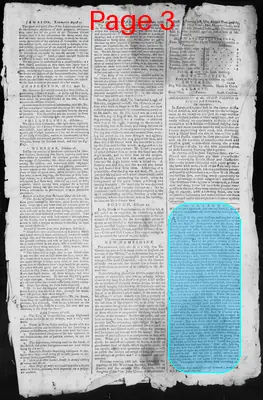
Literary
October 26, 1786
Fowle's New Hampshire Gazette And General Advertiser
Portsmouth, Rockingham County, New Hampshire
What is this article about?
A reflective prose essay on the divine regularities of the seasons, from seed time to harvest, drawing on biblical promises of perpetual cycles of nature. It celebrates the joys, comforts, and wisdom in spring, summer, and the alternation of day and night, ending with praise to God's manifold works.
Clipping
OCR Quality
98%
Excellent
Full Text
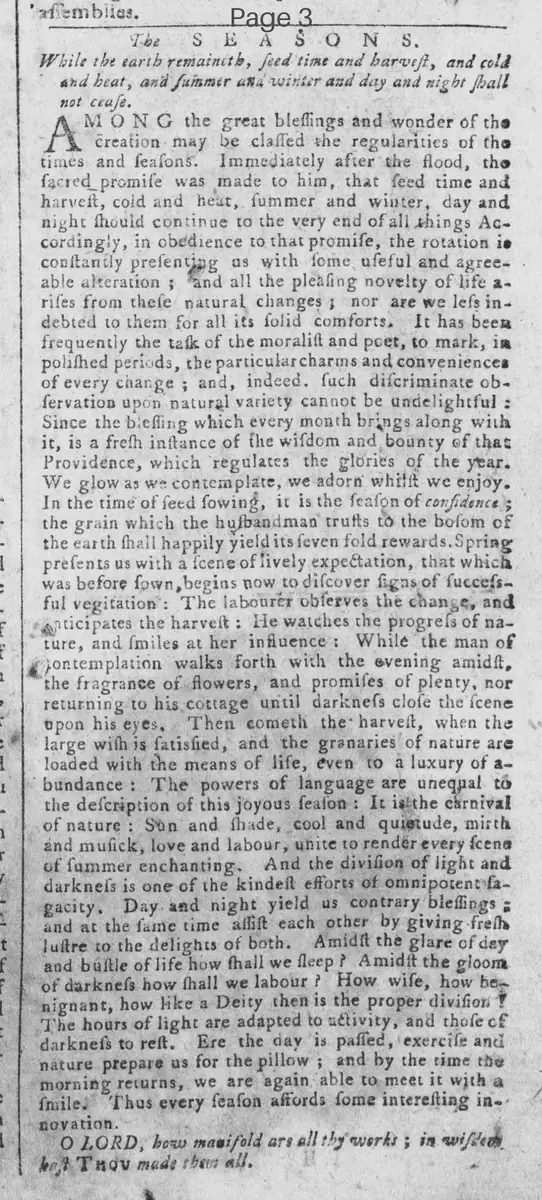
THE SEASONS.
While the earth remaineth, seed time and harvest, and cold and heat, and summer and winter and day and night shall not cease.
AMONG the great blessings and wonders of the creation may be classed the regularities of the times and seasons. Immediately after the flood, the sacred promise was made to him, that seed time and harvest, cold and heat, summer and winter, day and night should continue to the very end of all things. Accordingly, in obedience to that promise, the rotation is constantly presenting us with some useful and agreeable alteration; and all the pleasing novelty of life arises from these natural changes; nor are we less indebted to them for all its solid comforts. It has been frequently the task of the moralist and poet, to mark, in polished periods, the particular charms and conveniences of every change; and, indeed, such discriminate observation upon natural variety cannot be undelightful: Since the blessing which every month brings along with it, is a fresh instance of the wisdom and bounty of that Providence, which regulates the glories of the year. We glow as we contemplate, we adorn whilst we enjoy.
In the time of seed sowing, it is the season of confidence; the grain which the husbandman trusts to the bosom of the earth shall happily yield its seven fold rewards. Spring presents us with a scene of lively expectation, that which was before sown, begins now to discover signs of successful vegetation: The labourer observes the changes, and anticipates the harvest: He watches the progress of nature, and smiles at her influence: While the man of contemplation walks forth with the evening amidst, the fragrance of flowers, and promises of plenty, nor returning to his cottage until darkness close the scene upon his eyes. Then cometh the harvest, when the large wish is satisfied, and the granaries of nature are loaded with the means of life, even to a luxury of abundance: The powers of language are unequal to the description of this joyous season: It is the carnival of nature: Sun and shade, cool and quietude, mirth and music, love and labour, unite to render every scene of summer enchanting. And the division of light and darkness is one of the kindest efforts of omnipotent sagacity. Day and night yield us contrary blessings; and at the same time aid each other by giving fresh lustre to the delights of both. Amidst the glare of day and bustle of life how shall we sleep? Amidst the gloom of darkness how shall we labour? How wise, how benignant, how like a Deity then is the proper division? The hours of light are adapted to activity, and those of darkness to rest. Ere the day is passed, exercise and nature prepare us for the pillow; and by the time the morning returns, we are again able to meet it with a smile. Thus every season affords some interesting innovation.
O LORD, how manifold are all thy works; in wisdom hast thou made them all.
While the earth remaineth, seed time and harvest, and cold and heat, and summer and winter and day and night shall not cease.
AMONG the great blessings and wonders of the creation may be classed the regularities of the times and seasons. Immediately after the flood, the sacred promise was made to him, that seed time and harvest, cold and heat, summer and winter, day and night should continue to the very end of all things. Accordingly, in obedience to that promise, the rotation is constantly presenting us with some useful and agreeable alteration; and all the pleasing novelty of life arises from these natural changes; nor are we less indebted to them for all its solid comforts. It has been frequently the task of the moralist and poet, to mark, in polished periods, the particular charms and conveniences of every change; and, indeed, such discriminate observation upon natural variety cannot be undelightful: Since the blessing which every month brings along with it, is a fresh instance of the wisdom and bounty of that Providence, which regulates the glories of the year. We glow as we contemplate, we adorn whilst we enjoy.
In the time of seed sowing, it is the season of confidence; the grain which the husbandman trusts to the bosom of the earth shall happily yield its seven fold rewards. Spring presents us with a scene of lively expectation, that which was before sown, begins now to discover signs of successful vegetation: The labourer observes the changes, and anticipates the harvest: He watches the progress of nature, and smiles at her influence: While the man of contemplation walks forth with the evening amidst, the fragrance of flowers, and promises of plenty, nor returning to his cottage until darkness close the scene upon his eyes. Then cometh the harvest, when the large wish is satisfied, and the granaries of nature are loaded with the means of life, even to a luxury of abundance: The powers of language are unequal to the description of this joyous season: It is the carnival of nature: Sun and shade, cool and quietude, mirth and music, love and labour, unite to render every scene of summer enchanting. And the division of light and darkness is one of the kindest efforts of omnipotent sagacity. Day and night yield us contrary blessings; and at the same time aid each other by giving fresh lustre to the delights of both. Amidst the glare of day and bustle of life how shall we sleep? Amidst the gloom of darkness how shall we labour? How wise, how benignant, how like a Deity then is the proper division? The hours of light are adapted to activity, and those of darkness to rest. Ere the day is passed, exercise and nature prepare us for the pillow; and by the time the morning returns, we are again able to meet it with a smile. Thus every season affords some interesting innovation.
O LORD, how manifold are all thy works; in wisdom hast thou made them all.
What sub-type of article is it?
Essay
What themes does it cover?
Seasonal Cycle
Religious
Nature
What keywords are associated?
Seasons
Harvest
Seed Time
Providence
Nature Cycles
Divine Blessings
Day Night
Literary Details
Title
The Seasons.
Key Lines
While The Earth Remaineth, Seed Time And Harvest, And Cold And Heat, And Summer And Winter And Day And Night Shall Not Cease.
Immediately After The Flood, The Sacred Promise Was Made To Him, That Seed Time And Harvest, Cold And Heat, Summer And Winter, Day And Night Should Continue To The Very End Of All Things.
It Is The Carnival Of Nature: Sun And Shade, Cool And Quietude, Mirth And Music, Love And Labour, Unite To Render Every Scene Of Summer Enchanting.
The Hours Of Light Are Adapted To Activity, And Those Of Darkness To Rest.
O Lord, How Manifold Are All Thy Works; In Wisdom Hast Thou Made Them All.